

Description
What the Flexus CORE 100 Is
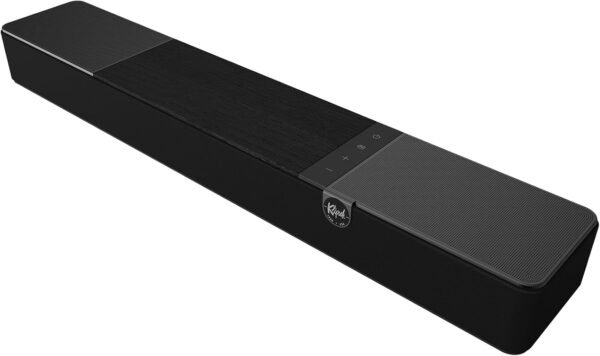
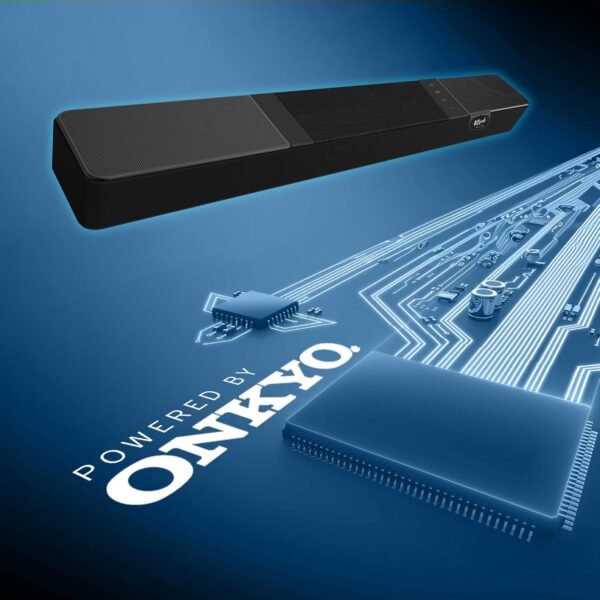
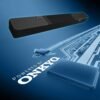
The Klipsch Flexus CORE 100 is a 2.1 channel sound bar with subwoofer drivers built into the bar itself, positioned as the entry point into the Flexus range. Klipsch describes it as the first step toward building a larger home entertainment system, and that framing is accurate: the bar is designed to be bought alone and expanded later with Flexus surrounds and a Flexus subwoofer over the same proprietary wireless link.
Klipsch is explicit that the Flexus platform is engineered with Onkyo, and that partnership is the more informative detail on the listing. It means the amplification and digital signal processing come from a company with a long history of building receivers rather than from a consumer accessory supplier. Buyers looking at the larger model in the same family should compare the Klipsch Core 200, and the bundled option with a subwoofer is covered in the Flexus Core 200 and Sub 100 bundle.
Drivers and the 2.1 Layout
Klipsch publishes the driver complement precisely, which is unusual and welcome: two 2.25 inch ceramic drivers handling the main channels and dual 4 inch subwoofer drivers built into the bar. That is what the 2.1 designation means here, with the .1 referring to internal drivers rather than a separate cabinet. Ceramic is chosen for cone stiffness, and 4 inch subwoofer drivers are large for a bar of this class, which is the basis of the claim that no separate subwoofer is required.
That claim needs qualifying rather than accepting. Two 4 inch drivers inside a bar will produce far more low frequency output than the small drivers in a typical budget bar, and considerably less than a 10 inch driver in a dedicated cabinet. Physics sets the limit: air displacement is a function of cone area and travel, and a bar has neither the area nor the enclosure volume of a subwoofer. Households that want cinematic impact should plan to add something from the subwoofers category, though on this platform that means the matching Klipsch Flexus SUB 100 specifically.
Dolby Atmos and Expandability
Atmos support is the feature most buyers will weigh first, and the way it is implemented here matters more than the badge. Dolby Atmos processing is included, which Klipsch describes as built for handling current films, shows and games. As with the driver complement, the honest reading matters: there are no upward firing drivers listed on this bar, so Atmos here is processing applied to a 2.1 layout rather than a physical height layer bouncing sound off the ceiling. It will widen and heighten the presentation, and it will not place sound overhead the way a bar with dedicated up firing drivers can.
Expandability is handled by Klipsch Transport, the company’s own wireless technology built into every Flexus product. It allows Flexus surround speakers and one or two Flexus subwoofers to be added later, connecting automatically rather than through manual pairing. The trade off is that the ecosystem is closed: a subwoofer or surround speaker from another brand cannot join it. Klipsch also states that Flexus products pass over 1,000 tests before shipping, and describes the packaging as designed for recyclability with waste minimized. That test figure is a manufacturing quality claim rather than a performance one, and it cannot be independently checked, but it is the kind of statement a brand makes when it expects returns to be scrutinized closely.
Highlights
- Two 2.25 inch ceramic drivers with dual 4 inch subwoofer drivers built into the bar.
- Dolby Atmos processing for current film, television and game soundtracks.
- Engineered and manufactured with Onkyo.
- Klipsch Transport wireless link for adding Flexus surrounds and subwoofers later.
- No separate subwoofer cabinet required to get usable bass.
- Over 1,000 factory tests per unit stated by Klipsch.
- Packaging designed for recyclability.
- Driver complement published precisely, which is unusual for a sound bar listing.
Things To Consider
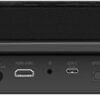
The listing is thin on measurable specifications. There is no total power output, no frequency response, no dimensions, no weight, no HDMI specification and no statement about eARC support. For a sound bar those are the details a buyer normally uses to decide, particularly the HDMI arrangement, which determines whether the television remote can control volume and whether lossless Atmos formats can be passed through. Anyone matching this to a specific television should confirm the connection options before ordering.
The Klipsch marketing copy also leans heavily on absolute claims about bass and connectivity that no listing can substantiate, and those should be read as advertising rather than as specification. What can be taken at face value is the driver complement, which Klipsch states plainly and which is the most useful information on the page. Anyone comparing bars across brands will find that most competitors do not publish driver sizes at all, so the figures here are worth more than the adjectives around them.
The closed ecosystem is the other consideration. Klipsch Transport makes expansion simple and makes it exclusive: the surrounds and subwoofer must be Flexus products, so a household that already owns a subwoofer cannot use it, and the investment is tied to one manufacturer’s roadmap. Finally, a 2.1 bar has no dedicated center channel, so dialogue is imaged between two drivers rather than reproduced by its own. Buyers whose main complaint is unclear speech should consider a 3.1 configuration such as the Yamaha SR-B30A or browse the wider sound bars range.
Who It Suits
The Flexus CORE 100 suits a household making a first substantial upgrade over television speakers, that does not want a separate subwoofer cabinet in the room, and that may want to add surrounds or a subwoofer later without replacing the bar. The published driver complement and the Onkyo engineering partnership are both more concrete than most bars at this level offer.
It is a weaker choice for anyone who wants genuine overhead effects from up firing drivers, anyone who needs a dedicated center channel for dialogue, and anyone who already owns a subwoofer they intend to keep. Those buyers should look outside the Flexus platform, where subwoofer connections are standard rather than proprietary.