


Description
What the Flexus SUB 100 Is
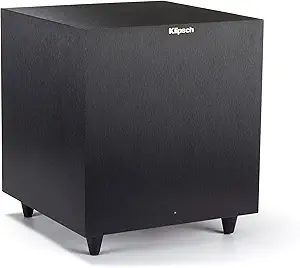
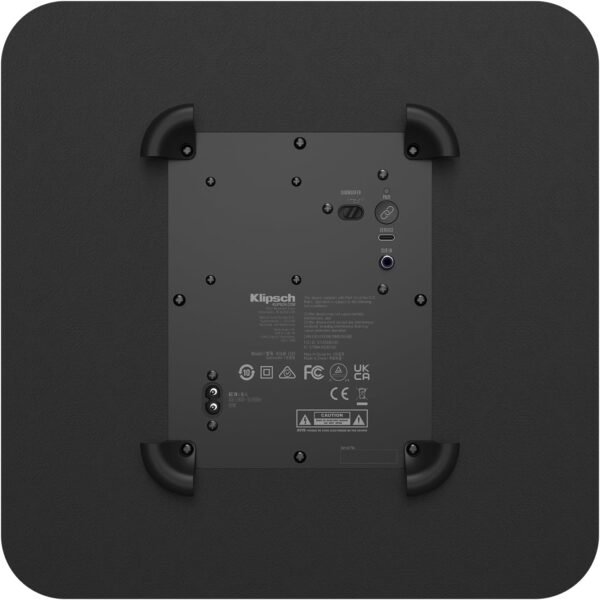
The Klipsch Flexus SUB 100 is a 10 inch wireless subwoofer designed to pair with Klipsch Flexus sound bars. The most important sentence in the entire listing is the one Klipsch puts first: it works exclusively with the Flexus CORE 100 and CORE 200 sound bars. This is not a general purpose subwoofer, it has no line level input for a receiver, and it cannot be added to a system from any other manufacturer. Buying one without a Flexus bar means buying a cabinet that will not produce sound.
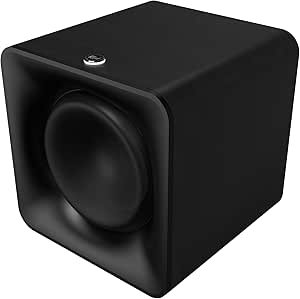
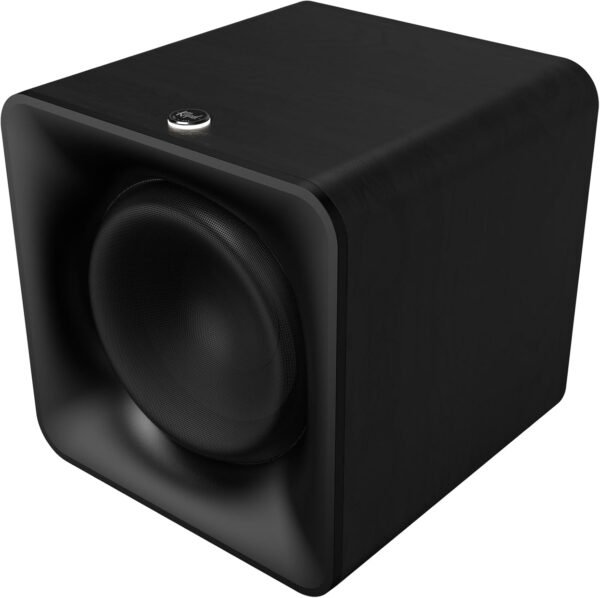
Within that constraint it is a straightforward product. Klipsch describes a high excursion paper cone woofer in a deliberately compact cabinet, listed at 13.75 inches deep by 13.19 wide by 13.38 high and weighing 28 pounds. Owners of the bar it is designed for will find the pairing covered in the Klipsch Flexus Core 200 bundle and the entry level Flexus Core 100.
The Driver and Cabinet
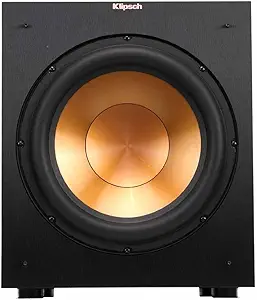
High excursion means the cone is engineered to travel further than a conventional driver of the same diameter. That is the standard engineering route to getting meaningful low frequency output from a small box, since the amount of air a driver moves is a function of cone area multiplied by travel, and if the area is fixed by the cabinet size then the travel has to increase. Paper remains a common cone material at this diameter because it is light and internally well damped, and Klipsch has used paper and paper composite cones across its range for decades.
Klipsch makes a specific claim worth noting: that the subwoofer delivers depth without sacrificing the low latency and musicality typically displayed by larger subwoofers. Latency is an unusual thing for a subwoofer manufacturer to raise, and it is relevant here because the connection is wireless. A wireless link introduces delay, and bass arriving late relative to the sound bar is audible as a loose, disconnected low end. Klipsch is effectively addressing that concern in advance. The cabinet is MDF with a vinyl covering, finished in what the listing calls ebony.
Klipsch Transport and Setup
The wireless link is Klipsch Transport, the company’s own technology used across the Flexus range. Klipsch describes it as making the whole ecosystem function quickly and efficiently, with simple setup and low latency. A proprietary link has one clear advantage over a generic standard: the manufacturer controls both ends, so pairing can be automatic and the latency can be compensated for precisely because the system knows what it is talking to.
The disadvantage is equally clear, and it is the exclusivity noted above. Klipsch also states that Flexus products undergo over 1,000 rigorous tests, and describes the packaging as designed for recyclability with waste minimized. At the time this data was captured the listing showed 70 ratings at an average of 4.4 stars, which is a small sample reflecting a product first listed in April 2024. Buyers who want a subwoofer that can move between systems should look at the general purpose designs in the subwoofers category instead.
Highlights
- 10 inch high excursion paper cone woofer in a compact cabinet.
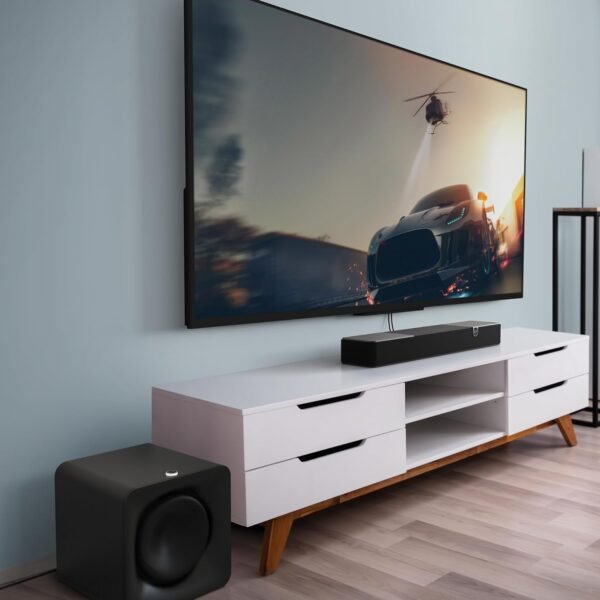
- Wireless connection to the sound bar, so only a mains socket is needed at its position.
- Klipsch Transport proprietary link, chosen for low latency and automatic pairing.
- Cabinet is roughly 13 inches on each side, small enough to sit beside furniture.
- MDF and vinyl construction in an ebony finish, listed at 28 pounds.
- Over 1,000 factory tests per unit stated by Klipsch.
- Packaging designed for recyclability.
- Setup is automatic, with no cable run and no manual pairing between bar and subwoofer.
Things To Consider
The exclusive compatibility is the defining limitation and it should be treated as absolute. This subwoofer works with the Flexus CORE 100 and CORE 200 and nothing else. It cannot be connected to an AV receiver, it cannot be used with a sound bar from another brand, and it cannot be repurposed later if the bar is replaced with something outside the Flexus family. That makes it a component of a closed system rather than an independent purchase, and it also means the resale market for it is limited to other Flexus owners.
Several specification fields are wrong. The connectivity protocol is listed as Bluetooth, when the wireless technology field elsewhere on the same page correctly says Klipsch Transport; those are different systems and Bluetooth is not used here. The control method is given as App with no app named anywhere in the listing. The surround sound channel configuration is given as 5.1 for a single subwoofer. The woofer diameter and audio driver size both appear as 1E plus 1 inches, scientific notation for 10 inches.
Klipsch also does not publish the amplifier power, the frequency response or the low frequency limit anywhere on this page, which means there is no way to judge how deep it goes or how it compares with a conventional subwoofer of the same driver size. Since the product cannot be used outside its ecosystem, that matters less than it would elsewhere, but it still leaves the buyer choosing on brand alone. Anyone comparing what a general purpose 10 or 12 inch subwoofer offers should look at the Klipsch R-12SW from the same manufacturer.
Who It Suits
The Flexus SUB 100 suits exactly one buyer: someone who already owns, or is buying, a Klipsch Flexus CORE 100 or CORE 200 sound bar and wants to add proper low frequency output without running cable. For that person it is the intended and only option, setup is automatic, and the compact cabinet fits where a full size subwoofer would not.
It is the wrong purchase for anyone else. Owners of any other sound bar, anyone with an AV receiver, and anyone who wants a subwoofer that will survive a future system change should buy a conventional powered subwoofer with a line level input, such as the Dayton Audio SUB-1200, or compare complete systems in the sound bars category.