
Description
What the Galaxy Buds 3 Are
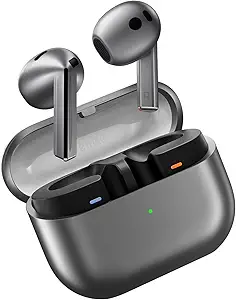
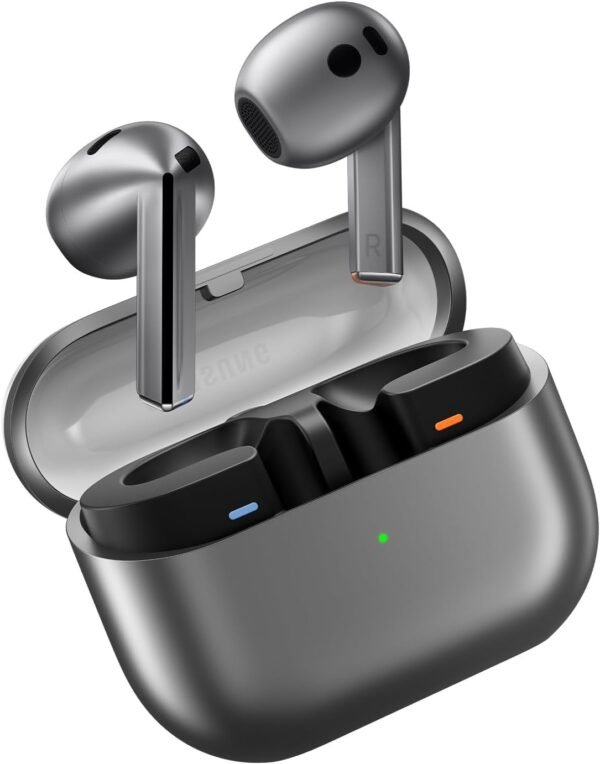
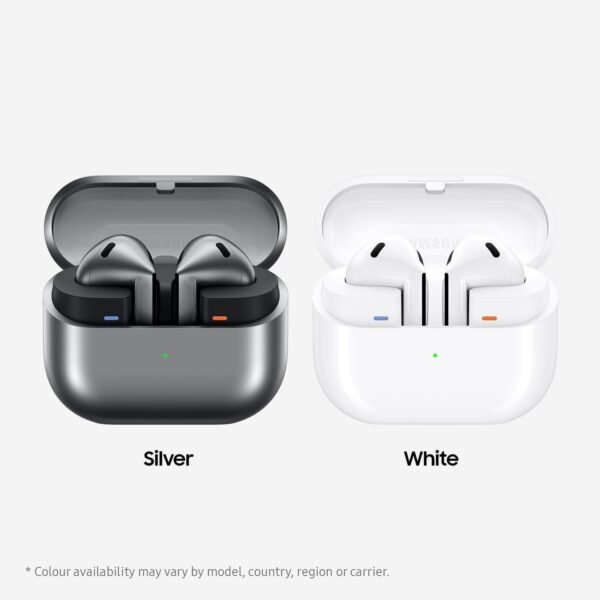
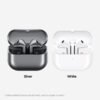
The Samsung Galaxy Buds 3 are true wireless earbuds with active noise cancellation, launched in July 2024 and sold here with a silver charging case. They sit in the mainstream of the Samsung earbud range, above the Fan Edition models and below the Pro variant, and they are aimed at owners of Samsung phones who want a matched pair without paying flagship prices.
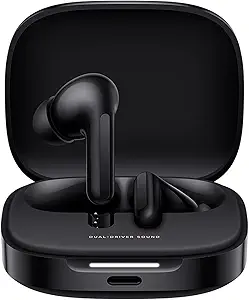
The listing describes dynamic drivers, Bluetooth 5.4, touch control, a stated 8 hours of battery per charge and a frequency range of 20 Hz to 20,000 Hz. Bluetooth 5.4 is a current version and brings improvements in connection reliability and power efficiency. Buyers comparing options within the same family should look at the Samsung Galaxy Buds FE, and those looking outside it can compare the Nothing Ear (a) and the Redmi Buds 5 Pro.
Noise Cancellation and Fit
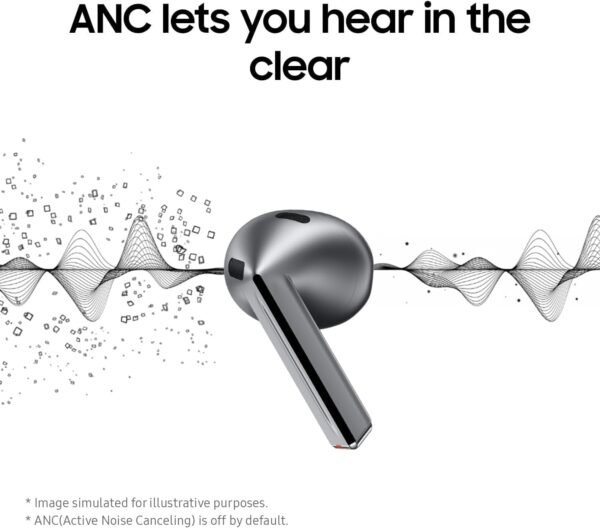
Active noise cancellation is listed under noise control, which places these above the many wireless earbuds that offer passive isolation only. What the listing does not provide is a cancellation depth figure in decibels or a statement of the frequency range over which cancellation is effective, so there is no way to compare it on paper against competitors that do publish those numbers. In general, earbud cancellation handles constant low frequency noise such as engines and air conditioning far better than it handles speech.
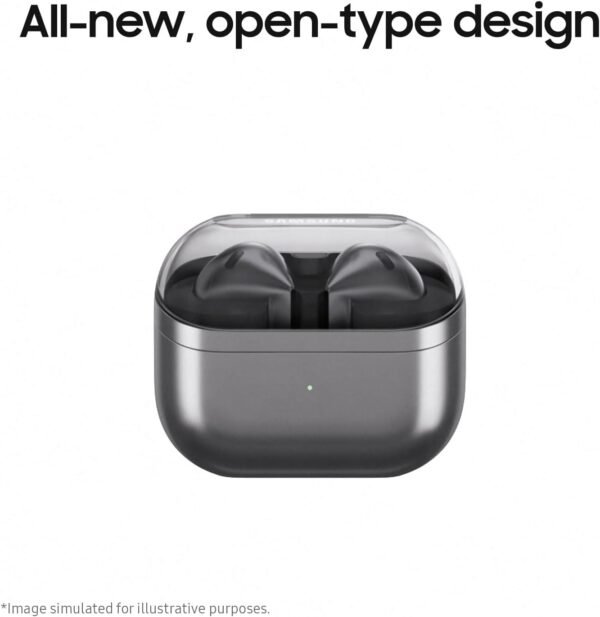
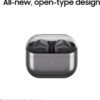
Fit is where this listing becomes ambiguous, and it matters. The earpiece shape is given as rounded tip, which describes a sealing in ear design. The Galaxy Buds 3 line, however, includes an open type variant that does not seal in the ear canal, and cancellation behaves very differently between the two: a sealing tip provides substantial passive isolation before any processing is applied, while an open fit provides almost none and asks the cancellation circuit to do all the work. The listing does not resolve which fit is supplied, and a buyer who needs quiet on a commute should confirm it with Samsung before ordering.
Battery, Controls and Compatibility
Battery life is listed as 8 hours, which should be read as the figure for a single charge of the earbuds themselves rather than a total including the case. Eight hours per charge is a strong number for earbuds with cancellation running, and it is long enough for a full working day of intermittent use or a long flight. The listing does not give the case capacity or the total combined figure, which is unusual, and it does not state whether the case supports wireless charging.
Control is by touch, and the compatible devices field lists Bluetooth enabled devices generally rather than Samsung hardware only, so these will pair with an iPhone or a non Samsung Android phone. As with all manufacturer earbuds, though, the companion app features and any automatic switching between devices are likely to be tied to the manufacturer ecosystem, and the listing does not detail which features carry over to other phones. Listeners who want something with fewer ecosystem dependencies should browse the earbud headphones category.
Highlights
- Active noise cancellation rather than passive isolation alone.
- Bluetooth 5.4, one of the most current versions available.
- Stated 8 hours of playback per charge with a charging case supplied.
- Touch controls for playback, volume and calls.
- Dynamic drivers with a stated 20 Hz to 20,000 Hz frequency range.
- Silver charging case, listed at 1.97 by 1.97 by 1.18 inches.
- Pairs with Bluetooth devices generally, not Samsung hardware only.
- Launched in July 2024, so a current design rather than a run out model.
- Silver charging case supplied, listed at just under two inches on its longest side.
- Listed for adult and teen use, with no jack and nothing to plug in.
Things To Consider
This listing carries no manufacturer description and no feature bullets at all, only an attribute table. For a product where the differences between variants are significant, that is a serious gap: there is no account of the codec support, the case battery capacity, the cancellation depth, the microphone arrangement or the app features. Several fields in the table are also plainly wrong. It states that one D battery is required, on a product powered by internal lithium cells. It gives the Bluetooth range as 1E plus 1 meters, scientific notation for 10 meters. The item weight of 4.9 ounces describes the package rather than the earbuds.
Water resistance is listed only as water resistant, with no IP rating. That is the specification that determines whether earbuds survive sweat during exercise or a walk in rain, and without a number it cannot be relied on. Anyone buying for the gym should treat the protection level as unknown. A rating of IPX4 or better is the usual threshold for sweat resistance, and the difference between that and no protection at all is the difference between earbuds that survive a year of training and earbuds that do not.
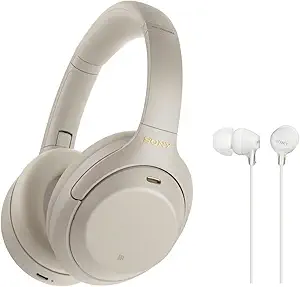
The fit ambiguity discussed above is the most consequential unknown. Sealing and open fit earbuds suit completely different situations: a sealing tip isolates and is better for travel, while an open fit stays comfortable for longer and keeps the wearer aware of traffic. Buying without knowing which arrives is a genuine risk. Anyone who needs certain isolation for a commute would do better with an over ear design from the over ear headphones category, such as the Sony WH-1000XM4.
Who It Suits
The Galaxy Buds 3 suit a Samsung phone owner who wants current Bluetooth, active cancellation and a full day of battery in a matched pair that integrates with their existing devices. The 8 hour figure per charge is genuinely useful, and Bluetooth 5.4 should mean fewer dropouts than older designs in crowded environments.
They are a weaker choice for anyone who needs a confirmed water rating for exercise, anyone who needs to know the fit type before buying, and anyone outside the Samsung ecosystem who would lose the integration features. Buyers in that position should compare models whose listings publish an IP rating and codec support explicitly.