
Description
What the KSC35 Wireless Is
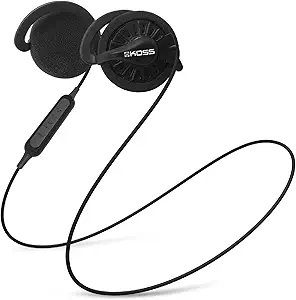
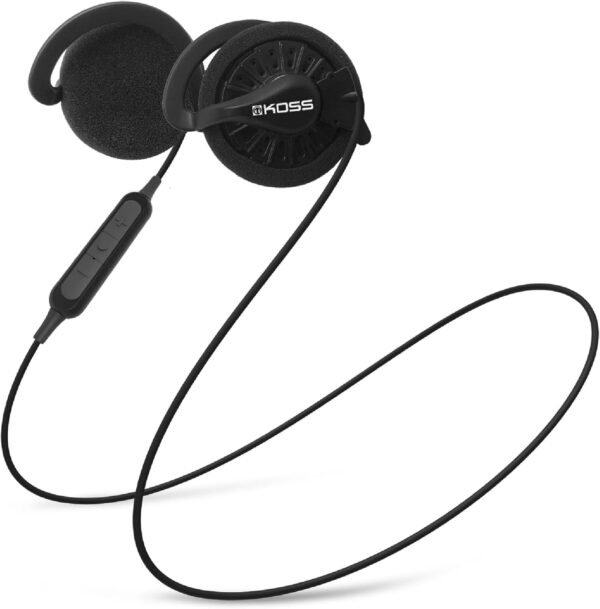
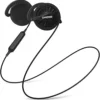
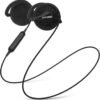
The Koss KSC35 Wireless is a Bluetooth version of a design Koss has produced in wired form for many years: a pair of small foam covered drivers held in place by clips that hook over the outside of the ear. It is not an in ear earphone and it is not a headband headphone. The clip approach sits in a category of its own, and it is the reason this product has a following among runners and cyclists.
Koss lists a frequency range of 15 Hz to 25,000 Hz, an in line microphone with remote, USB-C charging and a carrying case with cable management clips. The material is listed as foam and the earpiece shape as on ear. Anyone considering the same brand in wired form should look at the Koss Porta Pro and the Koss KPH7, both long running designs built around the same philosophy of low weight over isolation.
The Ear Clip Approach
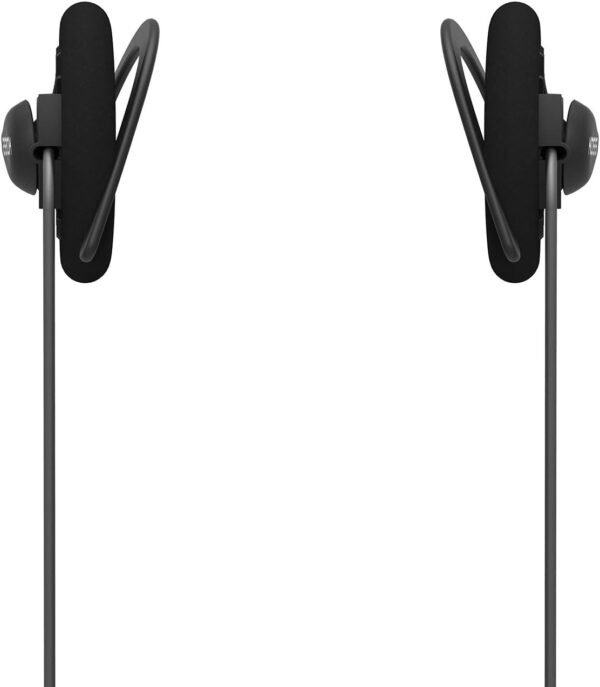
An ear clip holds the driver in position by gripping the outside of the ear rather than by wedging a tip into the canal or clamping a band across the head. Three things follow from that. The fit does not depend on finding the right ear tip size, which removes the most common reason earphones fall out. Nothing is inserted into the ear canal, which many people find far more comfortable over long periods and which avoids the occlusion effect that makes footsteps thump inside the head while running. And crucially, the ear canal stays open, so ambient sound is fully audible.
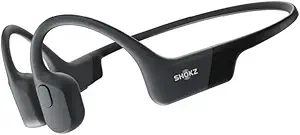
That last point is a safety consideration rather than an audio one. A runner or cyclist on a road needs to hear traffic, and an open design does that in a way that even a transparency mode on sealed earbuds cannot match, because nothing is blocking the ear in the first place. The trade off is equally direct: there is no isolation at all, so these are a poor choice on a train, a plane or in an open plan office. Listeners wanting the same open principle through bone conduction should compare the Aftershokz OpenRun.
Sound, Controls and Charging
The stated 15 Hz to 25,000 Hz frequency range is wider than the 20 Hz to 20 kHz figure most listings quote, though as always a range published without a decibel tolerance says nothing about how evenly those frequencies are reproduced. Koss has a long history with this driver, and the wired KSC series has been a standing recommendation for inexpensive open sound for decades.
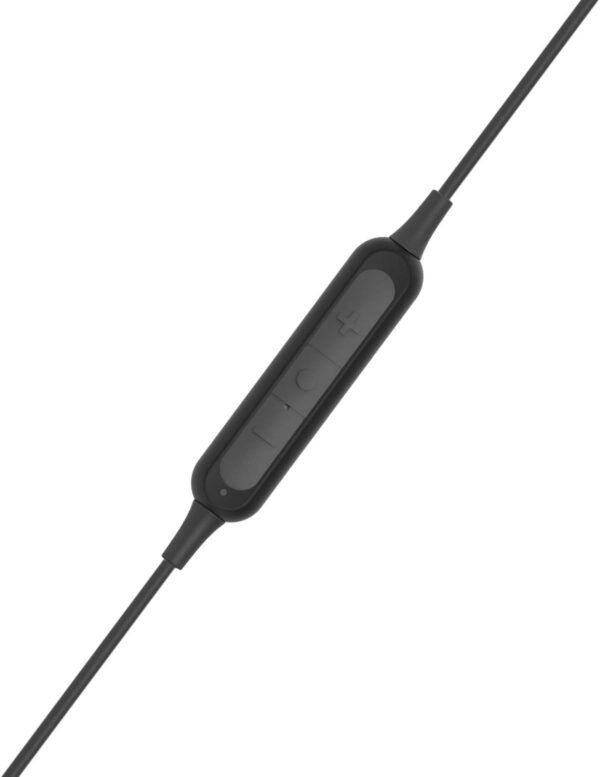
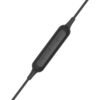
An in line microphone with remote handles calls, volume, track control and voice assistant activation, which keeps a phone in a pocket during exercise. Charging is over USB-C, which is the current standard and means one cable covers the earphones and most other devices. Koss supplies a protective carrying case and cable management clips, the latter being genuinely useful on a design where a cable runs between the two earpieces. The listing gives the charging time as 6 hours and the weight as 3.8 ounces.
Highlights
- Ear clip fit that does not rely on ear tip size or canal insertion.
- Fully open design, so traffic and surroundings remain audible.
- Stated 15 Hz to 25,000 Hz frequency range.
- USB-C charging rather than micro USB.
- In line microphone and remote for calls, volume and voice assistant.
- Carrying case and cable management clips included.
- Foam pads, the same approach used across the long running Koss KSC line.
- Light at a listed 3.8 ounces, with nothing resting on the top of the head.
Things To Consider
This listing contradicts itself on two of its most important specifications. The product title states 6 plus hour battery life, while the third feature bullet states up to 18 plus hour battery life, and the specification block gives battery life as 6 hours. Six and eighteen hours are completely different propositions for a product sold on portability, and a buyer cannot resolve which is correct from this page. Separately, the first bullet states Bluetooth 5.2 while the specification block gives the Bluetooth version as 4.2, which are five years apart in standard and differ substantially in power efficiency and connection stability.
The second serious issue is water resistance. Koss markets this product explicitly for running, working out, cycling and exercising, and describes the clip as suited to active listeners. The specification block lists the water resistance level as Not Water Resistant and provides no IP rating. Sweat is the environment this product is being sold into, and a design with no stated moisture protection in that environment is a genuine mismatch between the marketing and the specification. Anyone buying for training should raise this with the seller before purchase.
On capability, the open design that makes these safe on a road makes them ineffective anywhere noisy, and sound leaks outward as well, so they are unsuitable for a quiet office or a library. There is no active noise cancellation. The site files these under earbud headphones, while the listing itself describes an on ear earpiece shape and ranks the product in both the on ear and the earbud subcategories, so category browsing may not find them where expected. At the time this data was captured the listing showed 519 ratings at an average of 3.8 stars, which is lower than most products in the on ear headphones category and worth investigating.
Who It Suits
The KSC35 Wireless suits a runner or cyclist who wants to hear their surroundings, who finds in ear tips uncomfortable, and who values a fit that does not depend on getting the tip size right. For outdoor exercise on roads and paths, an open ear clip is arguably the safest wireless format available.
It is the wrong purchase for commuting, office use, flights, or anywhere isolation is needed, and buyers should resolve the battery life, Bluetooth version and water resistance contradictions before ordering. Those wanting a sealed sports design with a documented rating should compare the JLab Epic Air Sport ANC 3 or browse the earbud headphones selection.