



Description
What the ULTIMEA Poseidon D50 Is and Who It Suits
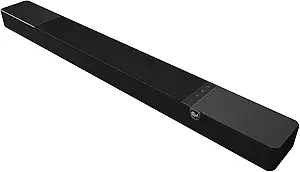
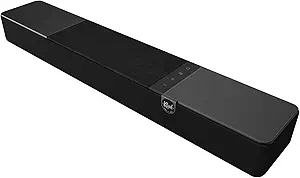
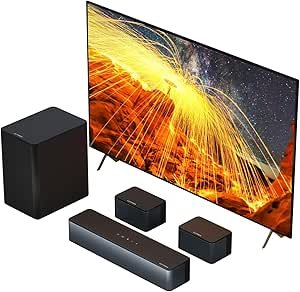
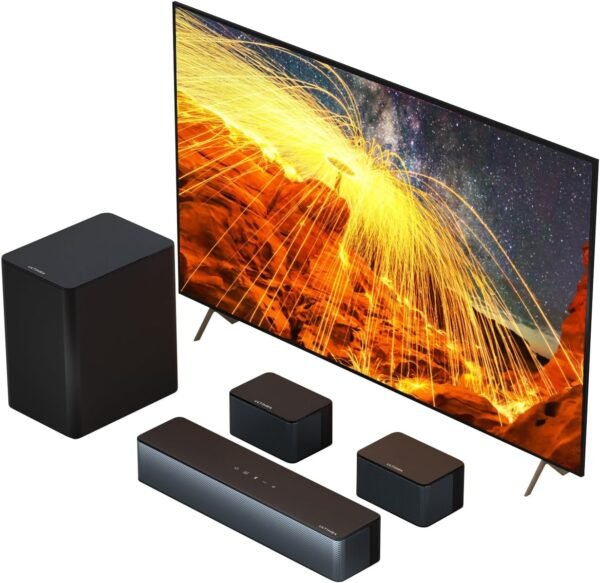
The Poseidon D50 is a complete 5.1 channel home theater package built around a soundbar, a wireless subwoofer and two separate surround speakers. The listing gives the subwoofer driver as 5.25 inches, the tweeter diameter as 2.25 inches, the construction materials as metal and ABS plastic, and the total weight as 11.68 pounds. Model number U2500, wall mountable, with a listed audio encoding of PCM 5.1. It ranks high in Amazon’s electronics category, indicating substantial sales volume.
The buyer this suits is someone who wants real surround sound from one purchase at a modest price, and who has somewhere to put rear speakers. The package approach removes every matching decision. Anyone who wants a single bar with nothing else in the room should look at the Hisense A620, and anyone specifically wanting Dolby Atmos should compare the ULTIMEA Poseidon D60 from the same range.
The 5.1 Package and What Comes in the Box
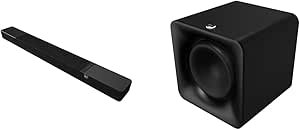
The included components list on this listing is unusually complete, and it is the strongest argument for the product. It covers the soundbar, one subwoofer, two surround speakers, a power adaptor, a subwoofer power cable, a 3.5 mm to RCA cable, a 20 foot RCA to RCA cable, an HDMI cable, a digital optical cable, a wall mounting kit with bracket and screws, a remote control and a user manual.
That matters because the hidden cost of a surround system is usually cables and mounts. A 20 foot RCA cable in particular is what allows the surround speakers to reach the back of a room, and it is the kind of thing buyers discover they need after the box is open. Supplying HDMI, optical and analog cables means the system connects to almost any television without a further purchase.
The subwoofer is wireless, so it needs only a power outlet rather than a cable run to the bar. The surround speakers appear to be wired, given the subwoofer power cable and the long RCA cable in the box, so cable routing to the rear of the room is still required.
The Audio Encoding Question
The audio encoding field lists PCM 5.1 and nothing else. That is worth flagging carefully. PCM 5.1 means the system accepts uncompressed multichannel audio, which a television can send over HDMI. It does not confirm Dolby Digital or DTS decoding, and neither format appears anywhere in the product data.
This is a real question for a home theater purchase, because most streaming and disc content is delivered in Dolby Digital or DTS rather than as raw PCM. A system without those decoders relies on the television to decode first and pass PCM onward, which most televisions do but not all, and which can limit what a connected disc player or console sends. Buyers should confirm format support with ULTIMEA before purchase rather than assuming it.
Drivers, Connectivity and Physical Data
The driver information is thin. A 5.25 inch subwoofer driver and a 2.25 inch tweeter are listed, with the speaker size given as 2.25 inches. Nothing describes the bar’s midrange drivers, the center channel arrangement or the surround speaker drivers. For a 5.1 system that is a significant gap, since the center channel handles dialogue and is the main reason people buy soundbars.
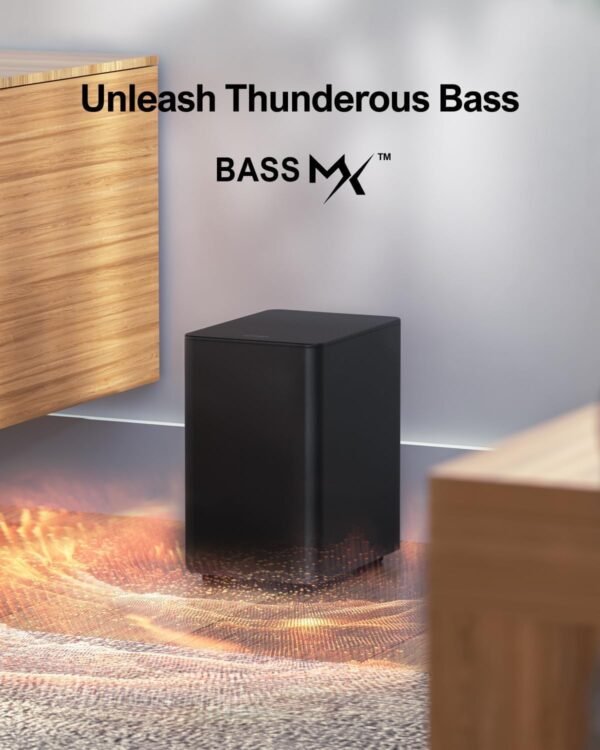
A bass boost function is listed as a special feature. Control is by remote, with the control method field also listing an app, though no app name is given anywhere in the listing. Bluetooth handles streaming from phones, tablets and laptops, and the compatible devices list names projectors, gaming consoles, desktops, televisions and home theater equipment.
The product dimensions are listed as 15.75 inches deep by 3.54 inches wide by 2.76 inches high, which cannot describe a soundbar. Those figures appear to have the depth and width transposed, and even then they describe one component rather than the package. The total weight of 11.68 pounds covers the whole system, which is light for a 5.1 package and suggests compact plastic enclosures rather than substantial cabinets.
The listing has no manufacturer description and no feature bullets at all, so everything above comes from the attribute table. There is also no customer rating figure in the product record, no HDMI port count, no eARC confirmation, no total power rating and no subwoofer dimensions.
Highlights
- Complete 5.1 package with a subwoofer and two separate surround speakers.
- Wireless subwoofer needing only a power outlet rather than a cable to the bar.
- Unusually complete cable set including HDMI, optical, 3.5 mm and a 20 foot RCA run.
- Wall mount kit with bracket and screws included.
- Bass boost function and both remote and app control listed.
- Bluetooth streaming alongside the wired television connection.
Things To Consider
Dolby and DTS decoding are not documented. Only PCM 5.1 appears in the listing, which is the single most important thing to verify before buying this for movie watching.
The surround speakers appear to be wired, so cable routing to the back of the room is still necessary despite the wireless subwoofer.
The listing has no description, no bullets and no customer rating data, and its dimension figures are transposed. The driver complement for the bar and the surrounds is undocumented.
Eleven and a half pounds for a complete 5.1 system is light, which points to compact plastic enclosures and limits what the surround speakers can produce. No total power rating is given. Buyers should compare across the sound bars category, including the TCL Q6510 and the Hisense HS5100, both of which are also complete 5.1 packages.
Who Should Buy It and Who Should Not
The Poseidon D50 fits someone who wants surround sound in one affordable purchase, has space for rear speakers, and values a box that contains every cable and mount needed to install it. The completeness of the accessory set is genuinely useful and is the reason systems like this sell in volume.
It is the wrong system for a buyer who needs confirmed Dolby or DTS decoding, for a room where rear speakers cannot be cabled, or for anyone expecting substantial enclosures. A single bar such as the LG S40TR is worth comparing if the rear speaker question is the obstacle.