Description
What the Yamaha FC7 Is and Who It Suits
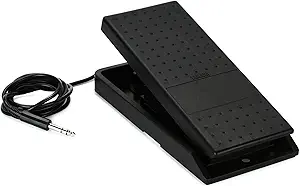
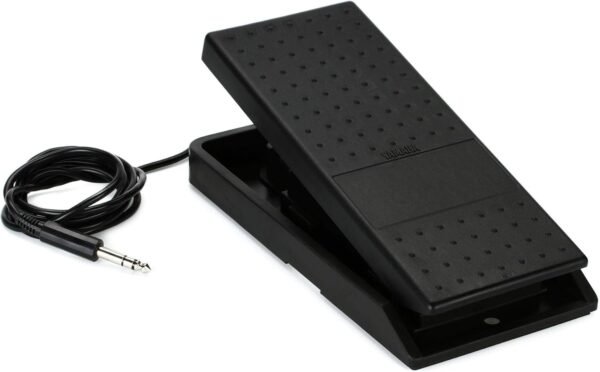
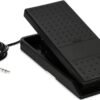
The Yamaha FC7 is a foot pedal used to control volume and expression on a keyboard, synthesizer or sound module. It is not a speaker, a headphone or anything that makes sound on its own. It is a controller: the player’s foot moves the treadle, the pedal sends a continuously varying control signal to the instrument, and the instrument responds by changing volume, filter position, modulation depth or whatever parameter has been assigned to it. The listing gives dimensions of 10.75 x 5.25 x 2.75 inches, a weight of 1.5 pounds, and a first availability date of December 2004.
The buyer is a keyboard player, an organist or a synthesist who needs hands free control while both hands are occupied. That is the whole use case, and it is a real one: expression is what separates a static held chord from a phrase that swells and fades. Anyone shopping for something to listen to rather than something to play with should note that this is a musical instrument accessory. Players who need something to plug it into will find options in the home digital pianos and synthesizer and workstation keyboards categories.
How an Expression Pedal Is Different from a Volume Pedal
The distinction matters and it trips people up regularly. A volume pedal in a guitar rig sits in the audio path and attenuates the signal passing through it, like a fader operated by foot. An expression pedal, which is what the FC7 primarily is when used with modern keyboards, sits outside the audio path and sends a control voltage or a control change message telling the instrument what to do. Nothing audio passes through it.
That difference has practical consequences. An expression pedal cannot be inserted between a keyboard and an amplifier as a volume control, because it has no audio to attenuate. It must plug into a jack on the instrument that is designed to receive it, and the instrument must be told which parameter to assign. It also means the pedal’s electrical characteristics have to match what the host instrument expects, which is where compatibility problems arise. Yamaha’s own keyboards are the safest match; other manufacturers use different wiring conventions and may need an adapter or a different pedal entirely. Players pairing this with a Yamaha instrument can see the range in the Yamaha PSR-E273.
Build, Feel and Adjustment
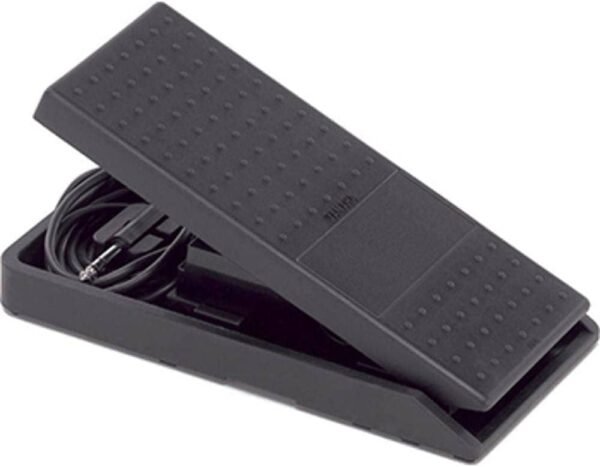
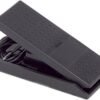
The physical qualities are what buyers of this pedal actually talk about. At 1.5 pounds and nearly 11 inches long, the FC7 is a substantial treadle rather than a small plastic switch, and weight matters on a pedal because a light one slides away under the foot mid performance. The long footboard gives fine control over the sweep, which is the difference between a smooth swell and a jump.
Yamaha’s design for this pedal includes adjustment for the treadle angle and the spring tension, which lets a player set how much force is needed and where the pedal rests. That is worth having, because the correct tension depends on whether the player is seated or standing and on how they hold their foot. The FC7 also has a maximum position beyond the normal sweep, which Yamaha uses for an accent at full travel. Keyboard players building a stage rig around this should look at the Roland RD-88 and the Alesis Recital for instruments that accept a pedal of this kind.
Where It Fits in a Rig
On a stage keyboard, the expression pedal is normally the second most used physical control after the modulation wheel, and it is the one that allows a player to shape a sustained sound while playing with both hands. On an organ patch it becomes a swell pedal. On a synthesizer it can sweep a filter. On an orchestral patch it can cross fade between dynamic layers of a sampled instrument, which is how expressive string and brass sounds are actually played.
Because the pedal is passive and simple, the failure modes are mechanical rather than electronic: a worn potentiometer that becomes scratchy, a cable that fails at the strain relief, a spring that loses tension. Those are the things to check on a used unit. The listing shows the product as not discontinued, with a sales rank of number 2,317 in Musical Instruments, indicating a long lived accessory that continues to sell. Players who want the full picture of what a modern stage keyboard offers should read the Roland FP-60X.
Highlights
- Long treadle with a substantial 1.5 pound body that stays where it is placed.
- Adjustable pedal angle and spring tension for different playing positions.
- Designed for volume and expression control on keyboards and sound modules.
- Listed at 10.75 x 5.25 x 2.75 inches, a full size pedal rather than a compact one.
- Listed as not discontinued, in production since December 2004.
- Ranked number 1 in its listed category on the source data.
Things To Consider
The first thing to flag is the category. This product sits under Accordion Accessories in the site catalog, which mirrors the source listing where it holds the number one position in that category. It is not an accordion accessory in any meaningful sense; it is a keyboard expression pedal. The categorization comes from the upstream data and is left here unchanged, but readers should not take it as guidance about what the pedal is for.
The specification block is close to useless and contains obvious errors. Color Name is listed as 1 Year, which is a warranty duration in a color field. Batteries is listed as 1 Unknown batteries required, on a passive pedal that takes no batteries. Voltage is listed as 9 Volts, again on a pedal with no power connection. Signal Format is given as Analog, which is at least directionally right for a potentiometer based control, but the listing publishes no resistance value, no taper, no polarity and no connector type, and those are precisely the four facts needed to confirm compatibility with a specific instrument.
The practical limitation is compatibility. Expression pedal wiring is not standardized across manufacturers, and a pedal that works on one brand’s keyboard may read backward or not at all on another. Buyers should confirm against their instrument’s manual before purchase rather than assume.
Who Should Buy It, and Who Should Not
The FC7 suits a keyboard player, particularly a Yamaha owner, who wants a solid full size expression pedal with adjustable feel for stage or studio use. Its weight and adjustability are the reasons it has stayed in production for two decades.
It does not suit anyone shopping for listening equipment, and it does not suit a guitarist looking for a volume pedal to place in an audio signal chain, since that is a different device. Players in that position should look at a guitar volume pedal instead, and owners of non Yamaha keyboards should confirm compatibility before ordering.