Description
What the Tone Hammer Bass Preamp Direct Box Is
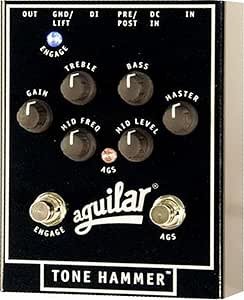
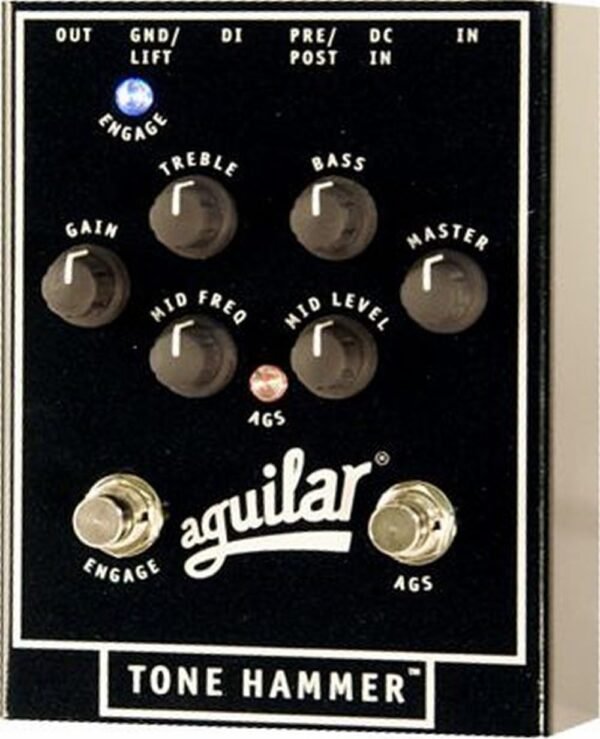
The Tone Hammer bass preamp direct box is a pedal that does two jobs at once. It is a preamp, meaning it shapes the tone of a bass guitar before that signal reaches an amplifier or a mixing console, and it is a direct box, meaning it converts the instrument’s unbalanced high impedance output into a balanced low impedance signal that can travel down a long cable to a front of house desk without picking up noise. The source listing places it under Musical Instruments, Amplifiers and Effects, Guitar and Bass Amplifiers and Preamps, Bass Guitar Amplifiers and Preamps, and finally Preamps.
The buyer is a working bass player. On most stages the bass reaches the audience through the PA rather than through the stage amplifier, and something has to make that connection properly. A pedal that combines the DI with tone control means the player controls the sound the audience hears rather than leaving it to whoever is at the desk. Players building the rest of a bass rig should look at the Orange Crush Bass 25, and those going the amp modeling route can compare the Boss IR-2.
Why a Direct Box Matters More for Bass Than for Guitar
Bass has a specific problem that a direct box solves. A passive bass pickup is a high impedance source, and high impedance signals lose high frequencies over long cable runs because cable capacitance forms a filter with the pickup. Guitarists notice this too, but bass players notice it alongside a second issue: low frequencies carry a lot of energy and a poorly matched input stage will lose definition in exactly the range the instrument occupies.
A direct box fixes both by converting to a balanced low impedance output. Balanced cabling then rejects interference picked up along the run, because noise arriving equally on both conductors cancels at the receiving end. That is why every professional stage runs balanced lines and why a DI is not optional equipment for a bass player, it is the connection itself. A ground lift switch, standard on direct boxes of this type, breaks a ground path that would otherwise create a hum loop between the stage rig and the house system.
The Preamp Stage and Tone Shaping
The second half of the product is the preamp. A bass preamp typically offers gain, a multi band equalizer and some form of drive or saturation. The gain control sets how hard the input stage is driven, which changes both level and character. An equalizer with a sweepable midrange is more useful on bass than a fixed one, because the frequency range where a bass either cuts through a mix or disappears into it varies by instrument, by room and by what else is playing.
Drive circuits on bass preamps are usually gentler than guitar overdrives, because heavy distortion on a bass destroys the low end that holds a song together. What most bass drive circuits aim for is the compression and harmonic thickening of a valve amplifier pushed slightly, which adds presence without losing the fundamental. Players who want to hear how a comparable approach works on guitar can read the Boss OD-200 hybrid drive, and those looking at a full amplifier instead will find options across the combo amps category.
Where It Sits in a Rig
There are three common ways to use a pedal like this. The simplest is as an always on preamp at the end of a pedalboard, feeding both the stage amplifier and the house desk. The second is as a backup: if a stage amplifier fails mid set, a preamp with a DI output means the show continues through the PA with no change in tone. The third is as the entire rig, running direct with no amplifier at all, which is increasingly common on stages with in-ear monitoring.
For recording, the same box replaces an audio interface’s basic instrument input with something voiced for bass, and it means the recorded sound already has the player’s tone rather than needing to be built later. Players who record at home should also consider what happens after the DI, and the Behringer B210D and the wider PA systems selection cover the monitoring and amplification side of that chain.
Highlights
- Combines a bass preamp and a balanced direct output in a single pedal.
- Balanced output allows a long cable run to a mixing console without noise pickup.
- Works as a backup rig if a stage amplifier fails during a performance.
- Suitable for recording directly into an interface with a voiced bass tone.
- Pedal format fits on a board rather than requiring rack space.
- Listed within the bass amplifier and preamp category rather than as a general effect.
Things To Consider
The retail listing for this product contains no specification block at all. There is no information on the number of equalizer bands or their frequencies, no input and output impedance figures, no maximum input level, no power requirement, no confirmation of whether phantom power can run the unit, no dimensions and no weight. Every one of those matters. Phantom power capability in particular decides whether a player needs to carry a separate power supply to a gig, and input headroom decides whether an active bass with a hot output will overload the input.
Nothing in this review invents those figures, and buyers should obtain them from the manufacturer’s documentation before purchase. The listing title also gives only the product name without a manufacturer, which makes independent verification harder than it should be.
Beyond the missing data, there are ordinary considerations. A preamp pedal adds another item to power and another connection to fail on a dark stage. Its tone shaping is a matter of taste rather than correctness, and a player who already likes the sound of their amplifier may only need a plain passive DI at a much lower cost. And a DI output only helps if the venue can accept it, which on very small stages is not always true.
Who Should Buy It, and Who Should Not
This suits a gigging bass player who wants control over the sound reaching the house desk, who needs a reliable balanced output, and who values having a backup path if an amplifier dies. It also suits a home recordist who wants a bass tone shaped before it hits the interface.
It does not suit a player who only ever practices at home through an amplifier, since the DI function goes unused, and it does not suit someone who needs the full specification confirmed before buying, because this listing does not provide it. Players in the first group should look at a straightforward practice amplifier in the combo amps category instead.