

Description
What the Shure MV6 Is
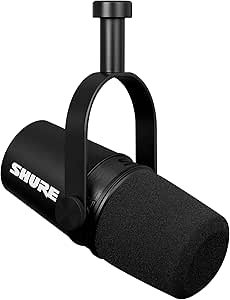
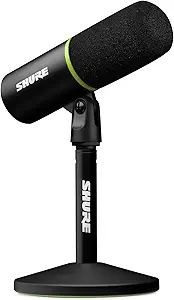
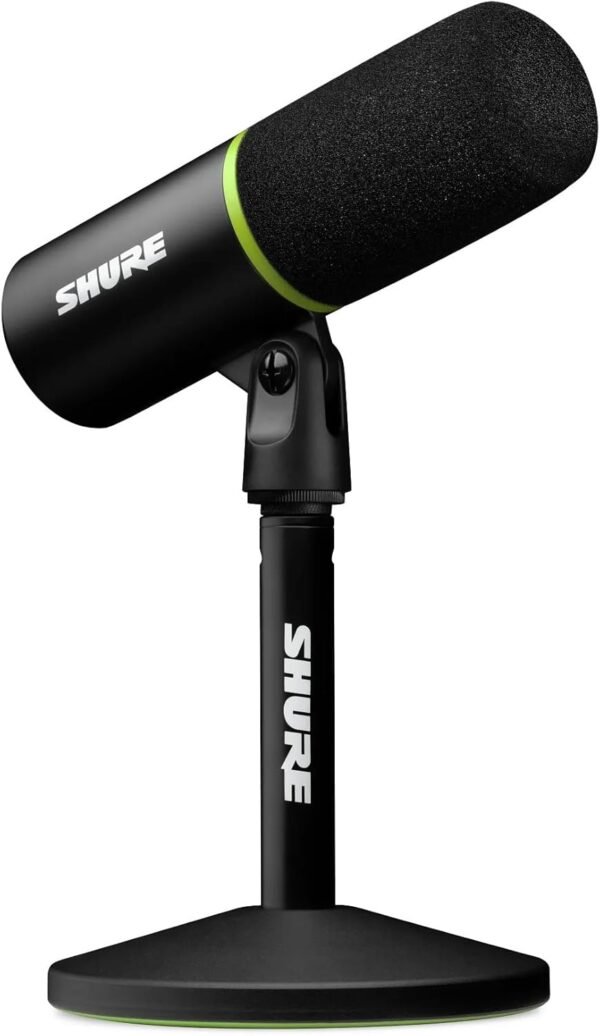
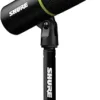
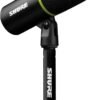
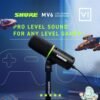
The Shure MV6 is a dynamic USB microphone aimed at gamers and streamers, and Shure is explicit about where it comes from: the company describes it as borrowing design and technology from the SM7 and MV7 ranges, its two best known broadcast style vocal microphones. The proposition is that a first time buyer gets a Shure dynamic capsule and the processing that makes it easy to use, without needing an audio interface, a preamp or any knowledge of gain staging.
The choice of a dynamic capsule rather than a condenser is the most important decision in the product. Dynamic microphones are less sensitive than condensers, which sounds like a disadvantage until you consider the environment: a gaming desk has a mechanical keyboard, a PC fan, a chair that creaks and often an untreated room behind it. A dynamic capsule with a cardioid pattern hears mostly what is directly in front of it and rejects much of the rest. That is why broadcast studios have used dynamics for decades, and it is why this is the right capsule type for the job. Buyers wanting the same lineage without USB should compare the Shure MV7X, which is XLR only.
Processing Features
Shure builds four processing features into the microphone itself rather than leaving them to software on the computer. Auto Level Mode adjusts gain in real time, so a streamer who whispers during a tense moment and then shouts is kept at a workable level without touching a control. That single feature addresses the most common failure in amateur streams, which is inconsistent volume rather than poor tone.
The Digital Popper Stopper handles plosives, the bursts of air from p and b sounds that hit a diaphragm and produce a thump, doing in processing what a physical pop filter does with fabric. The Real-Time Denoiser uses digital signal processing to reduce steady background noise such as fans and air conditioning. Voice Isolation combines the dynamic capsule and the cardioid pattern to reject off axis sound. Together these are the reason someone can plug the MV6 in and sound reasonable without learning anything, which is the entire point. Streamers comparing dynamic USB options should also look at the FIFINE AM8T and the MAONO PD200X.
Connections, Controls and Software
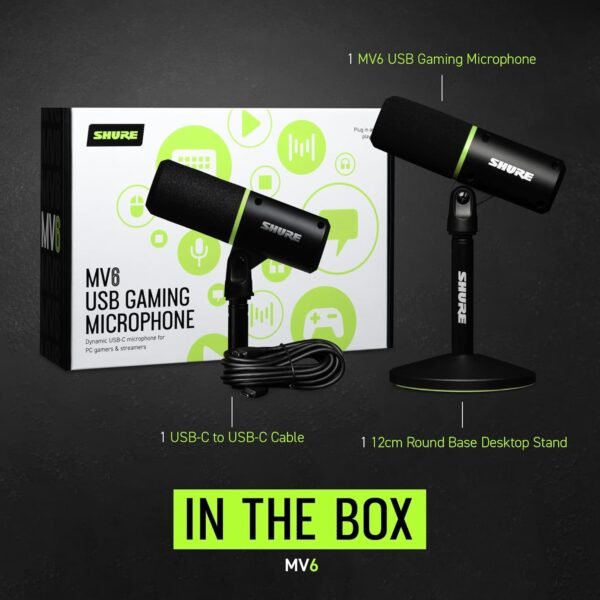
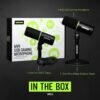
Connection is USB-C to a computer, and Shure supplies a 1 meter USB-C cable in the box along with a round base desktop stand. A 3.5 mm output on the microphone provides real time headphone monitoring, which lets a user hear their own voice without the delay that comes from routing monitoring through the computer. Latency in monitoring is genuinely disruptive when speaking, so a hardware headphone output is a meaningful inclusion rather than a checkbox.
A tap to mute button on the body gives immediate privacy control without reaching for software, which matters in a live stream or a call. Shure also provides the MOTIV Mixapp free of charge, used to balance the monitor mix between computer audio and microphone playback and to adjust the microphone settings. The hardware platform is listed as PC. At the time this listing data was captured it showed 474 ratings at an average of 4.5 stars and ranked 12th in vocal dynamic microphones.
Highlights
- Dynamic cardioid capsule, chosen to reject room noise rather than capture it.
- Design and technology drawn from the Shure SM7 and MV7 ranges.
- Auto Level Mode keeps output consistent between quiet and loud speech.
- Digital Popper Stopper removes the need for a separate pop filter.
- Real-Time Denoiser targets steady background noise such as fans.
- Tap to mute button on the microphone body.
- 3.5 mm headphone output for monitoring without software delay.
- Round base desktop stand and 1 meter USB-C cable included.
Things To Consider
The specification block on this listing does not match the product. The microphone form factor is given as shotgun, which describes a long, highly directional microphone used for film and location recording, and is not what this is; the MV6 is a cardioid desktop microphone. The item weight is listed as 3.74 pounds, which is far heavier than a microphone of this size and appears to be a packaged weight including the stand. Maximum frequency and frequency response are both given as 15 kHz, and the minimum frequency as 50 Hz, so the actual usable range is stated once as a range and once as a single value.
The Shure marketing copy also makes promotional claims about level control and audio quality that no microphone can literally guarantee, and those should be read as advertising rather than specification. The processing features are useful, but automatic gain control has trade offs: it can raise the noise floor during pauses, and it removes the deliberate dynamics that an experienced speaker might want to keep. Anyone recording music rather than speech should switch it off.
On practical limits, the supplied stand is a desktop base, which sits on the same surface as a keyboard and will transmit typing vibration up into the microphone unless a boom arm is used instead. The USB cable is 1 meter, which is short for many desk layouts. And a USB microphone is a closed path: it cannot be routed through an external preamp or used with a mixer, so a user who later wants a more capable chain has to replace the microphone rather than upgrade around it. Buyers who anticipate that should compare the XLR options in the vocal microphones category, or a stand mounted condenser from the multipurpose range for a treated room.
Who It Suits
The MV6 fits a streamer, gamer or podcaster who wants a recognized microphone brand, a simple USB connection and processing that compensates for an untreated room and inconsistent mic technique. The dynamic capsule is the right choice for a desk with a mechanical keyboard, and the headphone output plus tap to mute cover the two controls a live broadcaster actually reaches for.
It is a weaker choice for music recording, where a condenser and an interface will capture more detail, and for anyone who wants a microphone that can grow into a professional signal chain. Those buyers should look at XLR alternatives, and portable recordists should compare the Shure MV88+ from the same MOTIV family.