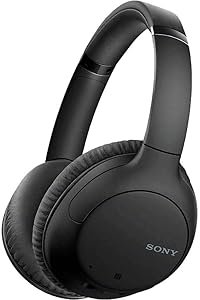
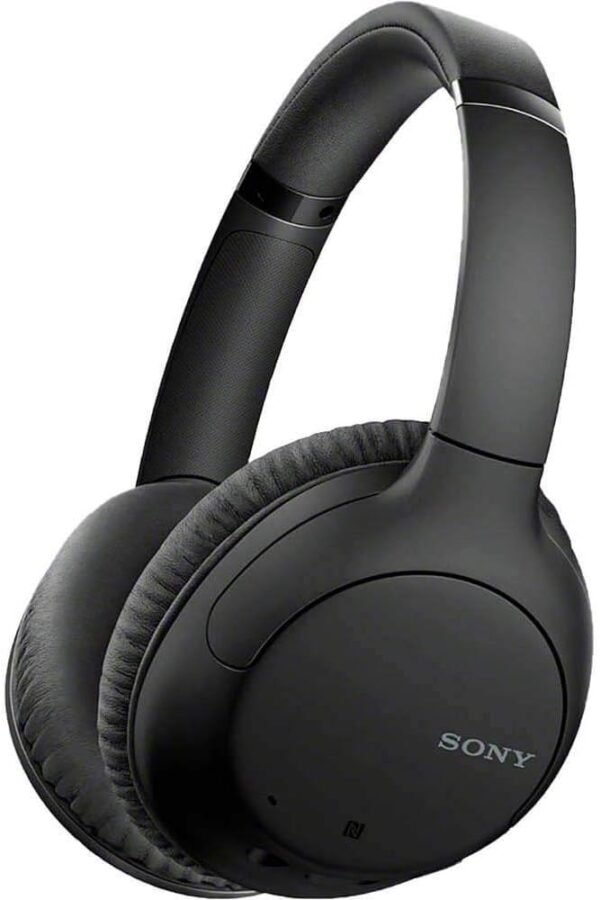
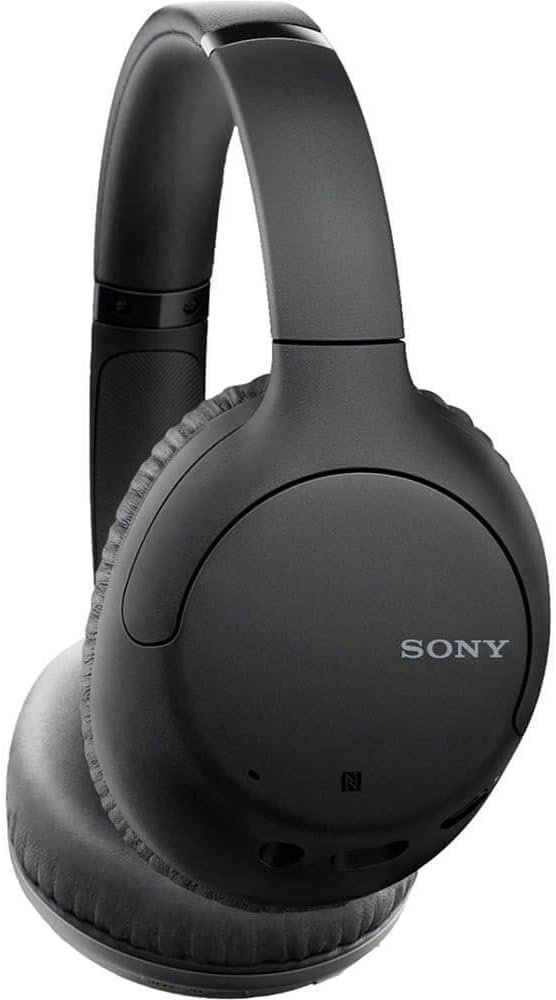
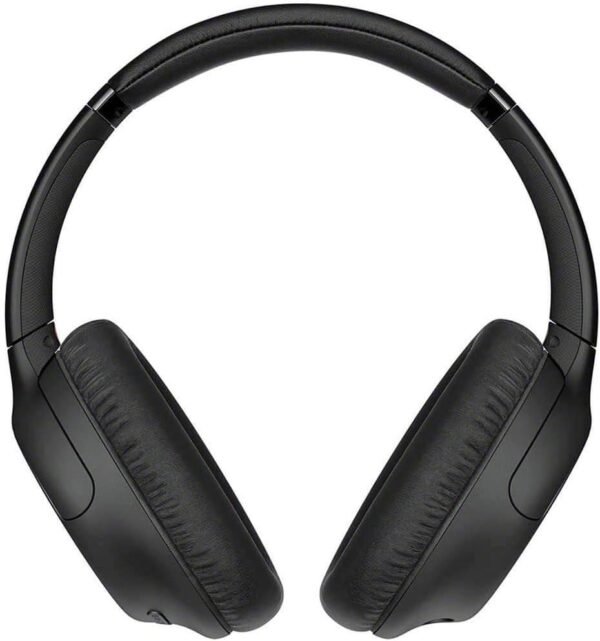
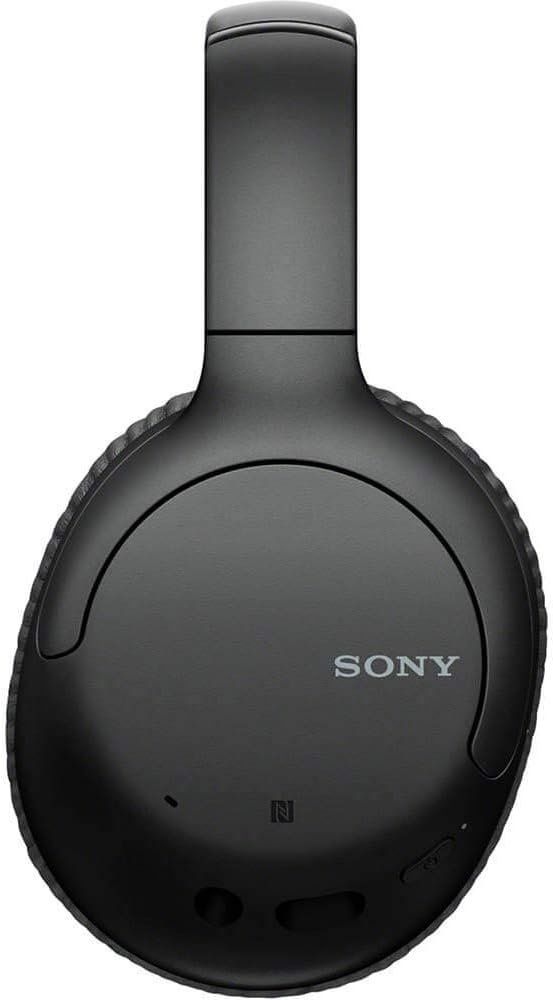
Description
What the WH-CH710N Is
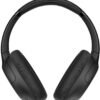
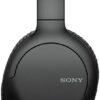
The Sony WH-CH710N is a wireless over ear headphone with active noise cancellation, a built in microphone for calls, and a stated battery life of up to 35 hours. It sits below Sony’s flagship 1000X series and is aimed at travel: Sony lists the specific use for the product as travel, and the marketing copy is built around long flights and the ability to switch to Ambient Sound mode to hear announcements without taking the headphones off.
Positioning matters with this model. Sony makes several noise cancelling headphones at very different levels, and the CH710N is the accessible one rather than the technical showcase. Buyers weighing it against the flagship should compare the Sony WH-1000XM3 and the Sony WH-1000XM4, both of which carry more capable processors, better codec support and more refined cancellation for a considerably higher outlay.
Noise Cancellation and Ambient Sound
Sony describes the cancellation as using Dual Noise Sensor technology, which places microphones both outside and inside each earcup so the system can measure the noise arriving and the noise that actually reaches the ear. The headphone then senses the environment automatically rather than requiring the listener to choose a mode. Automatic adjustment is the sensible default for a travel headphone, since the noise profile of a departure lounge, an aircraft cabin and a taxi are all different.
Ambient Sound mode does the reverse, passing outside sound through so announcements and conversation are audible without removing the headphones. Between the two, the practical experience of a long journey is covered. What Sony does not publish here is a cancellation depth figure in decibels, or a frequency range over which the cancellation is effective, so there is no way to compare it on paper against a competitor. In general, cancellation at this level handles low frequency drone such as engine and road noise well and does considerably less with speech.
Battery, Connection and Drivers
Battery life is given as up to 35 hours, which is a strong figure and enough for several long flights between charges, and Sony states the headphone supports quick charging. Charging is over USB-C, which the listing describes as next generation and which by current standards is simply the expected connector. NFC one touch pairing is included for Android devices, allowing a phone to be tapped against the earcup to pair rather than navigating a Bluetooth menu.
The drivers are 30 mm units, which is smaller than the 40 mm drivers common in over ear headphones and reflects the compact earcup design. Bluetooth is listed at version 5.0 with a range of 10 meters. The supported audio formats are stated as AAC and SBC only. That is the single most consequential specification on the page for a listener who cares about sound quality, because it means neither LDAC nor aptX is available, so an Android user cannot send a higher bitrate stream to these headphones the way they could to a model higher up the range. A 3.5 mm audio cable is included in the box alongside the USB-C charging cable, so the headphone can be used wired if the battery runs down. Metal sliders are used in the headband adjustment.
Highlights
- Active noise cancellation with Dual Noise Sensor technology that adjusts automatically.
- Ambient Sound mode for hearing announcements without removing the headphones.
- Up to 35 hours of stated battery life with quick charging support.
- USB-C charging rather than micro USB.
- NFC one touch pairing for compatible Android devices.
- 3.5 mm cable supplied for wired use when the battery is flat.
- Built in microphone for hands free calls and voice assistant access.
- Metal sliders in the headband adjustment mechanism.
Things To Consider
The specification block contradicts the product in several places. The headphone jack is listed as 6.35 mm, which is a quarter inch studio connector, while the box contains a 3.5 mm cable. The connectivity technology is given as Wi-Fi, which the headphone does not use. The charging time is listed as 35 hours, which is the battery life copied into the wrong field. Frequency response appears as a single value of 20 Hz rather than a range. A buyer reading those fields literally would form a completely wrong picture of the product.
The codec limitation is the most significant real constraint. With only AAC and SBC supported, this headphone cannot take advantage of the higher bitrate wireless audio that Sony itself promotes elsewhere in its range. For most listening that is unimportant, but it does mean the headphone is not a candidate for anyone pursuing wireless audio quality specifically. Sony also includes an unusual note in the listing advising that if Bluetooth connectivity problems occur, the Bluetooth function should be switched off for a couple of minutes and switched back on, which is a candid acknowledgment of a known connection quirk.
Other practical points: there is no water or sweat resistance rating, so this is not a headphone for exercise. Cancellation at this level will reduce engine drone substantially but will not silence conversation or office noise. And 30 mm drivers in compact cups mean a smaller ear opening than a full size studio design, so listeners with larger ears may find the pads sit on the ear rather than around it over a long flight. Buyers who want a smaller travel option should compare the earbud headphones category instead.
Who It Suits
The CH710N suits a frequent traveler who wants effective low frequency cancellation, very long battery life and USB-C charging without paying flagship prices. The inclusion of a wired cable and NFC pairing makes it practical across a range of situations, and 35 hours means charging becomes something to think about weekly rather than daily.
It is a weaker choice for anyone who wants high resolution wireless codecs, for exercise, and for listeners who need the most capable cancellation available. Those buyers should move up the Sony range, and anyone who mainly wants long battery life and a comfortable fit without cancellation may prefer something like the JBL Tune 710BT from the wider over ear headphones selection.