Description
What the Dell Pro Headset WH3022 Is and Who It Suits
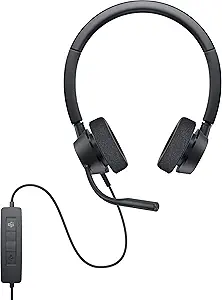
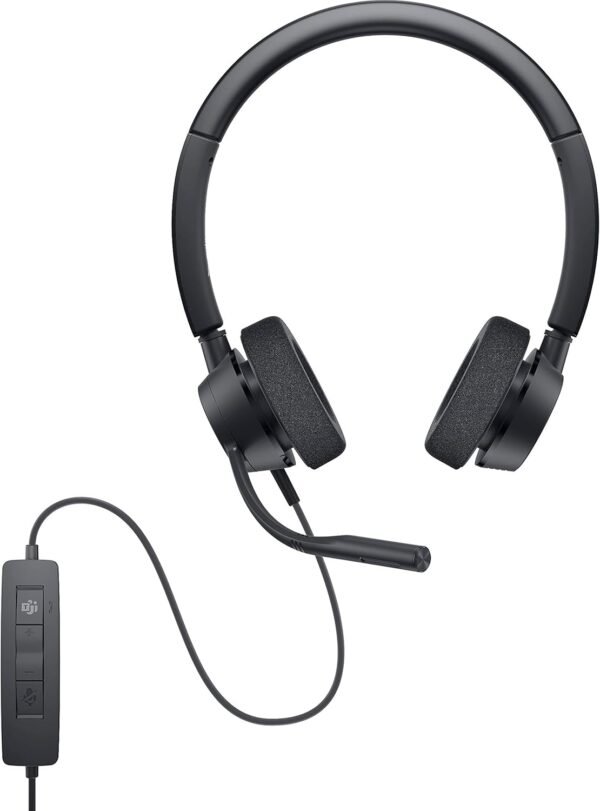
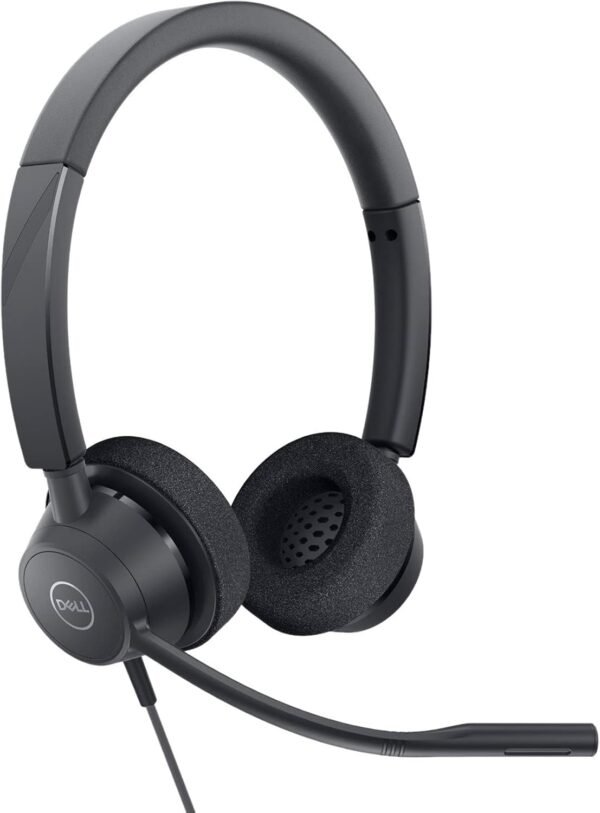
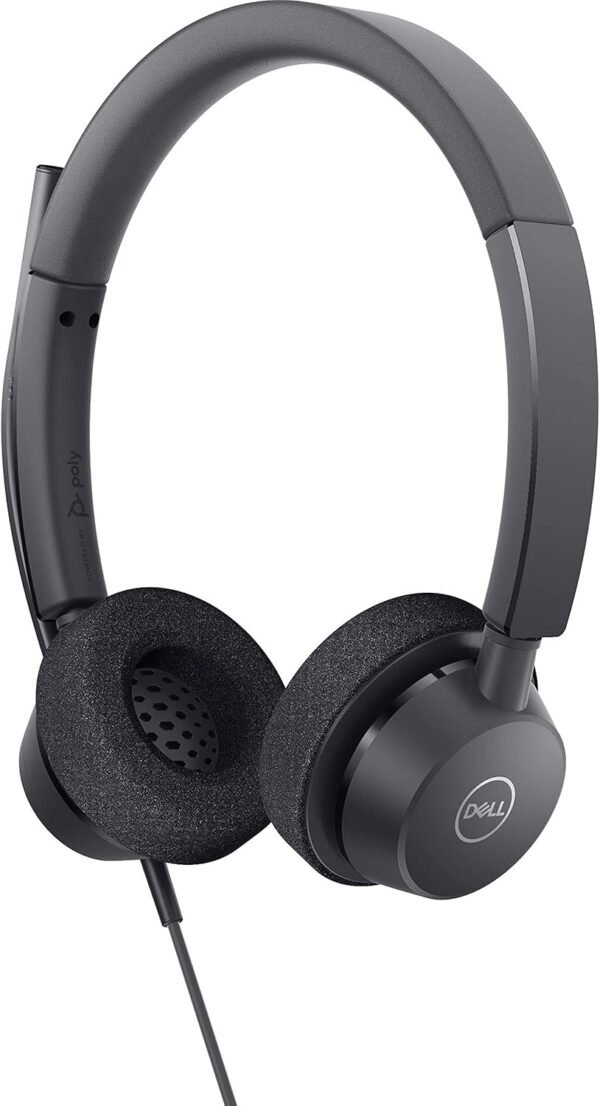
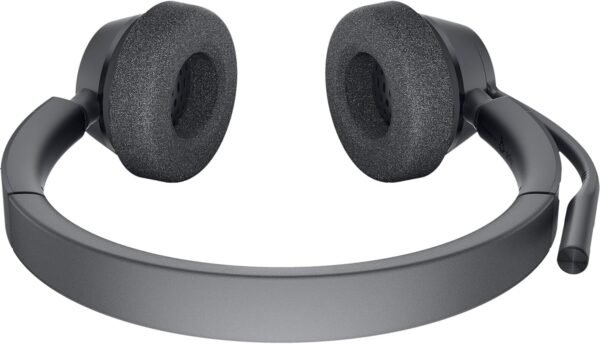
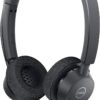
The WH3022 is a wired stereo headset aimed at office and conferencing use. Dell describes it as connecting to a computer over a USB-A cable, certified for Microsoft Teams and compatible with the leading unified communications platforms. The listing gives the weight as 3.36 ounces, the frequency range as 20 Hz to 20,000 Hz, the earpiece shape as on-ear, and the model number as DELL-WH3022. It was first listed in July 2021 and shows 51 ratings at an average of 3.9 stars.
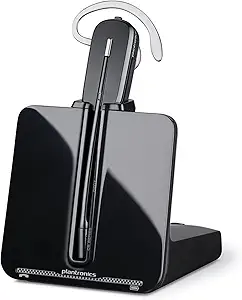
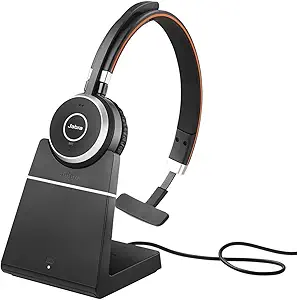
The buyer this suits is someone who spends the working day on calls: support staff, sales, anyone in back to back meetings. It is a communications tool first and a listening device second. Anyone wanting a headset for music or gaming should look at a different design entirely, and anyone who needs wireless freedom around a desk should compare the Jabra Evolve 65 SE or the Plantronics CS540.
The Microphone and What Noise Cancellation Means Here
This is the point most likely to be misread, so it is worth being precise. Dell states that the built in noise cancellation blocks ambient sound so that others can hear the wearer more clearly. That is microphone side noise cancellation. It cleans up what the far end hears. It is not active noise cancellation for the wearer, and the listing makes no claim that outside noise is reduced for the person wearing the headset.
For an open plan office that distinction matters. A caller on the other end will hear less keyboard noise and less background conversation. The wearer will still hear the office, filtered only by the passive isolation of an on-ear cushion, which is modest. Anyone who needs quiet for themselves should be shopping active noise cancelling headphones such as the Sony WH-1000XM3 rather than a communications headset.
The boom microphone can be worn on either side, which is a genuinely useful piece of design. Wearers have a dominant side, desks have monitors and walls in different places, and a fixed boom forces a compromise. Dell also lists a hearing protection feature that detects sudden loud noises and prevents audio spikes, which addresses a real hazard in contact center work where a burst of tone or feedback can arrive without warning.
Controls and Connection
An inline control panel handles volume, mute, unmute and call answer. Physical controls on the cable are the correct approach for a headset used all day, because they are found by feel without looking away from a screen. The listing describes the control type as call control, which is the important distinction from a media headset: these buttons are designed to interact with the softphone rather than only with the audio stream.
The connection is USB-A, not a 3.5 mm jack and not USB-C. That is worth checking against the target machine. Many recent laptops have dropped USB-A entirely, and while an adapter works, adapters get lost and add a failure point. Being USB rather than analog also means the headset carries its own audio processing rather than relying on the computer sound card, which is usually an advantage for call clarity.
Comfort, Build and Everyday Use
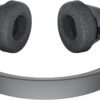
Dell describes cushioned earpads and an adjustable headband intended for all day comfort. At 3.36 ounces this is a light headset, and light weight is the single biggest factor in whether a headset is tolerable across an eight hour day. The design is on-ear rather than over-ear, which means the cushion rests on the outer ear rather than surrounding it. On-ear designs run cooler than over-ear ones but concentrate pressure on a smaller area, so comfort over long periods varies more between individuals.
Stereo rather than mono is a small but useful choice. Mono headsets leave one ear open, which some people prefer for awareness; stereo gives better intelligibility on conference calls where multiple speakers are present. The frequency range of 20 Hz to 20,000 Hz is the standard full range figure quoted for almost every headphone and says nothing meaningful about tuning.
Several specification fields on this listing do not match the product. The specific use is listed as gaming and the recommended uses as recording and gaming, which contradicts a Teams certified business headset in every other part of the listing. The control method is given as touch, when the product uses a physical inline control panel. The cable feature is listed as detachable, while the description states the headset connects via its USB-A cable with no mention of detachment. The country of origin is listed as USA.
Highlights
- Microphone side noise cancellation so callers hear less background noise.
- Teams certification with stated compatibility across leading UC platforms.
- Reversible boom microphone for left or right side wear.
- Inline control panel for volume, mute and call answering.
- Hearing protection that limits sudden audio spikes.
- Light at 3.36 ounces, with cushioned pads and an adjustable headband.
Things To Consider
The 3.9 star average across 51 ratings is soft, and 51 is a small sample. It is not enough to identify a specific fault, but it is enough to warrant caution and to suggest checking recent reviews before buying in quantity.
There is no active noise cancellation for the wearer. Anyone who read the noise cancellation claim as protecting their own ears from office noise will be disappointed, and this is the most likely source of dissatisfaction with the product.
USB-A only limits compatibility with current laptops and rules out phones and tablets. There is no wireless option, no 3.5 mm fallback and no USB-C variant described in this listing.
On-ear cushions suit some people and not others, and the listing gives no clamping force or pad material detail. The specification table also carries several fields that contradict the product description, listed above, so it should not be relied on. Finally, the listing does not state cable length, microphone pickup pattern, or whether a carrying case is included, all of which matter for a headset that travels between home and office.
Who Should Buy It and Who Should Not
The WH3022 makes sense for an organization standardizing on a simple, light, wired Teams headset where call clarity for the far end is the priority and cost per seat matters. The reversible boom, inline controls and hearing protection all address real workplace requirements. Buyers can compare it with the rest of the on-ear headphones selection and with dedicated business models in the headsets category, including the Poly Voyager Focus 2 UC.
It is not the right headset for music, for gaming despite what the specification table claims, or for anyone who needs to block office noise for themselves. It is also unsuitable for anyone working from a phone, a tablet or a USB-C only laptop without an adapter.