

Description
What the Bose AE2 Is
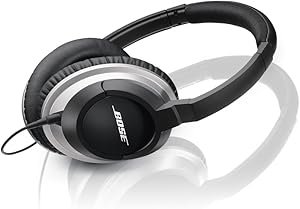
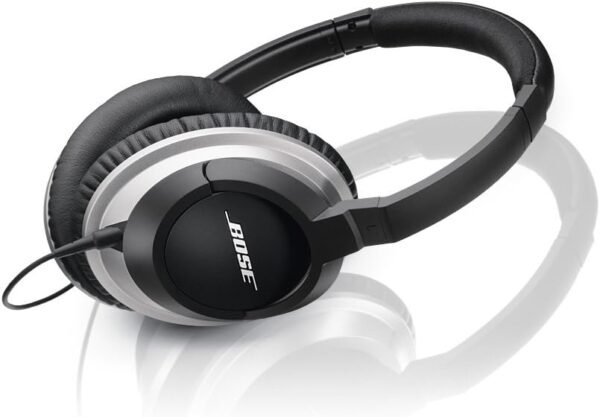
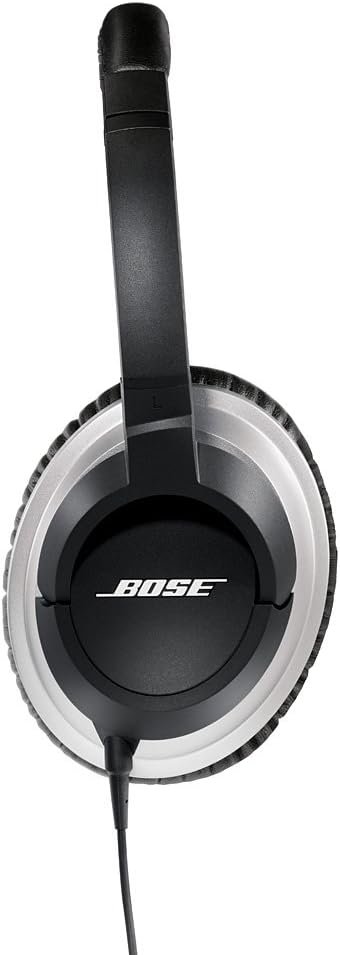
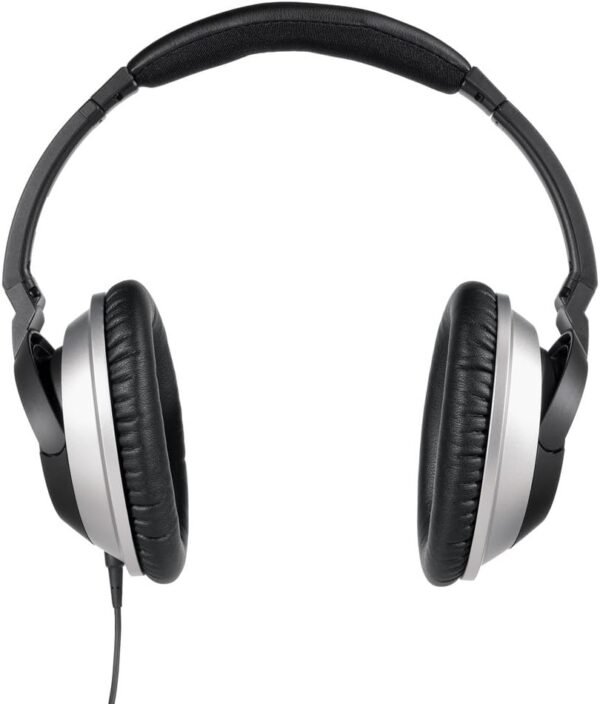
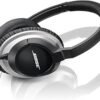
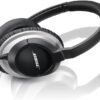
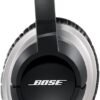
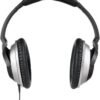
The Bose AE2 is a wired headphone that Bose first listed in September 2010, using a 3.5 mm connection and a detachable cable. The AE in the name stands for around ear, and the listing confirms that with an earpiece shape given as around the ear. It is a passive design: there is no active noise cancellation, no Bluetooth radio and nothing to charge, which places it in a different category from the noise cancelling models Bose is better known for.
A passive around ear headphone is a simpler proposition than most current products. It has no firmware, no battery to degrade, no app and no pairing procedure. It works with anything that has a headphone socket, and it will still work in ten years provided the pads and cable are intact. That simplicity is the main argument for a design of this kind, and it is worth weighing against a modern wireless pair for anyone who mostly listens at a desk. Buyers who want cancellation instead should compare the Bose QuietComfort 15, which is the active sibling from the same era.
Fit, Materials and Portability
The listing gives the material as nylon and states that a nylon carrying case is supplied. Product dimensions are listed as 6 by 1.5 by 7.5 inches, which describes the headphone folded into its case rather than worn. Bose has long designed its around ear headphones to fold flat for storage, which is the reason the depth figure is so small, and a flat folding design travels considerably better in a bag than a rigid one.
The cable is described as detachable, which is one of the most important durability features on any wired headphone. Cables fail long before drivers do, and a detachable cable turns a dead headphone into a cheap replacement part. The style field notes the model listed here is the version without a microphone, so there is no inline remote or call control on this particular variant. Listeners who want a lightweight alternative in the same broad class can compare the Koss Porta Pro, another long lived design that has stayed in production for decades.
Stated Performance
The frequency range is given as 20 Hz to 20,000 Hz, and the driver type is listed as dynamic. Those are the only performance figures on the listing. There is no impedance, no sensitivity, no driver diameter and no weight for the headphone in wearing condition, so there is no way to judge from this page how easily it will drive from a phone or how it compares on paper to anything else. In practice a passive consumer headphone of this type is designed to run from a phone or laptop without additional amplification.
Water resistance is listed as none, which is expected. The listing states it is not discontinued by the manufacturer, though the September 2010 first listing date means this is a design that predates most current headphone conventions, including USB-C charging, app based equalization and Bluetooth codecs. That is not a fault in a passive product, but it does mean the AE2 should be judged as a straightforward wired headphone rather than compared feature for feature against a modern wireless pair from the over ear headphones category.
Highlights
- Passive wired design with no battery, no pairing and no firmware.
- Detachable cable, so a failed cable does not end the headphone.
- Around the ear cushions rather than pads that press on the ear.
- Folds flat for storage, with a nylon carrying case supplied.
- Stated frequency range of 20 Hz to 20,000 Hz with dynamic drivers.
- Standard 3.5 mm connection compatible with almost any source.
- Listed without a microphone, so no inline remote on this variant.
Things To Consider
The attribute table on this listing describes a different product from the one in the title, and the contradictions are worth spelling out. It gives the connectivity technology as wired and then separately lists Bluetooth as the wireless communication technology. It states that one lithium ion battery is required, on a headphone with no electronics to power. It gives the control method as touch and the control type as media control, neither of which exists on a passive headphone. Any buyer reading those fields expecting a wireless product will be disappointed; the AE2 is wired only.
There is also a categorization mismatch. This site files the AE2 under on ear headphones, while the listing describes the earpiece shape as around ear, and the model name itself abbreviates around ear. The distinction is not cosmetic: an on ear pad rests on the ear and an around ear pad encircles it, and they feel completely different over a long session. Shoppers browsing that category should be aware the classification does not match the manufacturer description.
The practical limitations are those of the era. There is no noise cancellation, so this is not a headphone for a flight or a noisy commute. There is no microphone on this variant, so it cannot be used for calls without buying a different cable. The listed weight of 3.87 ounces should be treated with caution given how many other fields on the page are wrong. And because the design dates from 2010, replacement earpads are the component most likely to be difficult to source, which matters on a headphone whose comfort depends on them.
Who It Suits
The AE2 suits a listener who wants an uncomplicated wired headphone for home or desk use, who values a detachable cable and a fold flat case, and who has no interest in wireless features or cancellation. For a second pair kept at a desk, or for anyone who simply wants something that plugs in and works, a passive around ear design remains a reasonable choice.
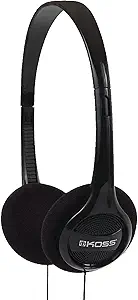
It is the wrong purchase for travel, for calls, for exercise, and for anyone who expects the Bluetooth mentioned in the specification table to exist. Buyers wanting those things should look at current wireless models, or at a lightweight on ear alternative such as the Koss KPH7 if simplicity and low weight are the priority.