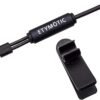
Description
What the Etymotic ER3XR Is and Who It Suits
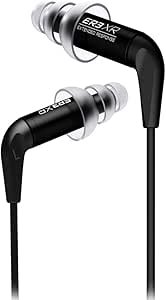
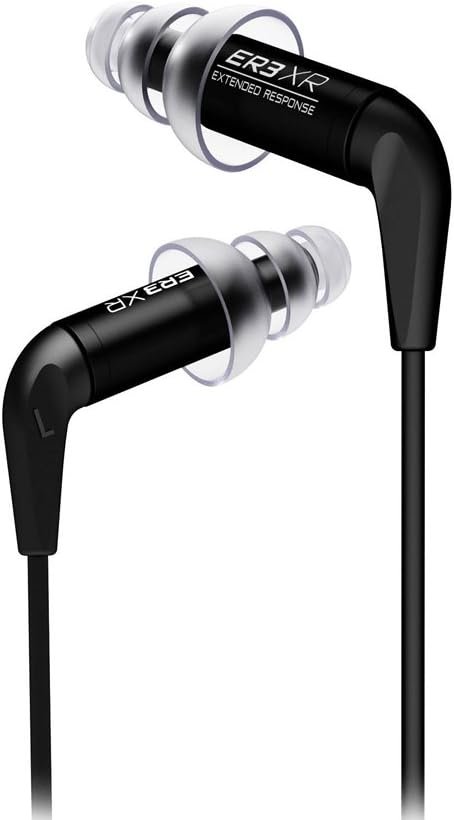
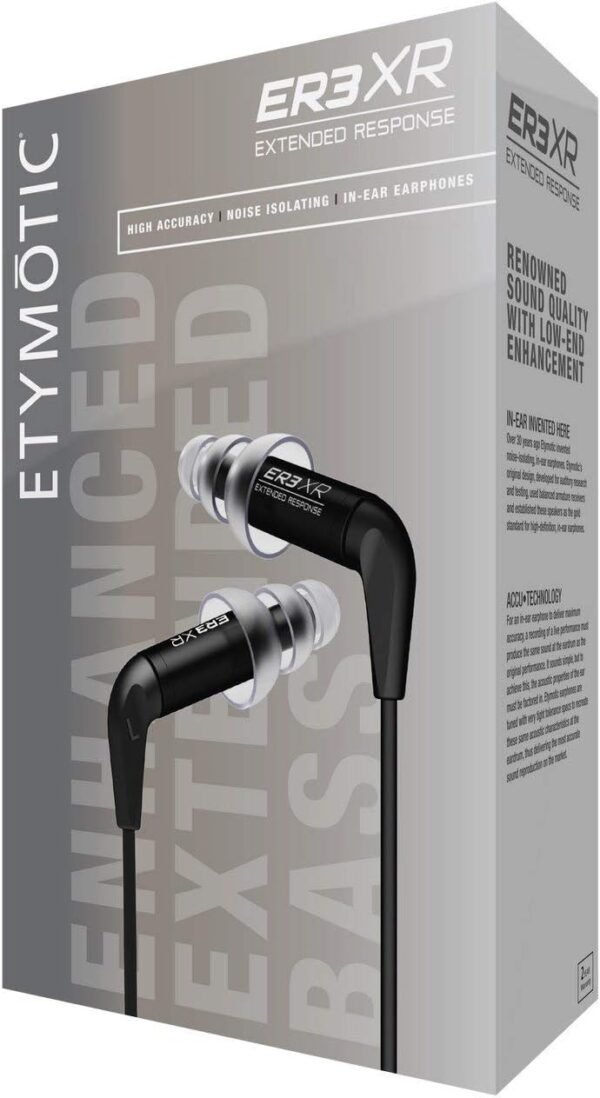
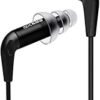
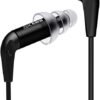
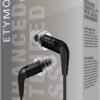
The ER3XR is a wired in-ear monitor from Etymotic Research, a company whose products come from a hearing research background rather than a consumer audio one. It uses a single balanced armature driver per side, a metal housing and a detachable cable, and the listing specifies a 3.5 mm jack, a 20Hz to 16kHz frequency range, sound isolation as the noise control method and a weight of 0.634 ounces. It was listed in October 2017, with a country of origin of Vietnam.
The buyer this suits is a listener who wants accurate reproduction and strong passive isolation, and who is willing to accept an insertion depth that many people find unusual. Etymotic’s designs sit further into the ear canal than typical earphones, which is where the isolation comes from. Anyone who wants a casual, quickly inserted earphone should look elsewhere, such as the FiiO FF3, which uses an open flat bud design instead.
The Balanced Armature Driver
A balanced armature driver works quite differently from the dynamic drivers in most earphones. A tiny armature balanced between two magnets pivots when current passes through a coil, and that motion drives a diaphragm through a connecting rod. The mechanism came from hearing aids, which is where Etymotic’s expertise originates.
The practical characteristics are a small size, high efficiency and generally very good detail and speed in the midrange and treble. The traditional weakness is bass extension, because a small armature moves very little air. Multi driver in-ear monitors address this by adding a dynamic driver for the low end, an approach used by designs such as the KZ ZS10 Pro and the CCA C12.
Etymotic takes a different route. The XR in the model name stands for extended response, indicating a tuning with more low frequency output than the company’s flat reference version. It is a tuning decision applied to a single armature rather than an extra driver, which keeps the coherence of a single driver design while adding bass weight.
The 16kHz Upper Limit
The listed frequency range tops out at 16kHz rather than the 20kHz quoted for most earphones. That is worth noting rather than worrying about. Adult hearing rarely extends to 20kHz, and a manufacturer with a hearing science background is more likely to publish a range measured to a meaningful tolerance than one padded to a round number. It should not be read as a deficiency relative to a competitor claiming 40kHz.
Isolation, Fit and the Insertion Question
The noise control method is listed as sound isolation, which is entirely passive. There is no active cancellation, no battery and no electronics. Isolation is produced by the seal between the ear tip and the ear canal, and Etymotic’s deep insertion design is what makes that seal unusually effective.
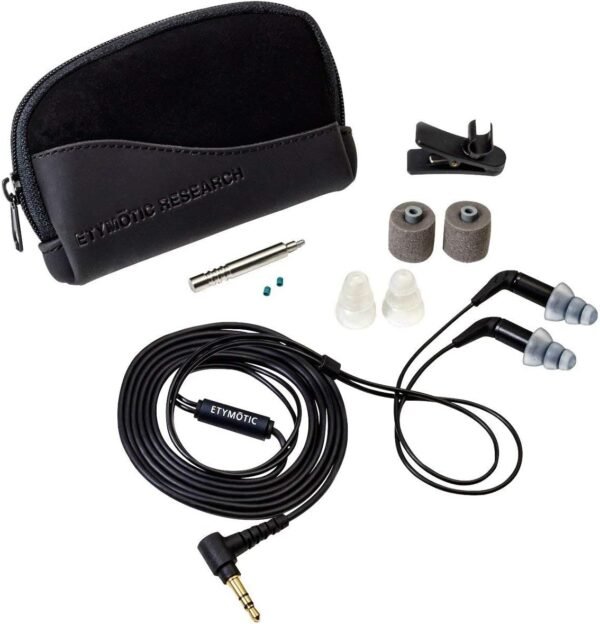
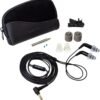
This is the defining characteristic of the product and the reason it divides opinion. A properly inserted Etymotic earphone sits considerably deeper than most people are used to, and the sensation takes acclimatization. Done correctly, the isolation rivals or exceeds active noise cancellation for a fraction of the complexity, and it works equally well against voices, which ANC handles poorly. Done incorrectly, with a shallow fit, the bass disappears and the isolation is unremarkable. A tip pack is included so that the correct size can be found, and finding it is not optional.
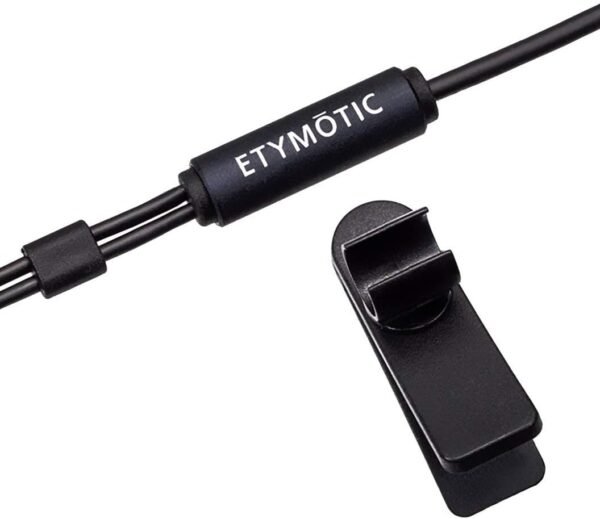
The detachable cable is the other important practical feature. Cables are the component that fails on any wired earphone, and a detachable design means a failure is a replacement rather than a write off. The housings are metal, which is more durable than the resin used at lower price points.
Several attribute fields do not fit the product. The control type is listed as media control and the control method as remote, though this model is the bare version without an inline remote or microphone; the listing gives no other indication of controls. The product dimensions of 2 by 3.75 by 7 inches describe the retail box. The earpiece shape is listed as a rounded tip, which describes the supplied tips rather than the housing.
The listing carries no manufacturer description, no feature bullets and no product title in the Amazon data, and there is no customer rating information in the product record at all. No impedance, sensitivity or isolation figure in decibels is published anywhere here.
Highlights
- Single balanced armature driver per side, from a manufacturer with hearing research origins.
- Extended response tuning adding bass weight over the flat reference version.
- Deep insertion design producing passive isolation without batteries or electronics.
- Detachable cable, so a cable failure is repairable rather than terminal.
- Metal housings and a supplied case and tip pack.
- Very light at 0.634 ounces with a straightforward 3.5 mm connection.
Things To Consider
The deep insertion fit is not for everyone. Some listeners never find it comfortable, and a shallow fit undermines both the bass response and the isolation the design exists to provide.
The listing has no description, no bullets and no customer rating data. Impedance, sensitivity and the isolation figure are all unpublished here, so there is no way to assess drive requirements from this page.
This is the bare version with no inline microphone or remote described, despite two attribute fields suggesting otherwise. Anyone wanting call handling should confirm the variant before ordering.
The single armature approach means the bass, while extended relative to Etymotic’s flat tuning, will still not match a dynamic driver design for sheer weight. These are also listed as not water resistant, ruling out gym and outdoor use. Buyers comparing options should look at the Moondrop CHU II DSP and browse the wider earbud headphones category.
Who Should Buy It and Who Should Not
The ER3XR fits a listener who values accuracy and isolation over bass impact, who is willing to learn the insertion technique, and who wants a durable wired design with a replaceable cable. For flights, offices and commuting, deep insertion passive isolation is genuinely effective and needs no battery.
It is the wrong earphone for anyone who dislikes deep insertion, for bass focused listening, or for exercise given the lack of water resistance. It is also a difficult purchase for anyone who needs published impedance and sensitivity figures, since this listing provides none.