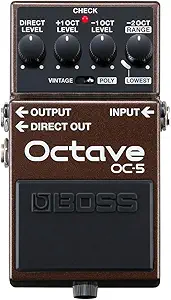
Description
What the Boss OC-5 Does
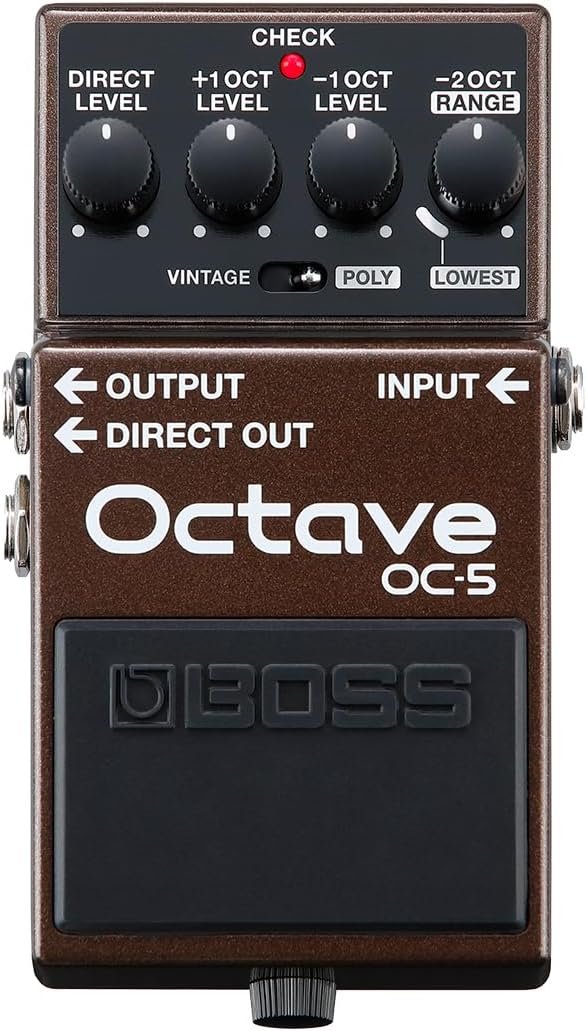
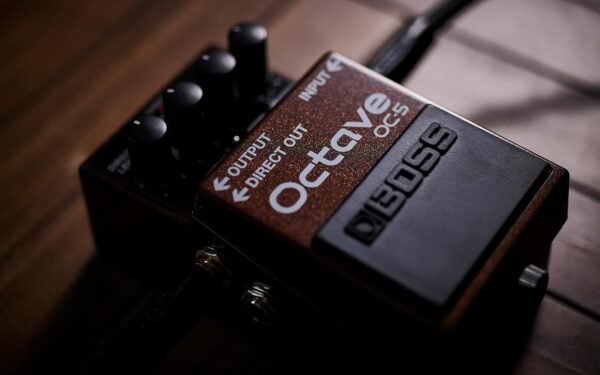
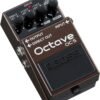
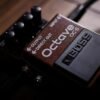
The Boss OC-5 is a compact octave pedal for electric guitar and bass that generates notes one and two octaves below what is played, plus a note one octave above. Boss positions it as the successor to a long line of OC series pedals stretching back to the OC-2 of 1982, and the company states directly that the Vintage mode inside the OC-5 is a recreation of that original mono circuit. The listing describes the OC-5 as offering the widest range, the finest sound quality and the strongest playability of any octave pedal to date, which is manufacturer language rather than an independent finding, but the underlying feature set is straightforward enough to evaluate on paper.
The pedal suits two fairly different players. A bassist gets a synth like sub octave and a dry output to keep the fundamental intact. A guitarist gets polyphonic tracking, which means chords can be processed rather than only single notes, opening up organ and baritone textures that a traditional analog octaver simply cannot produce. Anyone assembling a pedalboard around a compact amplifier such as the Orange Crush Mini will find the OC-5 makes a small rig sound considerably larger than it is.
Mono, Poly and the Range Control
The central design decision in the OC-5 is the split between two tracking modes. Mono mode, which Boss labels Vintage, follows the classic single note behavior of the OC-2 and produces the thick, slightly unstable sub octave that players have used on funk and fusion records for four decades. Poly mode uses newer tracking technology to handle full chords, and it is the reason this pedal exists rather than a straight reissue. Boss also gives Poly mode a Range setting whose lowest position applies the octave effect only to the bottom note of a chord, which is a genuinely useful behavior: it lets a guitarist add a bass line underneath a voicing without smearing the whole chord an octave down.
Adding an octave up completes what Boss describes as a three octave span. In practice that means one pedal can cover a sub bass role, a doubled unison role and a shimmering upper register, which is why an octaver often earns its board space ahead of a more specialized effect. Players who want to stack that against modulation and delay will find plenty of context in the delay and reverb category, where the Boss DD-8 covers the same compact format from the time based side.
Connections, Power and Build
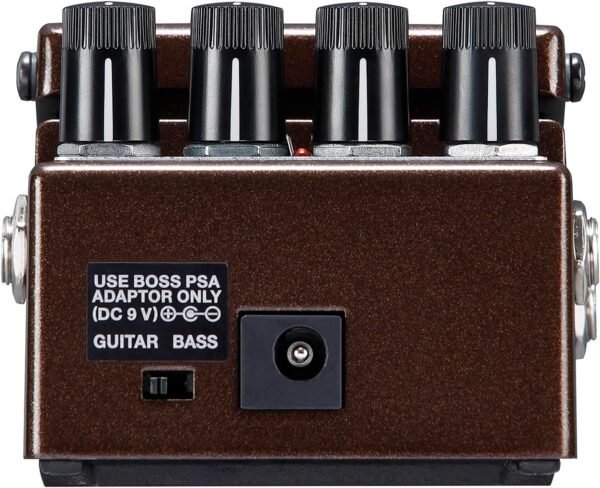
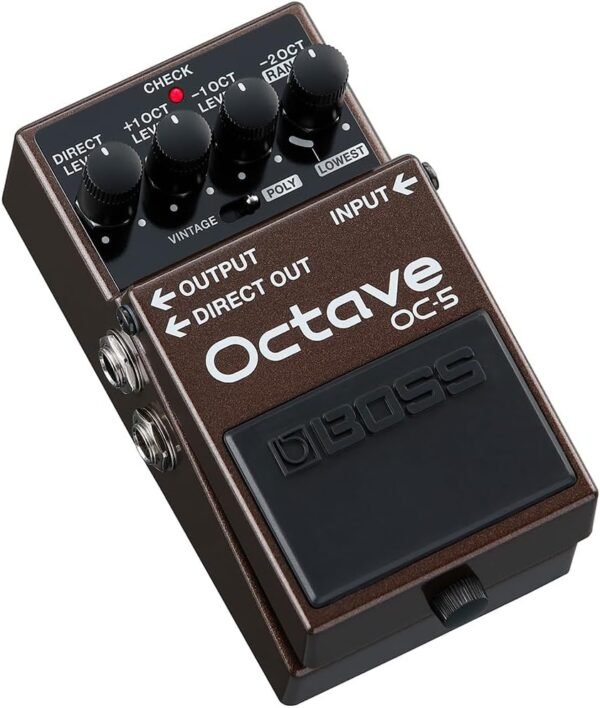
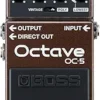
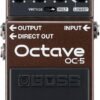
The listing gives the connector type as a quarter inch, 6.35 mm audio jack and the hardware interface as quarter inch audio, which is the standard for guitar signal. A Dry Direct Output is called out separately in the feature list, and it matters more than it sounds: it lets a bass player send the clean signal to one amplifier or DI and the octave signal to another, which keeps the low end tight instead of pushing a synthetic sub octave through the same speaker as the fundamental. Power is listed as a 9 volt AC adapter or a single 9 volt battery, and the enclosure is described as plastic and metal.
Dimensions are given as 3.62 by 5.83 by 2.56 inches with a weight of 1.15 pounds, and the country of origin is listed as Malaysia. Those figures are consistent with the standard compact Boss chassis, which has been physically unchanged for decades and remains one of the more durable formats in the pedal market. At the time this listing data was captured it showed 290 customer ratings at an average of 4.4 stars, and it was placed second in the Electric Guitar Pitch and Octave Effects subcategory.
Highlights
- Polyphonic tracking lets full chords be processed, not just single notes.
- Vintage mode is presented by Boss as a direct recreation of the 1982 OC-2 circuit.
- Octave up extends the total stated range to three octaves.
- Dry Direct Output allows a split signal path for bass rigs and stereo setups.
- Range control in Poly mode can target only the lowest note in a chord.
- Standard compact Boss enclosure with 9 volt battery or adapter power.
- Works with both guitar and bass rather than being tuned for one instrument.
Things To Consider
The listing data contains at least two contradictions worth naming rather than smoothing over. The signal format is given as Analog, yet polyphonic chord tracking of the kind Boss describes in Poly mode is a digital process. The color is listed as Brown and Black, which does not match the finish Boss uses on the OC-5. Neither error changes what the pedal does, but both are a reminder that the specification block on this listing was not carefully assembled, and a buyer should treat the marketing copy as the more reliable source here.
On the functional side, no octave pedal tracks cleanly in every situation. Polyphonic algorithms are far better than the analog circuits they replaced, but dense voicings, heavy distortion in front of the pedal and very low notes all make the job harder, and artifacts appear at the edges. Players used to a synthesizer will find the octave up in particular has a characteristic glassy quality. The pedal also has no built in tuner, no expression pedal input listed, and no stereo output, so it is a single purpose device in an era where many players expect one box to do several jobs. A multi effects unit such as the Zoom G1X FOUR covers octave effects among many others, at the cost of the immediacy a dedicated pedal gives.
Battery operation is possible but impractical for regular use, since a 9 volt battery in a digital pedal drains quickly. Most owners will run it from a pedalboard supply, which means budgeting an isolated output alongside whatever else is on the board.
Who It Suits
The OC-5 is a sensible choice for a guitarist who wants a convincing bass register under chord voicings, for a bassist who wants a classic sub octave with a clean signal preserved on a second output, and for anyone who already trusts the compact Boss format and wants a single reliable pedal rather than a menu system. The presence of both a faithful vintage mode and a modern polyphonic mode in one enclosure is the strongest argument for it.
It is a poor fit for a player who wants one device to cover amp modeling, delay, reverb and octave together, or for someone building a first board on a tight budget who would get more coverage from a multi effects unit. Those players should look through the floor multieffects selection first, where a single purchase covers considerably more ground, including options like the Boss GX-100.