

Description
What the MV88+ Is
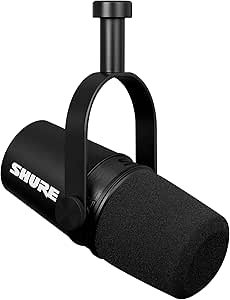
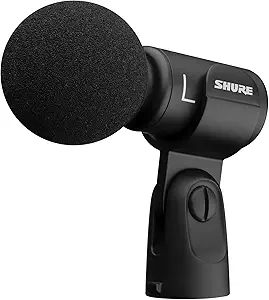
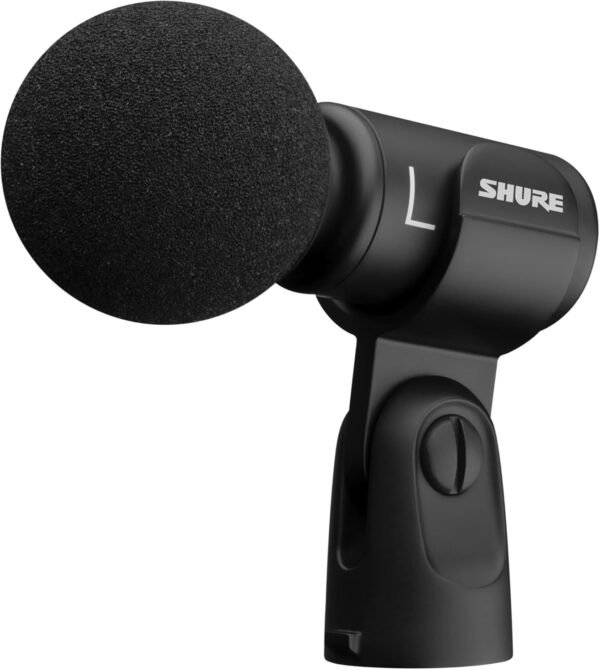
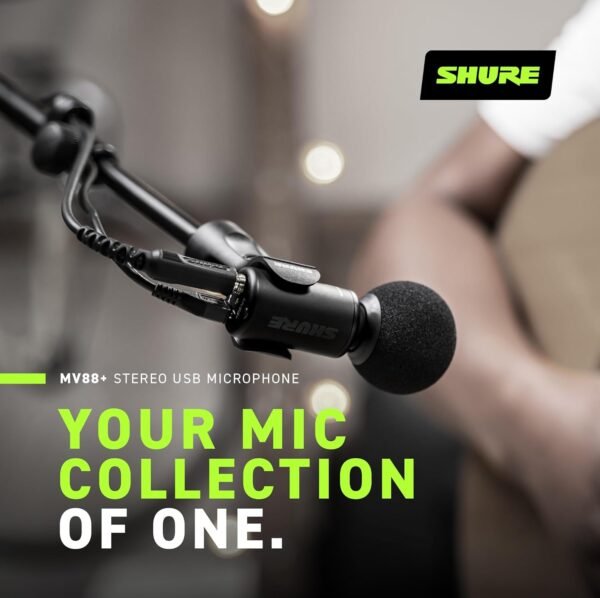
The Shure MV88+ Stereo USB Microphone is a compact condenser microphone that connects directly to a computer over USB, with no audio interface required. It belongs to the Shure MOTIV range, the company’s line of digitally configurable microphones, and its defining characteristic is that almost every setting lives in software rather than on the body. Shure supplies the ShurePlus MOTIV Desktop App free of charge, and that app is where gain, equalization, limiting, compression, monitor mix, pickup pattern and preset selection are all handled.
The stereo capability is what separates this from most desktop USB microphones. A single capsule captures one channel; a mid side arrangement captures a center signal and a side signal that can be combined into adjustable stereo width. That makes the MV88+ suited to recording an instrument, a room or an ensemble as well as a single voice. Buyers who only ever record one speaker into a computer will find a mono dynamic microphone such as the Shure MV6 a simpler and often more forgiving tool.
Pickup Patterns and DSP Presets
Four pickup patterns are selectable in the app: Mono, Stereo, Bi-Directional and Raw Mid-Side. Each has a distinct job. Mono is the right choice for a single voice close to the microphone. Stereo captures width, which suits acoustic guitar, piano and room ambience. Bi-Directional picks up from front and back while rejecting the sides, which is the traditional pattern for a two person interview across a table. Raw Mid-Side outputs the unprocessed mid and side channels so that stereo width can be decided later during editing, which is the option a working engineer would choose.
On top of the patterns sit five DSP presets: Instrument, Loud, Flat, Speech and Singing. These apply equalization, compression and limiting appropriate to each source, so a user who does not want to learn signal processing can pick a preset and record. Flat is the one to use when the processing is to be done afterward in a digital audio workstation. Anyone comparing this against a fixed pattern studio condenser should look at the AKG P120, which offers none of this flexibility but connects over XLR to any interface.
Monitoring, Mounting and What Is In The Box
A 3.5 mm headphone output on the microphone provides real time monitoring, and the balance between computer playback and the microphone signal is set in the MOTIV app as a monitor mix. Hardware monitoring avoids the latency that comes from routing the signal through the computer and back out, which is essential when singing or speaking to a track. The listing gives the signal to noise ratio as 76 dB and the noise level as 20 dB.
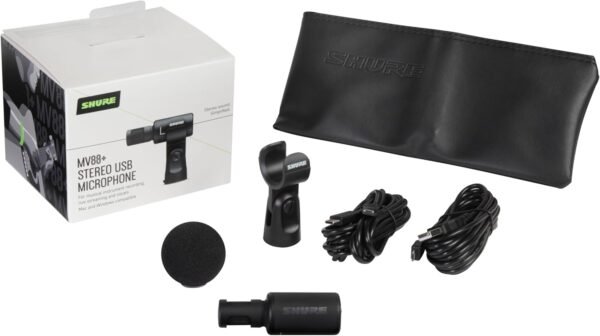
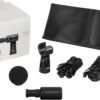
Shure supplies a substantial accessory set: a 10 foot Micro-B to USB-C cable, a 10 foot Micro-B to USB-A cable, a 5/8 inch swivel microphone clip, a 5/8 inch to 3/8 inch Euro thread adapter, an AMV88-WS foam windscreen and a zippered pouch, along with a two year warranty. Both thread sizes being covered means the microphone will fit essentially any stand worldwide. The microphone can also be used with a mobile device through the MOTIV apps on iOS and Android, though Shure notes that additional phone accessories are required and sold separately. Weight is listed as 11.8 ounces with dimensions of 5.16 by 4.41 by 4.1 inches.
Highlights
- Stereo mid side capsule rather than a single mono element.
- Four pickup patterns including Raw Mid-Side for post production control of width.
- Five DSP presets covering instrument, loud, flat, speech and singing sources.
- Full processing chain in software: gain, EQ, limiter, compressor and monitor mix.
- Real time headphone monitoring through a 3.5 mm output on the body.
- Both USB-C and USB-A cables supplied, each 10 feet long.
- 5/8 inch clip and a 5/8 to 3/8 inch adapter included for any stand.
- Foam windscreen and zippered travel pouch in the box, with a two year warranty.
Things To Consider
The listing contains a contradiction that could genuinely mislead a buyer. The power source field reads that all condenser microphones require phantom power and refers the reader to the user manual. That is true of XLR condensers, but the MV88+ is a USB microphone and draws its power over the USB cable; it does not need and cannot use phantom power. Anyone reading that field and concluding they must buy an audio interface would be spending money unnecessarily. The frequency response is also given as a single value of 20 KHz rather than a range.
The cable arrangement is dated. Both supplied cables terminate in Micro-B at the microphone end, which is an aging connector on a product first listed in September 2021, and it means the microphone end cannot be replaced with a common USB-C to USB-C cable. Keeping the supplied cables safe therefore matters more than usual.
Two further points deserve mention. Being a condenser, this microphone is sensitive and will capture room reflections, fan noise and keyboard clatter along with the intended source, so an untreated room limits what it can achieve regardless of the processing available. And at the time this data was captured the listing showed a customer rating average of 3.9 stars across 131 ratings, which is noticeably lower than other Shure products in the same range and is worth investigating before purchase. Users who want a simpler, more forgiving desktop option should compare the vocal microphones category, and those wanting XLR flexibility should look at the Shure MV7X.
Who It Suits
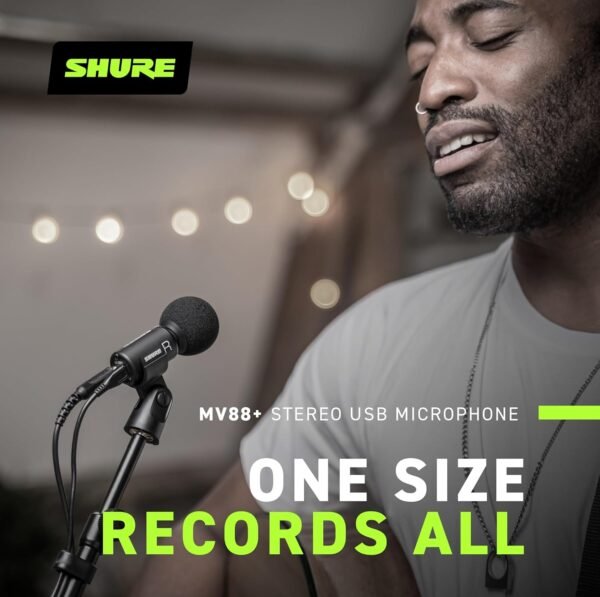
The MV88+ suits someone who records more than one kind of source: an acoustic instrument, a room, an interview and a voice, all with the same microphone and without an interface. The selectable patterns and the Raw Mid-Side option give it genuine range, and the travel accessories make it practical away from a desk.
It is a weaker choice for a streamer in a noisy room, where a dynamic microphone rejects more, and for anyone who wants a professional signal chain built around XLR and outboard preamps. Buyers wanting a fixed studio condenser with a stand mount should compare options in the multipurpose microphones category instead.