



Description
What the G1X FOUR Is
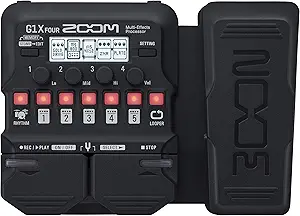
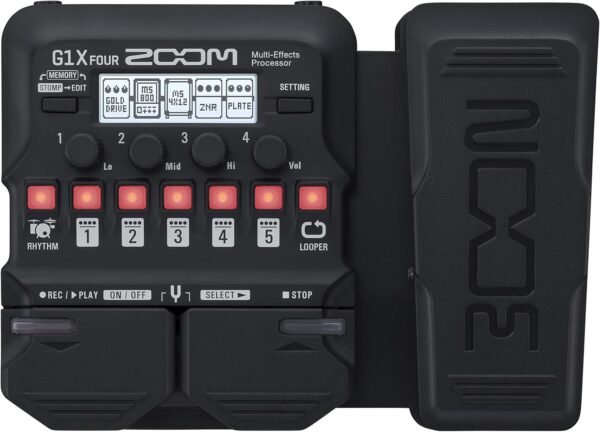
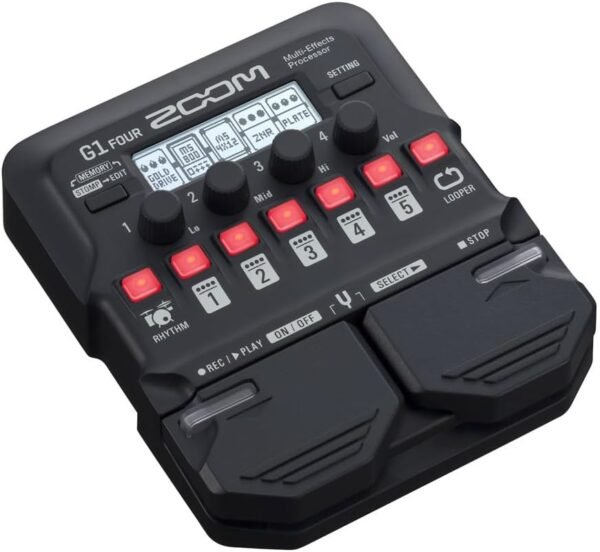
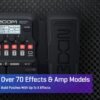
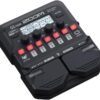
The Zoom G1X FOUR is an entry level guitar multi effects processor with an expression pedal built into the chassis. Zoom lists 71 built in guitar effects, 13 amp models, 68 rhythm patterns, a 30 second looper and a tuner, all in a unit that runs from four AA batteries. It is the X model in the G1 line, and the X denotes the expression pedal; the plain G1 FOUR is the same processor without it.
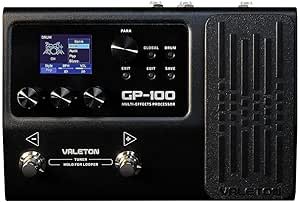
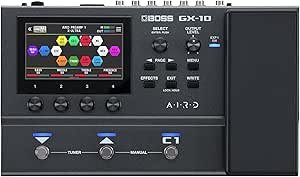
The positioning is clear. This is the processor a guitarist buys as a first pedalboard replacement, or keeps as a practice tool alongside a larger rig. It does not attempt to compete with professional floor units on processing power or connectivity, and it is not priced as though it does. Players wanting a deeper unit should compare the Valeton multi effects processor and the Boss GX-10, both of which offer more blocks, more outputs and a larger display.
Effects, Amp Models and the Expression Pedal
Seventy one effects and thirteen amp models is a large library for a unit at this level, covering the categories a guitarist actually reaches for: drive, distortion, modulation, delay, reverb, compression and filtering. The amp models matter more than the raw effect count, because they determine whether the unit can be used straight into headphones or a recording input without a real amplifier in the chain. Thirteen models is enough to cover the main families of American and British amplifier voicing.
The expression pedal is the feature that justifies the X in the name. It handles volume and wah style sweeps in real time, and on a unit of this kind it can normally be assigned to other parameters as well. Having it built into the chassis rather than as a separate purchase makes a substantial practical difference, since a wah is one of the few effects that genuinely cannot be replaced by a preset. Zoom also supplies Guitar Lab software free for Mac and Windows, which is where patches are built and additional effects are downloaded, and using it is far easier than editing on the hardware. Players building a board from separate pedals instead should look at the floor multieffects category for alternatives.
Practice Tools and Connections
The 30 second looper and 68 rhythm patterns turn the processor into a practice tool as well as an effects unit. Thirty seconds is short compared with the two or three minutes offered by dedicated loopers, but it is long enough for a chord progression to solo over, which is what most players use a looper for. The rhythm patterns provide a drum backing that is considerably more engaging to practice against than a metronome, and having 68 of them means a player can match the feel of what they are working on.
Connections are simple: a standard quarter inch guitar input, an aux input for playing along with an external music player, and a combined amplifier and headphone output. That last point is the one to understand. There is a single output that serves both an amplifier and headphones, so there is no separate balanced output and no dedicated recording connection. Power comes from four AA alkaline batteries at 9 volts, or from an adapter, and battery operation means the unit can be used anywhere. Guitarists pairing it with a small amplifier should look at the Orange Crush Mini or the wider combo amps range.
Highlights
- 71 built in guitar effects covering all the common categories.
- 13 amp models, enough to work into headphones without a real amplifier.
- Expression pedal built into the chassis rather than sold separately.
- 30 second looper for practicing over a progression.
- 68 rhythm patterns as a more musical alternative to a metronome.
- Built in tuner, removing another item from the gig bag.
- Battery powered from 4 AA cells, so no mains socket is needed.
- Free Guitar Lab software for patch editing and effect downloads.
Things To Consider
Two listing fields are clearly wrong. The item weight is given as 0.705 ounces, which is around twenty grams and cannot describe a unit with a metal treadle and four AA batteries inside it. The signal format is listed as Analog, when this is a digital signal processor and the amp modeling could not exist otherwise. Neither error affects the product, but they should be ignored rather than believed.
The real limitations are architectural. This is a compact unit with a small display and a limited number of footswitches, which means changing patches during a song is constrained and building a complex chain on the hardware itself is slow. The single combined amplifier and headphone output means there is no balanced connection for a front of house desk and no separate recording feed, so studio use requires reamping or a workaround. There is no effects loop and no MIDI.
Battery life is the other practical consideration. Four AA cells in a digital processor with an always on display will not last a long rehearsal at usable brightness, so regular users should budget for an adapter, which is not listed as included. And thirty seconds of loop time, while adequate for practice, is short enough to be limiting for anyone who wants to build layered arrangements. Players who need more should look at units with a longer looper such as the Valeton GP-100.
Who It Suits
The G1X FOUR suits a guitarist who wants a wide range of sounds, a tuner, a looper and a drum machine in one battery powered box, primarily for practice and home use. It is a sensible first multi effects unit and a sensible travel unit for a player who already owns a full rig, and the built in expression pedal makes it more capable than its size suggests.
It is a weaker choice for stage use where fast patch switching and balanced outputs matter, and for recording where a dedicated output would be expected. Those players should move up to a unit with more footswitches and XLR connections, and anyone wanting a single dedicated effect at higher quality should compare individual pedals such as the Boss OC-5.