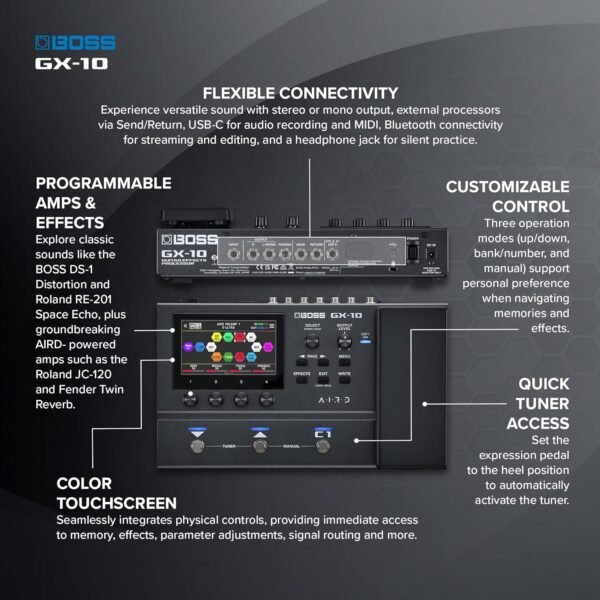
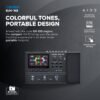
Description
What the Boss GX-10 Is and Who It Suits
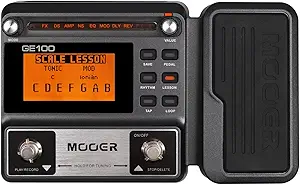
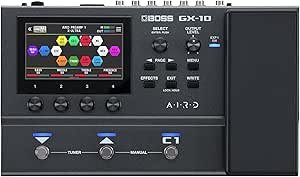
The Boss GX-10 is a floor format multi effects processor for electric guitar. The source listing places it under Musical Instruments, Amplifiers and Effects, Guitar Effects, Electric Guitar Effects, Multieffects and finally Floor Multieffects, which is the category of devices that combine amplifier modeling, cabinet simulation and a full complement of effects in one unit operated by foot.
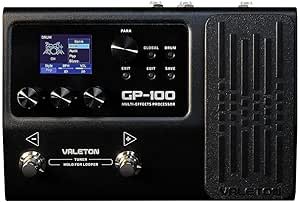
Boss is the largest manufacturer in guitar effects and its GX line sits between the compact single effect pedals the company is best known for and the large professional floor processors at the top of its range. The buyer is a player who wants one device instead of a board full of pedals, either for practical reasons of size and cabling or because a processor stores complete rigs as presets. Players considering the larger unit in the same family should read the Boss GX-100, and those wanting the smallest possible version can compare the Boss IR-2.
What a Floor Multi Effects Processor Replaces
Understanding the category matters more than any individual specification. A traditional guitar rig is a chain of separate boxes: an overdrive, a delay, a reverb, a modulation pedal, each with its own power connection and two cables. Building it is expensive, transporting it is awkward, and changing sound between songs means stepping on several switches at once.
A multi effects processor collapses that chain into one device where every effect is available at once and complete configurations are stored as presets. One footswitch recalls a whole rig. It also normally includes amplifier and cabinet modeling, which means the unit can be plugged directly into a mixing desk or a recording interface with no amplifier and no microphone involved. That capability is what has moved so many working guitarists to floor processors over the past decade. A dedicated single effect approach to the same problem is covered in the Boss DD-8 delay.
Presets, Switching and Live Use
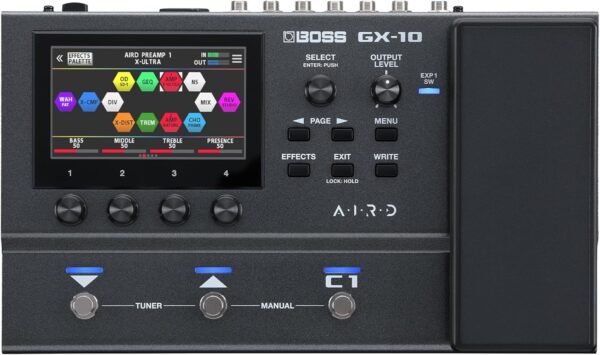
The practical difference between processors is usually in how they are operated rather than in how they sound. The number of footswitches determines how many sounds are reachable without menu diving, which on stage is the difference between a usable unit and a frustrating one. The display size determines how much can be edited without a computer. The presence of an expression pedal determines whether volume and wah effects are available underfoot.
Boss processors typically also support editing from a computer or a phone, which is a far more comfortable way to build sounds than tapping through a small screen. What matters for a buyer is deciding whether they want a unit optimized for building sounds at home and recalling them live, or one optimized for adjusting sounds on the fly. Players who want a simpler pedal format instead should look at the floor multieffects section.
Recording and Direct Use
The second major use for a processor of this kind is recording. A unit with amplifier and cabinet modeling and a USB connection can send a finished guitar sound straight into a computer with no microphone, no amplifier and no room acoustics involved, which removes most of the difficulty from recording electric guitar at home.
That capability comes with a trade worth stating honestly. A microphone in front of a real amplifier captures the interaction between the speaker, the room and the player, and modeling reproduces that convincingly but not identically. For most home recording purposes the difference is smaller than the difference a bad room makes, which is why direct recording has become the default. Players who want to record a real amplifier will find suitable microphones in the vocal and instrument microphone category.
Highlights
- Floor format processor operated by foot rather than by hand.
- Replaces a chain of separate pedals with one device and one power connection.
- Preset storage recalls a complete rig with a single footswitch.
- Amplifier and cabinet modeling allows direct connection to a PA or an interface.
- Made by the largest manufacturer in guitar effects, with a long support history.
- Sits between compact pedals and full size professional floor units in the range.
Things To Consider
The retail listing for this product publishes no specification block at all. There is no effect count, no amp model count, no preset count, no footswitch count, no display description, no input and output list, no confirmation of whether USB audio is supported, no expression pedal information, no power requirement, no dimensions and no weight. For a multi effects processor, nearly every one of those determines whether the unit suits a particular player, and the footswitch count and connection list in particular are decisive for live use. Nothing in this review invents any of them, and buyers should obtain the full specification from Boss before purchase.
The listing also shows no customer rating and no ratings count at all, so no aggregate buyer feedback is available from this data.
On the category itself, some general caveats apply. Multi effects processors have a learning curve, and a player who wants to turn one knob and hear one thing change will find a compact pedal more satisfying. Presets are powerful and also a commitment: a rig built for one venue may need rebuilding for another. Digital processors draw more current than analog pedals, which matters if the unit shares a power supply. And a device that does everything is a single point of failure on stage, where a chain of separate pedals degrades gracefully if one fails.
Who Should Buy It, and Who Should Not
This suits a player who wants one device covering amplifier sounds and effects, who records at home, and who values recallable presets over knob per function immediacy. For gigging players going direct to a PA, a floor processor is now the standard approach.
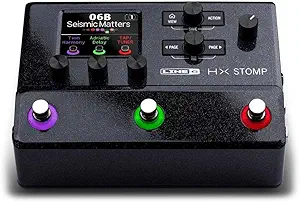
It does not suit a player who prefers a small number of well chosen pedals, and it does not suit a buyer who needs the specification before deciding, because this listing does not contain one. Those readers should look at a unit whose full specification is published or start from a compact pedal such as the Line 6 HX Stomp.