Description
What the S8 Is
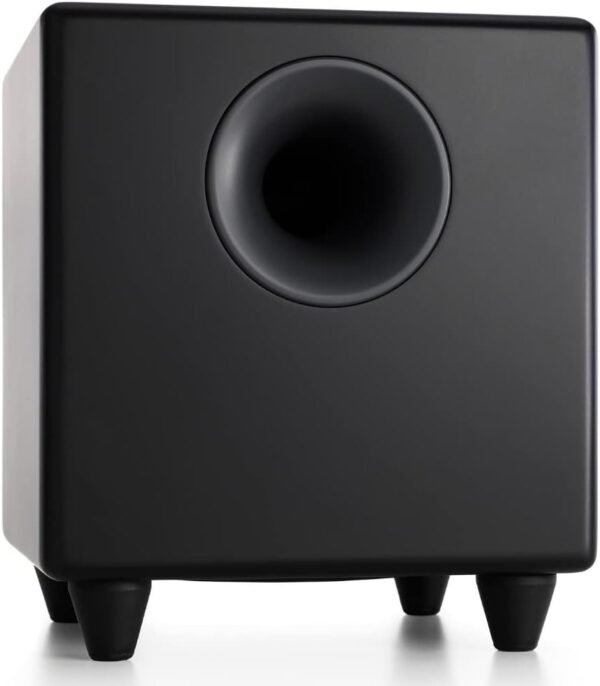
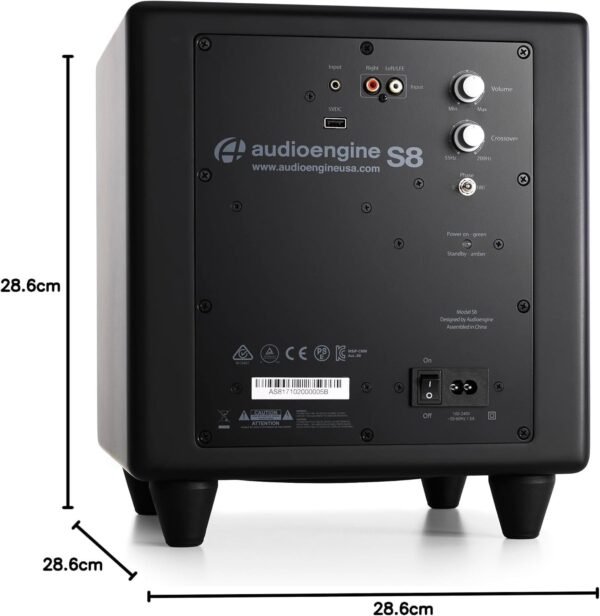
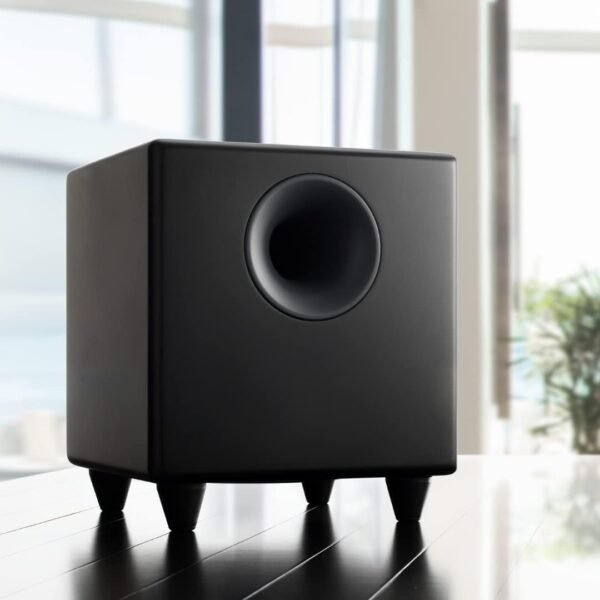
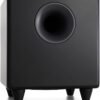
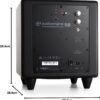
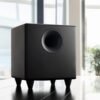
The Audioengine S8 is a powered subwoofer built around an 8 inch driver with 250 watts of amplification inside the cabinet. It is a compact design by subwoofer standards, listed at 11.26 inches on each side and weighing 30 pounds, which is roughly the size of a large cube rather than the floor standing box most 12 inch subwoofers require. Audioengine positions it as a way to add low frequency extension to a pair of bookshelf speakers, a stereo system or a home theater, rather than as a dedicated cinema subwoofer.
The company is based in Texas and describes itself as veteran owned, with a stated three year warranty and customer service handled by people rather than voicemail. Manufacturing is listed as taking place in China, which is worth noting alongside the company origin. Buyers comparing compact and full size approaches should look at the larger Dayton Audio SUB-1200 and the Klipsch R-8SW, which uses the same driver size.
Driver, Cabinet and Amplification
The 8 inch woofer uses a heavy duty rubber surround, which is the more durable choice compared with foam and is one of the reasons subwoofers of this type stay serviceable for decades. Audioengine describes an anti resonant steel frame behind the driver and a hand painted, hand finished MDF cabinet. Cabinet rigidity matters disproportionately in a subwoofer, because the forces involved in moving a large cone are substantial and a flexing panel radiates sound of its own that muddies everything above it.
Two hundred and fifty watts driving an 8 inch cone is a generous pairing. Smaller drivers need more power to reach a given output than larger ones, and a well powered 8 inch design can sound tighter and more controlled than an underpowered 12 inch one even though it will not go as deep. Audioengine also notes that the S8 can be made wireless by adding its own W3 wireless kit, sold separately, which removes the cable run to the subwoofer position.
Controls and Connection
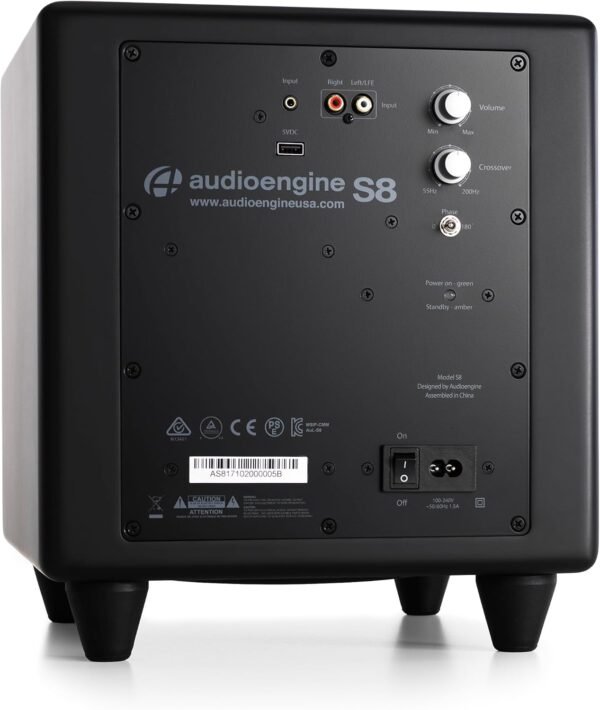
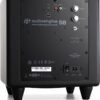
The two controls that matter for integrating a subwoofer are both present. A selectable crossover frequency adjustment sets the point above which the subwoofer stops working and the main speakers take over, and getting that point right is what makes a subwoofer disappear into a system rather than announce itself. A phase switch corrects for the timing difference caused by the subwoofer being in a different position from the main speakers, which is the usual fix when adding a subwoofer makes the bass sound thinner rather than fuller.
Connection is by RCA, and Audioengine states dual audio inputs. That makes the S8 compatible with any speaker system, receiver or turntable setup that provides an RCA analog output, which covers most stereo equipment. Included in the box are an RCA audio cable, a mini jack audio cable, an AC power cord, a microfiber cloth bag and a quick start guide, so no additional purchase is required to connect it. Owners running a turntable through it should look at the Fluance RT85N, and those pairing it with speakers can compare the bookshelf speakers selection.
Highlights
- 8 inch woofer with 250 watts of built in amplification.
- Compact 11.26 inch cube rather than a floor standing cabinet.
- Selectable crossover frequency for integration with existing speakers.
- Phase switch to correct timing against the main speakers.
- Hand painted and hand finished MDF cabinet with an anti resonant steel frame.
- Heavy duty rubber speaker surround rather than foam.
- All connection cables and the power cord supplied in the box.
- Three year warranty stated by the manufacturer.
- Optional Audioengine W3 kit converts the connection to wireless.
Things To Consider
The attribute table on this listing is unreliable. The input voltage is given as 240 volts, which is the European standard rather than the 120 volts used in the United States, and would be the difference between a working subwoofer and a damaged one if taken literally. It lists a built in microphone as a special feature, states that two lithium polymer batteries are required, gives a vehicle service type of Car and a surround sound channel configuration of 3.0. The speaker size of 11 inches describes the cabinet rather than the driver, which is 8 inches. A buyer should confirm the mains voltage with Audioengine before ordering.
What the listing does not publish is a frequency response figure, which for a subwoofer is the most important specification of all. Without a stated low frequency limit there is no way to know how deep this reaches, and an 8 inch driver in a sealed cabinet of this size will not extend as low as a 12 inch design regardless of amplifier power. The 250 watt rating is also given without measurement conditions.
On practical grounds, a compact subwoofer is a trade. It gains placement flexibility and loses ultimate depth and output, which is the right trade for music in a small or medium room and the wrong one for large room home theater. There is no wireless capability without buying the separate W3 kit. And at 30 pounds it is heavy for its size, so a shelf is not an option. Buyers wanting deeper extension should compare the subwoofers category more broadly, including the Klipsch R-12SW.
Who It Suits
The S8 suits someone adding low end to a pair of bookshelf speakers or a desktop system, who has limited floor space, and who wants proper crossover and phase controls rather than a fixed setting. The compact cube form and the complete cable set make it one of the more straightforward subwoofers to integrate into an existing stereo setup.
It is a weaker choice for a large room, for a dedicated cinema where the deepest effects matter, and for anyone who needs published frequency response before buying. Those buyers should look at 12 inch designs, and anyone whose main system is a sound bar should check compatibility carefully, since many bars only work with their own matched subwoofer. The S8 needs a source that provides an RCA analog output, which most sound bars do not, so it belongs to a component system rather than a bar based one.