Description
What the Klipsch R-8SW Is and Who It Suits
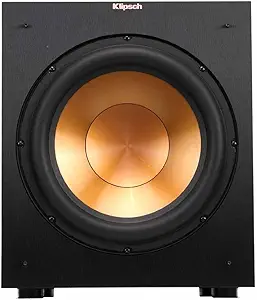
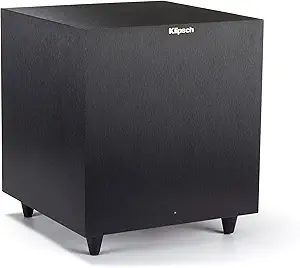
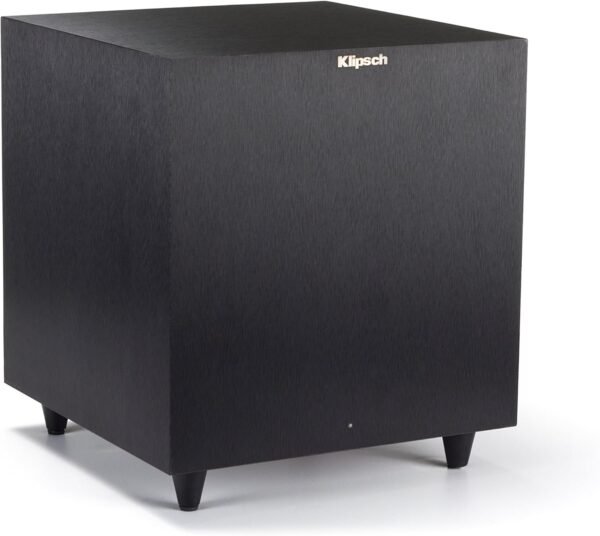
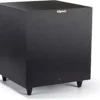
The Klipsch R-8SW is a compact powered subwoofer from the company’s Reference line. Klipsch specifies an 8 inch spun copper injection molded graphite woofer, a built-in all digital amplifier, a down firing driver, a low pass crossover with phase control, line and LFE inputs, an MDF cabinet with a brushed polymer veneer finish, and a front mounted LED power indicator. The listing gives cabinet dimensions of 11.75 x 11.75 x 13.25 inches and a weight of 15 pounds, with 150 watts of peak power quoted in the product title.
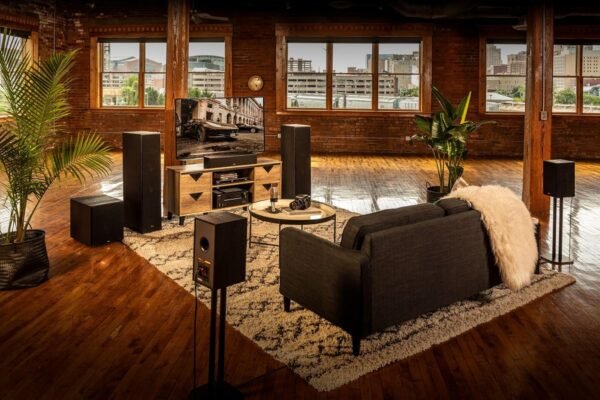
This is the subwoofer for a room where a large box is not welcome. Under 12 inches square in footprint, it disappears beside furniture in a way a 12 or 15 inch model cannot. The buyer is someone completing a small or medium home theater, or adding low frequency support to a pair of bookshelf speakers. Buyers with more space should compare the Klipsch R-12SW, which uses a larger driver, and readers building a matched system can look at the Klipsch R-51M bookshelf speakers.
The Driver, the Cabinet and Down Firing Placement
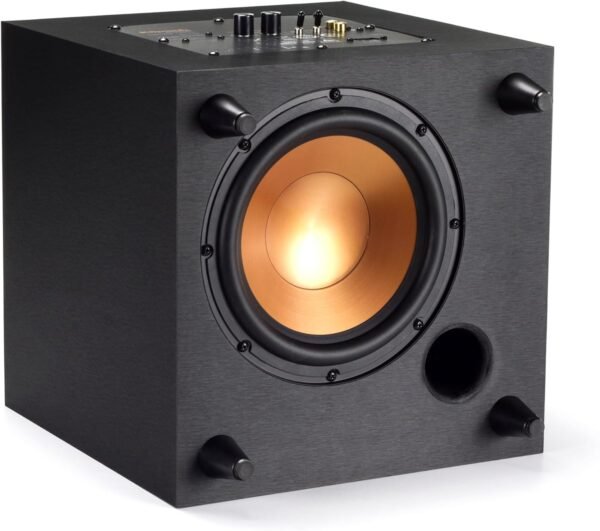
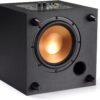
Klipsch’s injection molded graphite cone is the material choice the company highlights, describing it as light while being rigid, which it links to low frequency response with minimal cone breakup and distortion. Those two properties are genuinely in tension in loudspeaker design: a cone needs to be stiff enough not to flex at high excursion and light enough to accelerate quickly, and the material choice is where designers trade one against the other. The spun copper finish is cosmetic and has been a Klipsch signature for years.
The down firing arrangement points the driver at the floor rather than into the room. That has two consequences. It allows a shorter cabinet, since the driver depth runs vertically rather than horizontally, and it uses the floor as a boundary that reinforces output at low frequencies. It also means the subwoofer needs a hard or firm surface beneath it: placing a down firing subwoofer on thick carpet changes the gap between the driver and the floor and can muddy the result. Klipsch also notes the compact cabinet allows discreet, flexible placement.
Crossover, Phase and Getting It Blended
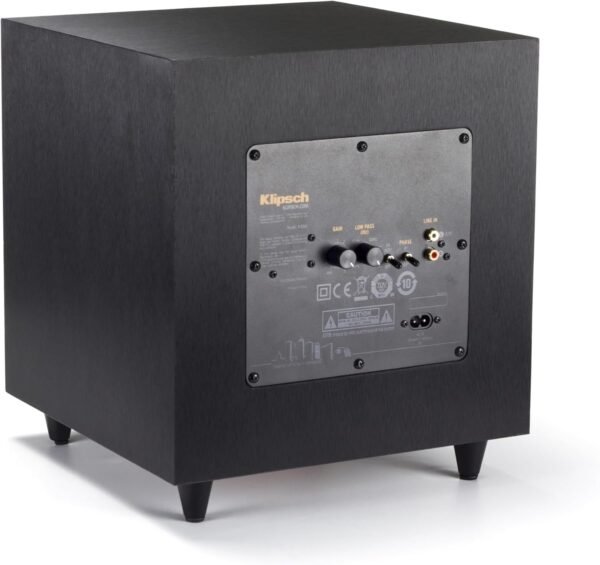
The two controls that decide whether a subwoofer sounds good are the low pass crossover and the phase control, and Klipsch lists both. The crossover sets the frequency above which the subwoofer stops playing, and it needs to meet the point where the main speakers stop rather than overlapping or leaving a gap. Set too high, the subwoofer becomes locatable and male voices sound thick. Set too low, there is a hole in the response that no amount of volume fixes.
Phase control addresses timing. Because the subwoofer sits in a different place from the main speakers, its output can arrive out of step and partially cancel rather than reinforce. The phase control lets the user shift that relationship until the bass sounds strongest at the listening position. Klipsch describes the pair of controls as allowing the user to blend the subwoofer’s low frequency tones with other Klipsch speakers and set the level of bass. Owners of a Klipsch system will find the matching center in the Klipsch R-52C.
Inputs, Amplifier and Connection
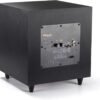
Klipsch lists line and LFE inputs and says this ensures compatibility with old and new receivers. That distinction matters. An LFE input takes the dedicated subwoofer output from a modern receiver, which has already applied its own crossover, so the subwoofer’s internal crossover should be bypassed or set to maximum. A line level input takes a stereo signal from an older amplifier that has no subwoofer output, in which case the subwoofer’s own crossover does the work. Getting this wrong is the most common setup error with any subwoofer.
The amplifier is described as all digital, which Klipsch links to power with high efficiency. In practice a class D amplifier runs cool and small, which is what allows a 15 pound cabinet this compact to contain meaningful power. Owners who want to place the subwoofer away from the receiver without running a cable should note that this model has a wired connection, and the Klipsch WA-2 wireless kit exists precisely for that problem on compatible Klipsch subwoofers. The full range of options is in the subwoofers category.
Highlights
- 8 inch spun copper injection molded graphite woofer.
- Built-in all digital amplifier, quoted at 150 watts peak power.
- Down firing driver allows a shorter cabinet and uses floor reinforcement.
- Low pass crossover and phase control for blending with the main speakers.
- Both line level and LFE inputs for old and new receivers.
- Carries a 4.5 star rating across 176 ratings on the source listing.
Things To Consider
The power figure needs care. The product title states 150 watts peak power, and peak is not the same as continuous. Continuous power, sometimes called RMS, is the figure that describes what an amplifier can sustain, and it is typically a fraction of the peak number. Comparing this subwoofer’s peak rating against another model’s continuous rating produces a misleading result, so buyers should look for like for like figures in Klipsch’s own documentation.
The specification block also has errors. Special Feature is listed as Radio, which no subwoofer has. Control Method is given as Remote, and this model has no remote control. Speaker Size is recorded simply as 8 with no unit. Compatible Devices lists projectors, MP3 players, tablets and smartphones, none of which connect to a subwoofer directly.
The genuine limitations follow from the size. An 8 inch driver in a 13 inch tall cabinet cannot reach the lowest octave that film soundtracks use, and no amount of amplifier power changes the volume of air a small cone can move. In a large room the R-8SW will run out of headroom before it runs out of extension. Klipsch does not publish a frequency response figure in this listing, which is the number that would settle the question. The connection is wired only, and this model first became available in February 2017, making it an established design rather than a current release.
Who Should Buy It, and Who Should Not
This suits a small or medium room where cabinet size is the constraint, and it suits someone adding low frequency support to bookshelf speakers or a compact center channel. The crossover and phase controls plus the dual input options make it straightforward to integrate with almost any system.
It does not suit a large open plan room or a buyer who wants the deepest cinema effects, where a 10 or 12 inch model such as the Dayton Audio SUB-1200 is the right starting point. It also does not suit anyone who needs a wireless connection out of the box.