Description
What the SUB-1200 Is
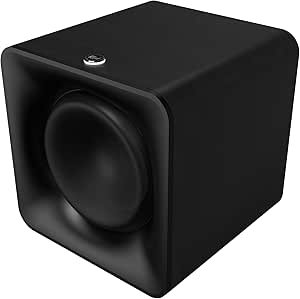
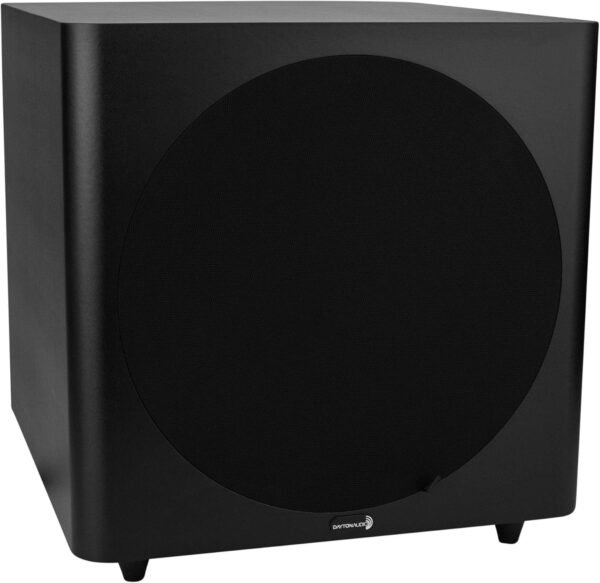
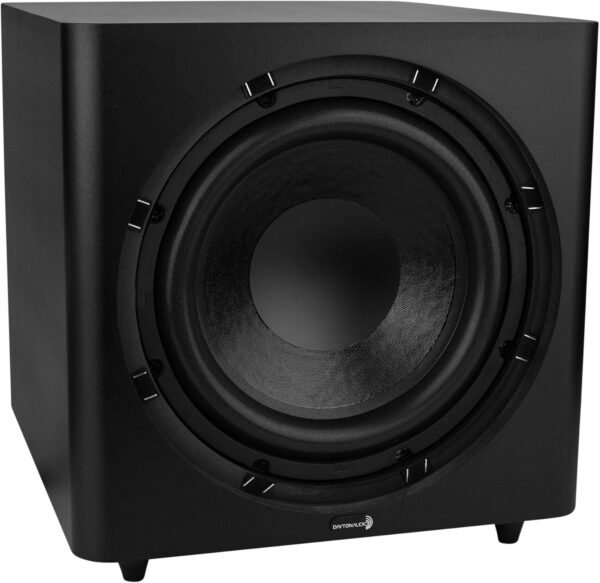
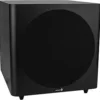
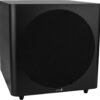
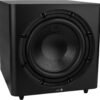
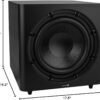
The Dayton Audio SUB-1200 is a powered subwoofer built around a 12 inch long throw woofer in a ported cabinet, with the driver firing downward toward the floor and the port flared to reduce air noise. Powered means the amplifier is inside the cabinet, so it connects to a receiver or processor by a line level RCA cable rather than by speaker wire from an external amplifier. That is the standard arrangement for home theater subwoofers and it is why a single RCA connection is all the listing specifies for signal.
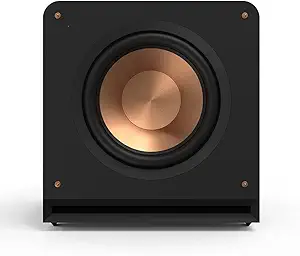
Dayton Audio is the house brand of Parts Express, and its products are generally positioned as competent engineering without the marketing overhead of the larger names. This particular model has been on sale for well over a decade, and at the time this data was captured it showed 338 ratings at an average of 4.5 stars and ranked 60th in home audio subwoofers. Buyers comparing options across brands should also look at the Klipsch R-12SW, which uses the same driver size in a front firing cabinet.
Cabinet Design and the Downward Firing Driver
A downward firing driver points at the floor rather than into the room. The practical consequence is that the floor becomes part of the loading, which can reinforce output, and that the cone is protected from being kicked or poked, which matters in a household with children or pets. It also means the subwoofer needs a hard floor or a low pile surface underneath it to work as designed; deep carpet absorbs some of what the driver is producing.
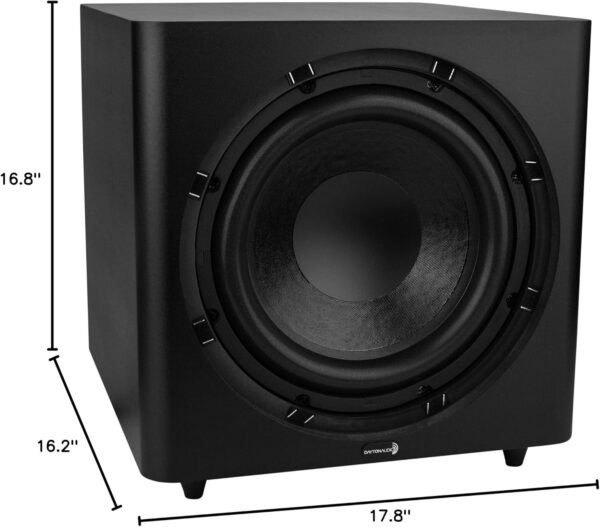
The port is described as flared, which is a specific and useful detail. Ports move air at high velocity, and a straight port with sharp edges produces turbulence that is audible as chuffing on heavy bass notes. Flaring the ends smooths that airflow. Combined with a long throw driver, which is designed to move further than a conventional cone, the design is aimed at getting substantial output from a cabinet of moderate size. The stated dimensions of 17.75 by 16.68 by 16.75 inches describe a cube of roughly a foot and a half on each side, and the weight is given as 32.9 pounds.
Setup, Controls and Connection
The selectable auto on mode is the most practically useful feature listed. With it enabled, the subwoofer powers itself up when it detects an incoming signal and returns to standby when the signal stops, so it does not need to be switched on and off by hand or left drawing power continuously. Being selectable matters, because auto on circuits can be triggered by noise or fail to trigger on very quiet passages, and having the option to force the unit on avoids both problems.
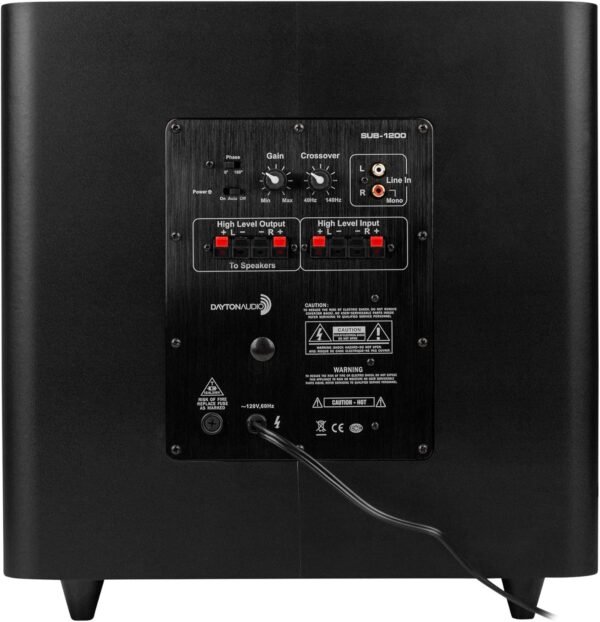
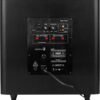
Connection is by RCA, listed under connectivity protocol, and the impedance is given as 4 ohms. Power is corded electric, and the included components field lists only the speaker itself, so a buyer should expect to supply the RCA cable. Anyone integrating this into a full system will be doing so through a receiver such as the Onkyo TX-RZ50, where the subwoofer output and the crossover settings live. Owners pairing it with tower speakers can compare the same brand’s Dayton Audio Classic T65.
Highlights
- 12 inch long throw woofer, larger than the drivers found in most sound bar subwoofers.
- Downward firing arrangement that protects the cone and uses floor loading.
- Flared port to reduce audible air turbulence on heavy bass.
- Selectable auto on mode so the unit sleeps when idle.
- Built in amplifier, connected by a single RCA line level cable.
- Textured black vinyl finish over a wood cabinet.
- Long running model with a substantial review history.
Things To Consider
The single most important number for a powered subwoofer is the amplifier rating in watts, and this listing does not publish it. Nor does it publish a frequency response figure, a crossover range, or a phase control specification. For a product whose entire job is producing low frequencies, the absence of a stated low frequency limit is a real gap, and it makes paper comparison against competitors impossible. Buyers should consult the Dayton Audio datasheet before ordering.
Several listing fields are also wrong. The vehicle service type is given as Car, on a home subwoofer. The control method is listed as touch. Dayton Audio’s own bullet points refer to stacking multiples of the SUB-1000L, a different model number from the one being sold, which suggests the copy was reused from another product in the range. None of these affect the hardware, but they show the page was not checked.
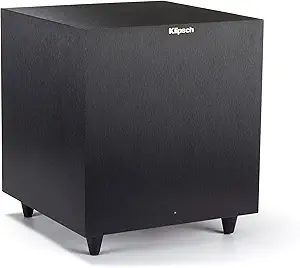
On practical limitations, a 12 inch ported subwoofer is a large object. At roughly 17 inches on each side and nearly 33 pounds it needs real floor space and cannot be tucked behind furniture, since a port needs clearance to breathe. Ported cabinets also produce more output than sealed ones at the cost of a steeper roll off below the tuning frequency, so the deepest content may fall away faster than a sealed design of similar size. And a single subwoofer in a room produces uneven bass by nature; placement makes more difference than most people expect. Anyone comparing smaller alternatives should look at the Klipsch R-8SW or browse the wider subwoofers range.
Who It Suits
The SUB-1200 suits someone building a home theater or stereo system on a budget who has the floor space for a full size cabinet and a receiver with a subwoofer output. A 12 inch driver in a ported box is a genuinely different proposition from the small drivers bundled with sound bars, and for movie soundtracks in particular that difference is the whole point.
It is the wrong purchase for a small apartment, for anyone who needs the subwoofer hidden, and for a buyer who wants published amplifier power and frequency response before committing. Those looking for something more compact should compare the Audioengine S8, which is built around a smaller driver in a sealed cabinet.