Description
What the Samson Meteor Mic Is and Who It Suits
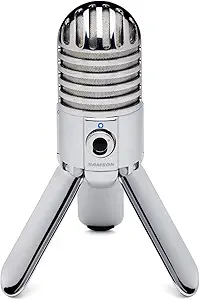
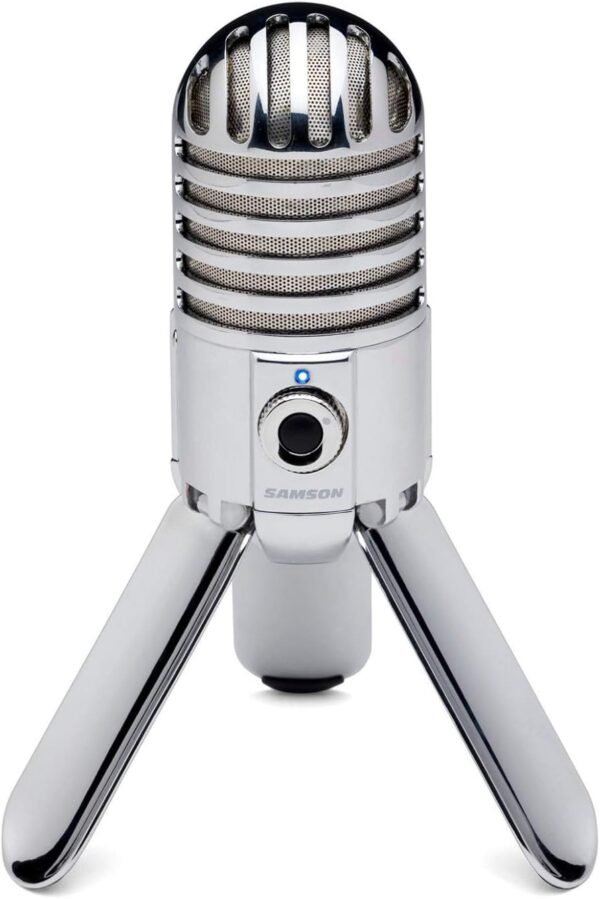
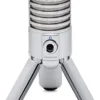
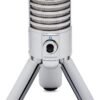
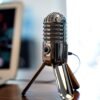
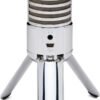
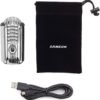
The Meteor Mic is a USB condenser microphone with a distinctive chrome body and three fold out legs that act as its stand. It connects directly to a computer over USB, requiring no audio interface and no phantom power supply. The listing gives the material as metal, the color as chrome, the weight as 10.6 ounces, the frequency range as 20 Hz to 20 kHz and the signal to noise ratio as 96 dB. It has been listed since January 2011 and remains ranked inside the top 150 multipurpose condenser microphones on Amazon.
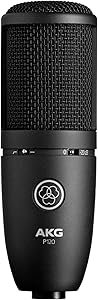
The buyer this suits is someone recording podcasts, voiceover, video calls or music demos on a computer who wants one object on the desk and no signal chain to assemble. That is the entire argument for USB microphones. Anyone who already owns an audio interface should buy an XLR microphone instead, such as the AKG P120 or the Shure MV7X, which offer more flexibility for the same money.
USB Convenience and What It Costs
A USB microphone contains its own preamplifier and analog to digital converter, presenting itself to the computer as an audio device. That removes three purchases: the interface, the XLR cable and the phantom power supply. For someone whose only requirement is getting a voice into a computer, that is the correct product category.
The tradeoff is that the conversion and the preamplifier are fixed. There is no option to use a better interface later, no way to run two microphones into one recording without software workarounds, and no path into a mixer or a camera. A USB microphone is a complete solution rather than a component in a system.
The stated signal to noise ratio of 96 dB is a reasonable figure for a USB condenser and indicates a usable noise floor for spoken word. The specification table also lists a noise level of 96 dB, which duplicates the signal to noise figure into the wrong field; self noise on a microphone of this type would normally be a much smaller number in the teens or twenties.
The Fold Out Legs
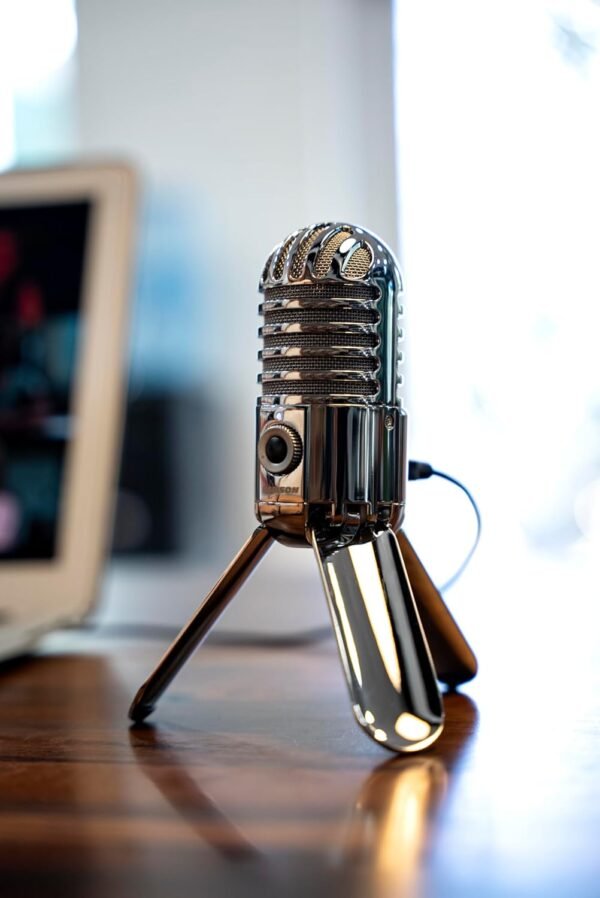
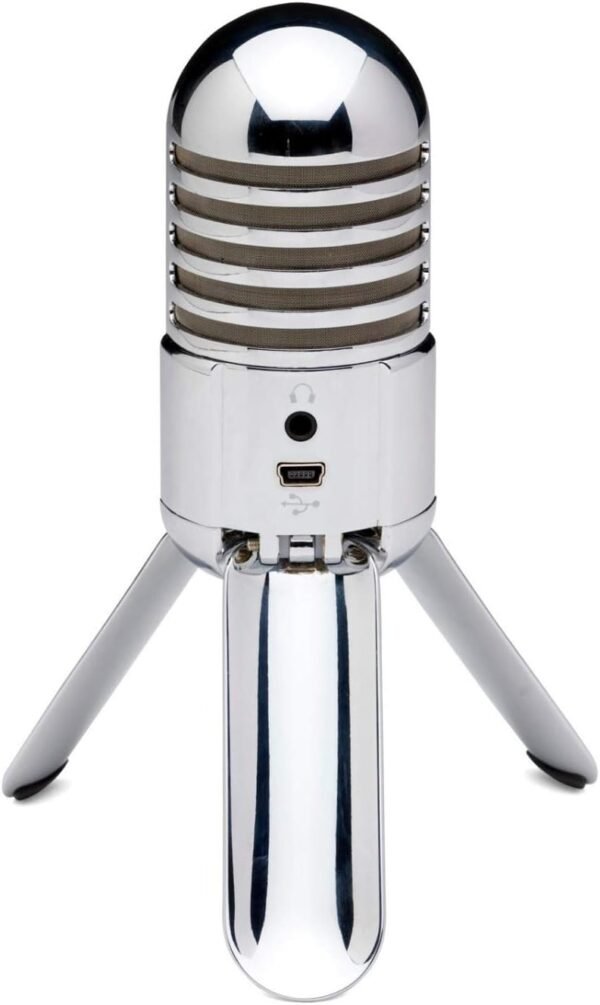
The three fold out legs are the design signature and are more practical than they appear. They tilt the microphone toward the speaker at an adjustable angle, they collapse flat for transport, and they eliminate the need for a separate desk stand. For a portable recording setup, a microphone that stands itself up is genuinely convenient.
The limitation is that a desk mounted microphone picks up desk vibration, keyboard noise and mouse clicks directly through its legs. A boom arm such as the RODE PSA1+ solves that by decoupling the microphone from the desk surface and positioning it closer to the mouth, and it is the usual upgrade for anyone recording seriously at a computer.
Compatibility, Monitoring and Listing Problems
The hardware platform is listed as PC, tablet and camera. Camera compatibility is doubtful for a USB microphone and should not be assumed. Tablet compatibility depends on the tablet supporting USB audio devices and supplying enough power, which varies. Computer use is the reliable case, and USB class compliant microphones of this type generally need no drivers on Windows or macOS.
Samson’s design includes a headphone output for monitoring, which is an important feature on a USB microphone: it allows the user to hear themselves through the microphone without the delay that comes from monitoring through the computer’s software. The listing does not mention it in the attribute data, so it is not documented here, but it is worth asking about before purchase since latency free monitoring is one of the main practical differences between USB microphones.
Several listing entries do not hold up. The power source is given as USB microphone, which is a category rather than a specification, while a separate field states that one lithium ion battery is required. A USB microphone draws all its power from the connection and has no battery. The frequency response field reads a bare 20 KHz alongside the correct full range elsewhere. The audio sensitivity of 50 dB has no stated reference and is not interpretable on its own. The item dimensions of 6 by 5 by 3 inches describe the package rather than the microphone.
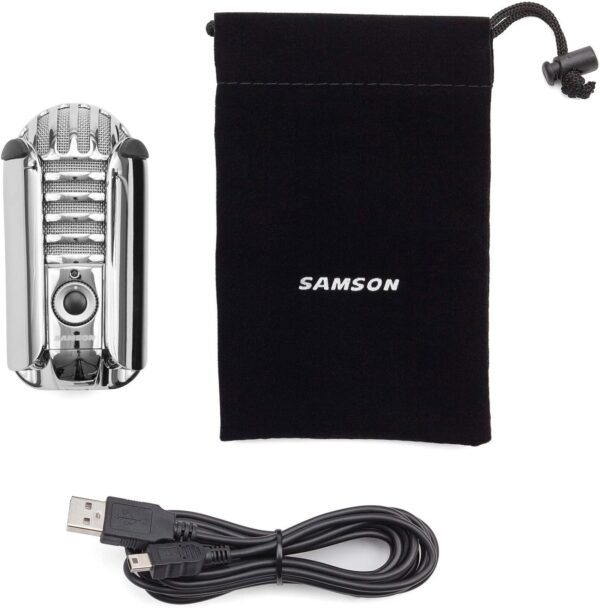
The UPC field contains six separate codes and the listing has run since 2011, which together indicate a merged listing accumulated across variants and bundles. Buyers should confirm exactly what arrives, including whether a USB cable and a carrying pouch are supplied.
Highlights
- Direct USB connection with no interface, cable or phantom power supply required.
- Fold out legs that serve as a stand and collapse flat for transport.
- Chrome plated metal construction rather than plastic.
- 96 dB signal to noise ratio with a stated 20 Hz to 20 kHz range.
- Class compliant USB operation, so no drivers are normally needed.
- Long established product with more than a decade of owner experience behind it.
Things To Consider
USB microphones cannot be upgraded piecemeal. The preamplifier and converter are fixed, and there is no path to a mixer, a camera or a multi microphone setup.
Desk mounting picks up vibration and keyboard noise through the legs. A boom arm is the usual remedy, and it defeats part of the point of the fold out design.
The specification table lists a required lithium ion battery on a bus powered microphone, gives a noise level identical to the signal to noise ratio, and reports an uninterpretable sensitivity figure.
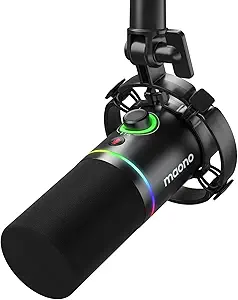
Camera compatibility is claimed but doubtful, and tablet compatibility depends on the tablet. The six UPC codes and the 2011 listing date indicate a merged listing, so box contents should be confirmed. The design also predates USB-C entirely, so the connector type should be checked. Buyers can compare newer USB options across the multipurpose microphones category, including the MAONO PD200X and the Shure MV6, and browse the vocal microphones category for XLR alternatives.
Who Should Buy It and Who Should Not
The Meteor Mic fits someone who wants a single object that turns a laptop into a recording setup, who values metal construction and a self supporting design, and who records in a reasonably quiet room. Its longevity in the market is itself evidence that the design works for that purpose.
It is the wrong microphone for anyone who already owns an interface, for multi microphone recording, or for a buyer who wants a current generation product with USB-C and documented monitoring. A portable stereo option such as the Shure MV88+ is worth comparing for anyone recording away from a desk.