
Description
What the RODE PSA1+ Is and Who It Suits
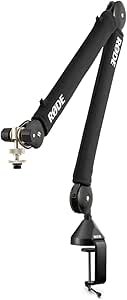
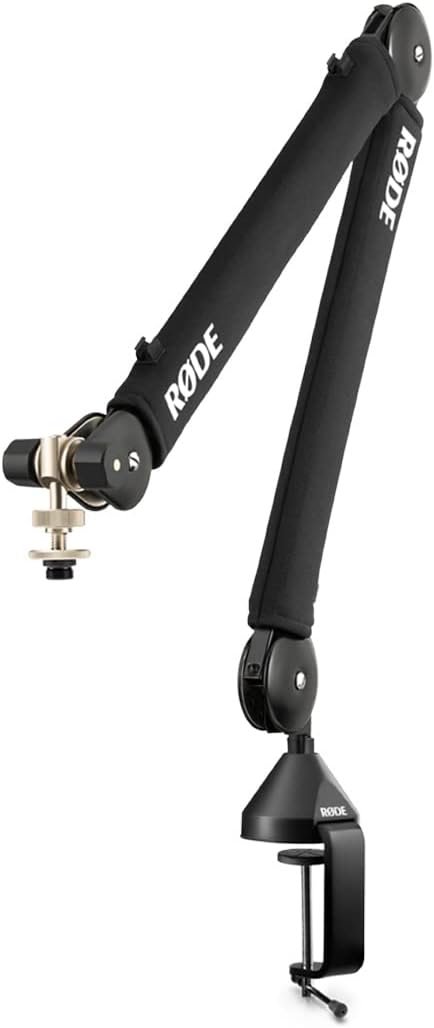
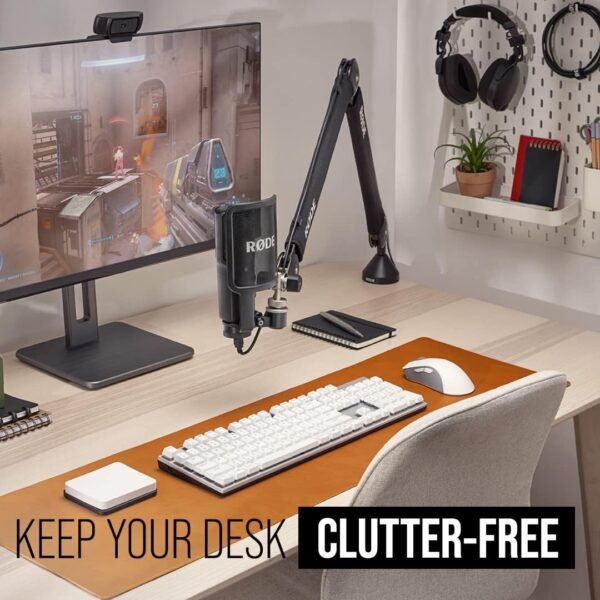
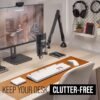
The PSA1+ is a professional desk mounted microphone boom arm, the successor to RODE’s long running PSA1. It uses a parallelogram spring mechanism to hold a microphone in position anywhere within its reach, with internal springs that are fully damped and a neoprene sleeve over the arm. RODE positions it for podcasters, streamers and broadcasters. The listing gives a packaged size of 21.25 by 8.25 by 3.25 inches and a weight of 3.4 pounds, with 1,748 ratings at an average of 4.8 stars since October 2021.
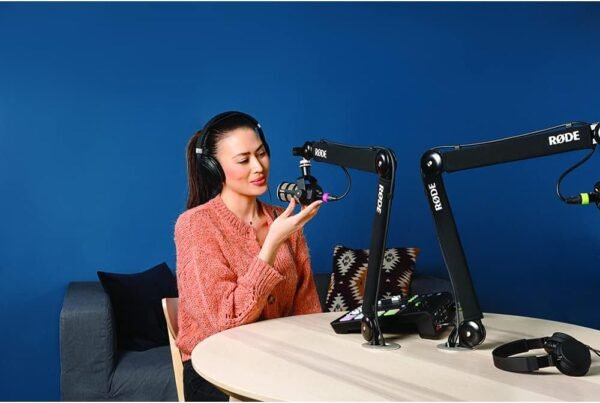
The buyer this suits is anyone recording spoken word at a desk with a microphone heavy enough to need proper support. A boom arm is not an accessory in that context; it is what allows a microphone to be positioned correctly relative to the mouth without occupying desk space or picking up desk vibration. Owners of a microphone such as the Shure MV7X or the Audio-Technica AT2035 are the direct audience.
The Parallelogram Design and Silent Operation
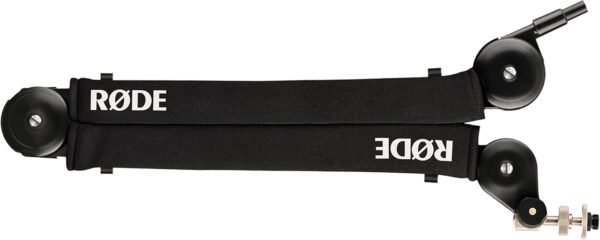
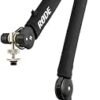
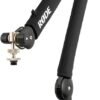
A parallelogram arm keeps the microphone’s orientation constant as the arm moves, so raising or lowering it does not tilt the microphone. That is the practical difference between a proper studio arm and a simple two segment arm with friction joints, and it is why the design has been standard in broadcast for decades.
The silent operation claim is the more important one for anyone recording. Spring loaded arms make noise when they move: springs creak, joints click, and metal transmits sound directly into the microphone body. RODE addresses this two ways, by damping the springs internally and by covering the arm in neoprene. For a live stream or a podcast where the microphone is repositioned mid recording, an arm that squeaks is genuinely unusable.
RODE also claims isolation from keyboard, mouse and desk noise. That is a function of the desk clamp and the arm structure decoupling vibration, though it is worth being clear that no boom arm eliminates desk vibration entirely. A microphone with an internal or external shock mount handles the remainder.
Cable Management
Integrated cable routing for both USB and XLR is a feature that sounds cosmetic and is not. A cable hanging loose from a boom arm swings when the arm moves, catches on the desk edge, and transmits handling noise up into the microphone. Routing the cable inside or along the arm removes all three problems and keeps the desk clear.
Supporting both USB and XLR matters because the two cable types have very different diameters and connector sizes, and a channel sized only for a thin USB cable will not accept a locking XLR connector. RODE states both are accommodated.
Reach, Rotation and Mounting
RODE describes extended reach and full 360 degree rotation. Reach determines whether the arm can bring a microphone from a desk clamp at the back or side of a workspace to a position in front of the speaker without the arm base intruding. Full rotation means the arm can be swung entirely out of the way when not in use, which matters on a desk that also serves as a workspace.
The mounting method is a desk clamp, and the listing does not state the maximum desk thickness it accommodates or whether a desk insert mount option is included. That is a practical omission, because thick desks and desks with a lip or a rear cable channel are common obstacles. Buyers should measure their desk edge before ordering.
The threading is described in one bullet as standard microphone threading, though that bullet contains an obvious typo, rendering standard as Stard. The listing does not state whether the thread is 5/8 inch or 3/8 inch, or whether an adapter is supplied. Since microphone stand threads come in both sizes, this is worth confirming before purchase; most microphones ship with an adapter that resolves it.
The listing also does not state the maximum supported microphone weight, which is the single most important specification for a spring arm. A spring arm holds position by balancing the load, so a microphone that is too heavy will sag and one that is too light will drift upward. Heavier microphones such as broadcast dynamics push arms toward their limits, and RODE does not publish the figure here.
Highlights
- Parallelogram spring design keeps microphone orientation constant through movement.
- Fully damped internal springs and a neoprene cover for quiet repositioning.
- Integrated cable management sized for both USB and XLR cables.
- Full 360 degree rotation, so the arm can be swung clear of the desk.
- Extended reach for positioning from a clamp at the desk edge.
- 1,748 ratings at 4.8 stars since 2021, an unusually strong record.
Things To Consider
No maximum microphone weight is published. For a spring arm that is the key compatibility figure, and its absence means buyers with heavy microphones are guessing.
The desk clamp specification is not stated. Maximum desk thickness, whether a desk insert option exists, and whether the clamp suits a desk with a rear lip are all unaddressed in the listing.
The thread size is not specified beyond a bullet that contains a typo. Most microphones include a thread adapter, so this is usually resolvable, but it should not require guessing.
A boom arm occupies permanent desk edge real estate and adds visual bulk. Anyone with a small desk or a shared workspace should consider a desk stand instead, and anyone mounting a microphone to an instrument rather than a desk needs a different product entirely, such as the Shure A56D drum mount. Buyers can compare microphones to pair with it across the vocal microphones and multipurpose microphones categories.
Who Should Buy It and Who Should Not
The PSA1+ fits a podcaster, streamer or voice recordist who works at a desk, repositions the microphone regularly, and needs the arm to be silent while doing it. The cable management and the damped springs are the two features that separate it from generic arms, and the rating record suggests the design delivers on them. It pairs naturally with a desk microphone such as the MAONO PD200X or the Samson Meteor Mic, though the latter is light enough that a simple stand would also work.
It is unnecessary for anyone using a light USB microphone that sits on a desk without complaint, for a fixed installation where the microphone never moves, or for a desk with no suitable clamping edge. It is also not the right choice for someone who needs a documented weight capacity before committing, since this listing does not publish one.