
Description
What the Audio-Technica AT4040 Is and Who It Suits
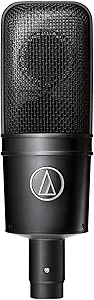
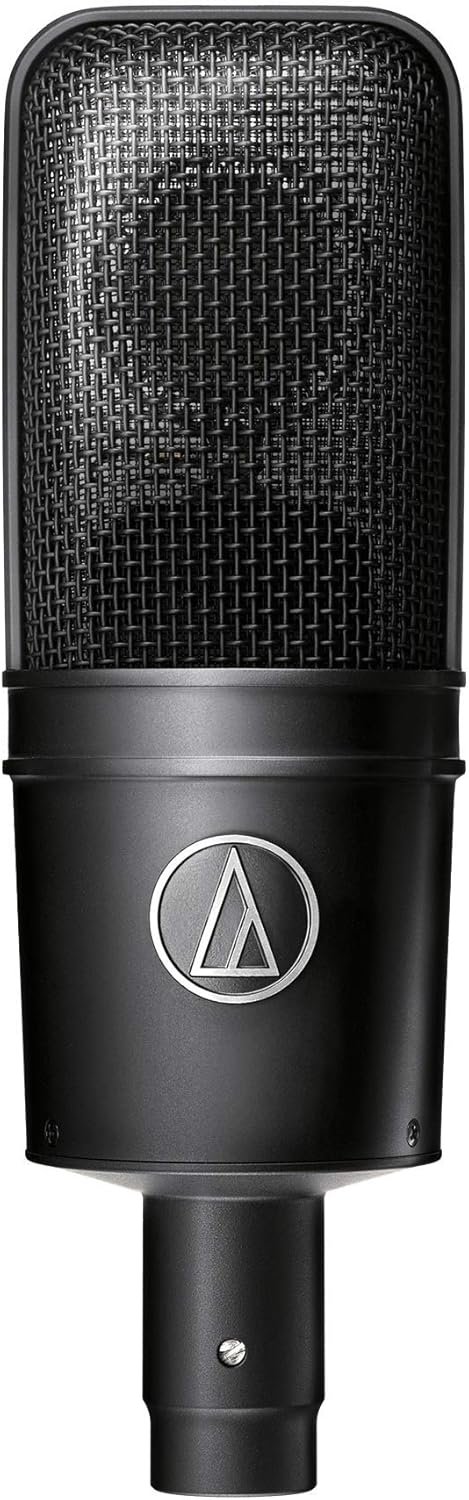
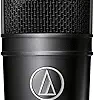
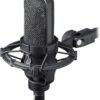
The Audio-Technica AT4040 is a large diaphragm cardioid condenser microphone built for studio recording. The listing gives brass construction, a single channel, a signal to noise ratio of 82 dB, a black finish and a microphone form factor of Microphone Only, meaning no stand or interface is included. It first became available in July 2004 and is listed as not discontinued, which after two decades is a meaningful statement about a design’s standing.
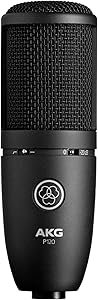
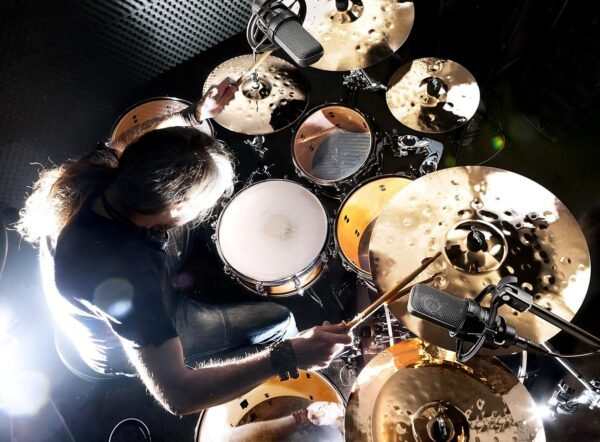
The buyer is someone recording voice or acoustic instruments in a space they have some control over. A large diaphragm condenser is the standard tool for studio vocals and for capturing detail on acoustic guitar, piano and drum overheads. It is not the right microphone for a noisy bedroom setup, for reasons covered below. Readers comparing condensers at different levels should look at the Audio-Technica AT2035 and the AKG P120.
Condenser Versus Dynamic and What Cardioid Means
Two properties define this microphone. The first is that it is a condenser, which uses an electrically charged diaphragm and a backplate to convert sound into a signal. That design is far more sensitive than a dynamic microphone and has a faster transient response, which is why condensers capture the detail in a voice or the attack of a guitar string more completely. The cost of that sensitivity is that the microphone hears everything: the fan, the street, the room’s own reverberation.
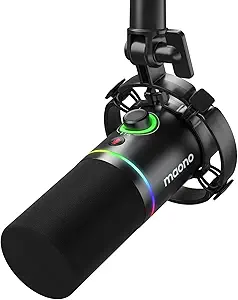
The second is that it is cardioid, meaning it is most sensitive to sound arriving from the front and rejects sound arriving from the rear. That directionality is what makes a condenser usable outside a completely quiet room, because pointing the null at a noise source removes a good deal of it. Cardioid microphones also exhibit proximity effect, a bass boost that increases as the source gets closer, which experienced vocalists use deliberately and inexperienced ones stumble into. Readers who need a microphone that rejects room noise more aggressively should consider a dynamic such as the MAONO PD200X.
Phantom Power and the Signal Chain
A condenser microphone needs power to work, and the standard supply is 48 volt phantom power delivered up the same XLR cable that carries the audio. Every audio interface and mixing desk built for microphones provides it, usually behind a switch labeled 48V or with a phantom symbol. A condenser plugged into a device without phantom power produces no signal at all, and this catches out a great many first time buyers.
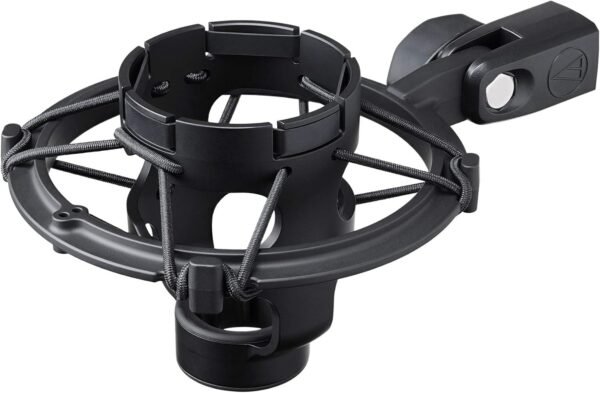
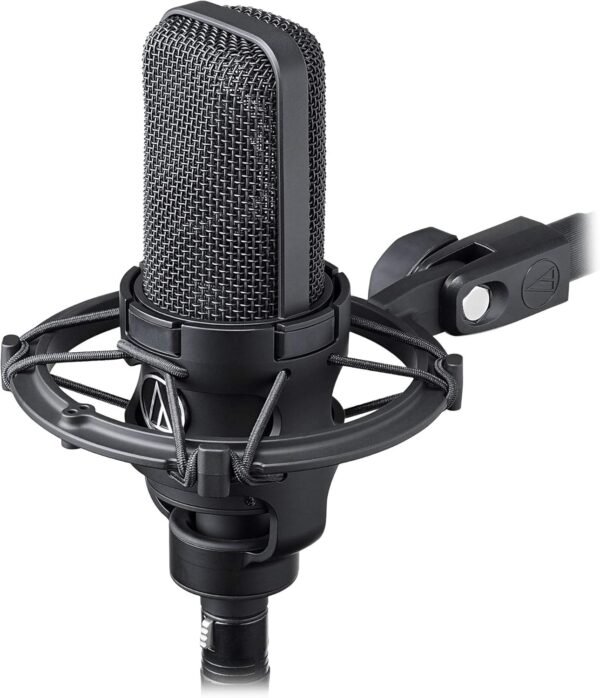
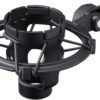
That makes the interface part of the purchase rather than an optional extra. The other part is a stand, since a large diaphragm condenser is normally suspended in a shock mount on a boom to isolate it from vibration through the floor and the desk. The Rode PSA1 studio arm covers an arm suited to studio microphones. The wider multipurpose microphone selection has the alternatives.
Build, Longevity and Studio Practice
Material is listed as Brass, which for a microphone body means mass and rigidity, both of which help by damping resonance in the housing. A microphone that has stayed in production since 2004 has a long history of use behind it, and that matters practically: parts, shock mounts, cases and accessories remain available, and a large body of collective experience exists about how it behaves on different sources.
The signal to noise ratio of 82 dB describes how far the microphone’s own self noise sits below its reference level, and self noise is the specification that matters most for quiet sources such as fingerpicked guitar or spoken word at low level. What the listing does not publish is the maximum sound pressure level, which decides whether the microphone can be placed in front of a loud source such as a guitar amplifier or a snare drum without distorting. That figure should come from Audio-Technica’s documentation. Buyers working on spoken content rather than music will find alternatives across the vocal microphone section.
Highlights
- Large diaphragm cardioid condenser designed for studio recording.
- Brass construction, which adds mass and damps housing resonance.
- Signal to noise ratio listed at 82 dB.
- Suited to vocals, acoustic instruments and drum overheads.
- In continuous production since 2004, so accessories and knowledge are widely available.
- Sold as the microphone alone, without stand or interface.
Things To Consider
The specification block is thin and partly wrong. Power Source is listed as AC, which is misleading: this microphone does not plug into a wall outlet, it requires 48 volt phantom power from an interface or mixer over the XLR cable. A buyer who reads that field literally will not understand what else they need to buy. Noise Level is listed as 82 dB, the same figure as the signal to noise ratio, which is one value duplicated into a field that measures something different. Frequency Response is recorded as a single value of 20000 Hz rather than a range. Item Weight of 3.15 pounds and dimensions of 11 x 9.8 x 4.5 inches describe the shipping package rather than the microphone.
The listing also carries seven different UPC codes and two Global Trade Identification Numbers, which usually indicates the same product sold through many channels or repackaged over a long production run. It is not a fault, but it does mean buyers should confirm they are purchasing new stock from an authorized seller if warranty matters.
The absent specifications are the important ones for a condenser: maximum sound pressure level, self noise in dB SPL A weighted, sensitivity, and whether a pad or a high pass filter switch is fitted. All four are standard on a studio microphone specification sheet and none appear here. The practical caveats are also real. A condenser in an untreated room records the room as clearly as the source, so acoustic treatment is not optional if the goal is a clean recording. And phantom power plus a stand plus a shock mount plus a cable are all additional purchases.
Who Should Buy It, and Who Should Not
This suits someone recording vocals or acoustic instruments in a room with some acoustic treatment, who already owns an interface with phantom power, and who wants a long established studio microphone rather than a streaming product. The two decade production run is a genuine argument in its favor.
It does not suit a streamer or podcaster working in an untreated room with a mechanical keyboard, where a dynamic microphone will produce a cleaner result, and it does not suit anyone without an interface, since the microphone cannot connect to a computer directly.