Description
What the Boss IR-2 Is and Who It Suits
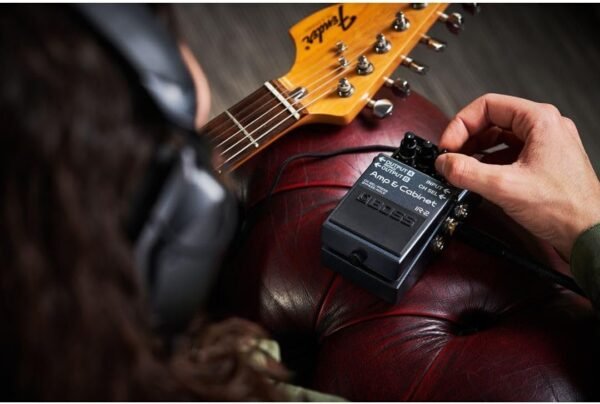
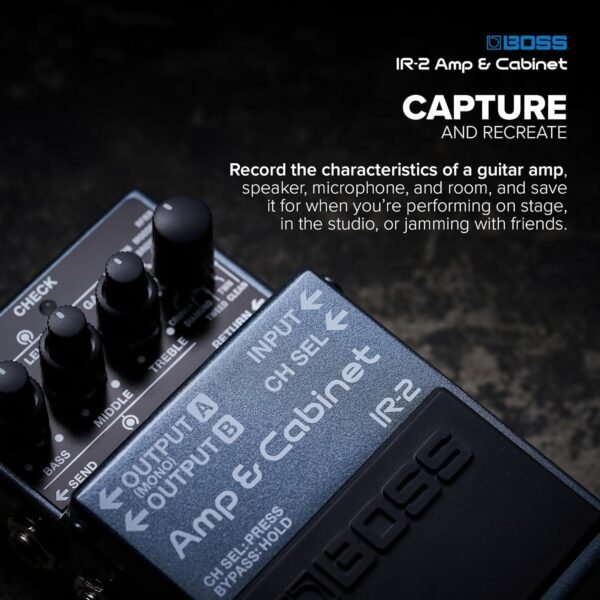
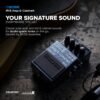
The Boss IR-2 is a compact pedal that combines amplifier modeling with cabinet impulse responses. Boss frames the problem it solves directly: with a conventional guitar amplifier, getting consistent tone across different rooms and different stages is difficult, because the amplifier interacts with whatever space it is in and whatever microphone is placed in front of it. The IR-2 sidesteps that by producing a complete amp and cabinet sound in the pedal, ready to send to a house PA or a recording setup.
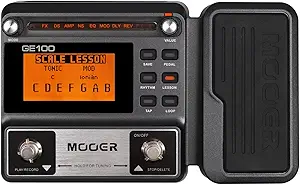
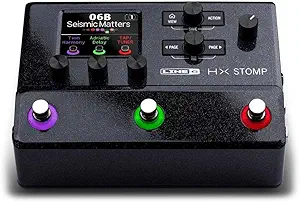
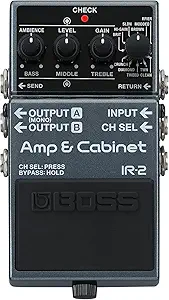
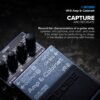
Boss states that the pedal offers 11 premium amp types paired with Celestion Digital impulse responses, adjusted through simple controls. Impulse responses are measured captures of a real speaker cabinet in a real room with a real microphone, and Celestion is the company that makes many of the physical speakers being captured, which gives the licensing some weight. The buyer this suits is a gigging guitarist going direct, a player who records at home, or someone who wants a reliable backup tone if a stage amplifier fails. Players who want a larger board format instead should compare the Boss GX-100 and the Line 6 HX Stomp.
Amp Types, Impulse Responses and Controls
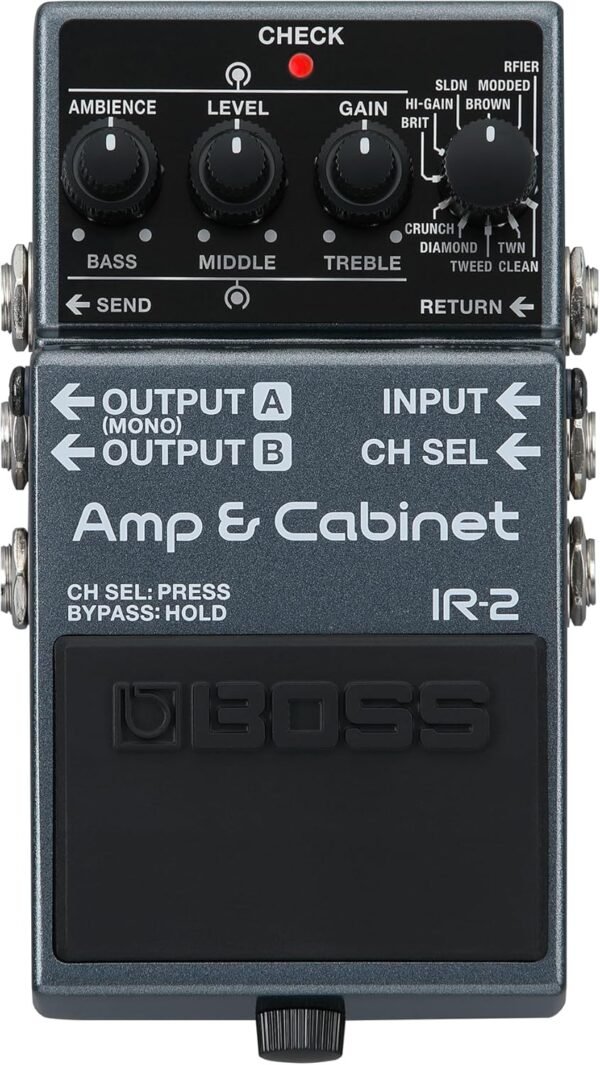
The 11 amp types cover the ground a working guitarist expects, from clean platforms through to high gain. Boss does not publish the full list in this listing, so the specific models are best confirmed from the manual. The important architectural point is that the amp voice and the cabinet impulse response are separate stages, which means a given amp character can be sent through different speaker captures. That separation is what gives this class of pedal its flexibility, because the cabinet choice usually has more effect on the final tone than the amp choice does.
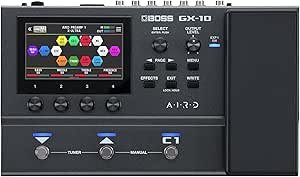
Boss emphasizes simple controls and immediate tweaking rather than menu diving, which is the design line separating a pedal like this from a full multi effects unit. There is a real advantage to knobs that do one thing each when adjusting tone at soundcheck with a room full of people waiting. The cost is depth: a unit with a screen and deep editing will always offer more parameters. Players who want that depth should read about the Boss GX-10, which is built around a much larger feature set.
Routing, the Effects Loop and Headphone Monitoring
The IR-2 includes what Boss describes as a mono and stereo loop for post amp effects. That matters more than it sounds. Time based effects such as delay and reverb are usually placed after the amplifier’s preamp stage rather than in front of it, because running a delay into a distorted preamp turns repeats into mud. A loop on an amp simulator pedal lets a delay or reverb sit in the correct position in the signal chain. Players adding a dedicated delay after this pedal can look at the Boss DD-8 digital delay for a unit that suits that position.
A headphone output is also included, which Boss ties to monitoring and quiet practice. For a pedal already producing a full amp and cabinet sound, headphones turn it into a complete practice rig with no amplifier at all. This is a genuinely useful feature for apartment players and for anyone practicing late. Players who still want a small physical amplifier in the room alongside it can compare the Vox AC4C1-12 combo.
Size, Power and Stage Practicality
The listing gives dimensions of 2.88 x 5.16 x 2.36 inches and a weight of 1.24 pounds, which is the standard Boss compact pedal footprint. Power source is listed as corded electric at 9 volts, which is the normal pedalboard supply voltage. Digital pedals typically draw more current than analog ones, so anyone adding this to a crowded board should check the current draw figure in the manual against the available milliamps on their power supply, since an overloaded supply causes noise rather than a clean failure.
Color is listed as Black, and the pedal first became available in November 2023, which makes it a recent design. The source listing shows a 4.4 star rating across 29 ratings and a sales rank of number 25 in Electric Guitar Floor Multieffects. Those numbers reflect a small sample on a relatively new product, so they carry less weight than a rating built from thousands of buyers. Guitarists browsing the wider floor multieffects category will find both simpler and far more complex alternatives.
Highlights
- 11 amp types paired with Celestion Digital cabinet impulse responses.
- Mono and stereo effects loop for placing delay and reverb after the amp stage.
- Headphone output for silent practice with a complete amp and cabinet sound.
- Standard Boss compact enclosure at 2.88 x 5.16 x 2.36 inches and 1.24 pounds.
- Runs on the usual 9 volt pedalboard supply.
- Designed to feed a house PA or a recording interface directly.
Things To Consider
The imported specification block contains two entries that make no sense for a guitar pedal and should be ignored. Hardware Interface is listed as SAS, which is a computer storage connection standard and has nothing to do with audio. Signal Format is listed as Analog, while the entire premise of the product is digital amp modeling and digital impulse response convolution. Buyers should treat these as import noise rather than product information.
The genuine limitations are worth stating plainly. Boss does not publish the amp type list, the number of user presets, the sample rate, or the impulse response length in this listing, and impulse response length in particular affects how much of a cabinet’s character is captured. It is not clear from the listing whether user loaded third party impulse responses are supported, which is a dividing line for many buyers. With only 29 ratings behind the review score, long term reliability data is thin. Finally, going direct means giving up the physical interaction between a guitar, a loud speaker and a room, which some players value and no simulation reproduces.
Who Should Buy It, and Who Should Not
This suits a gigging player who wants the same tone in every venue, a home recordist who needs a finished guitar sound without microphones, and anyone who wants a compact silent practice rig. It also works well as a failsafe on a board in case a backline amplifier dies mid set.
It does not suit a player who wants deep editing, hundreds of presets and a footswitchable song by song setup, since that is a different class of device. Nor does it suit someone who wants the feel of a real cabinet moving air behind them. Those players should look at a multi effects floor unit or a combo amplifier instead.