Description
What the Line 6 HX Stomp Is and Who It Suits
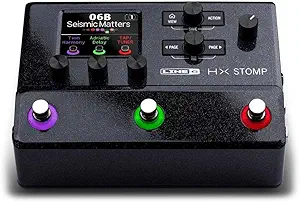
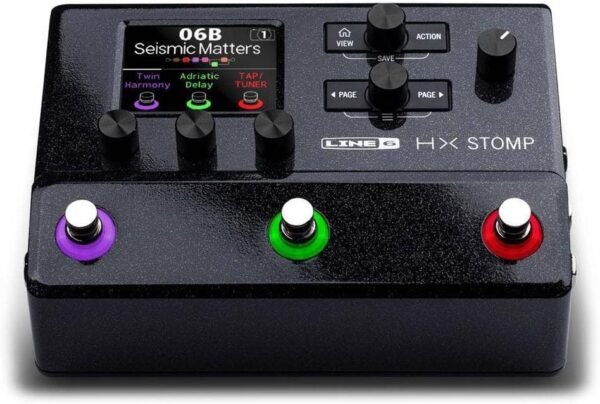
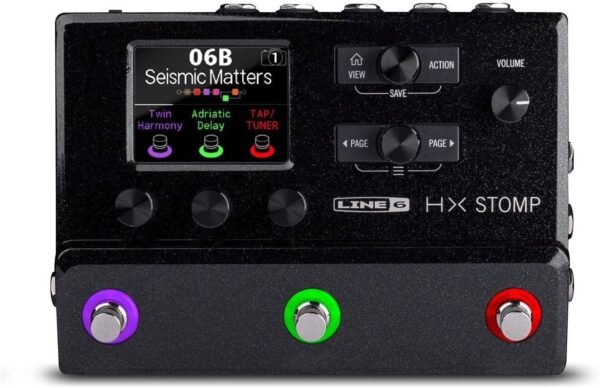
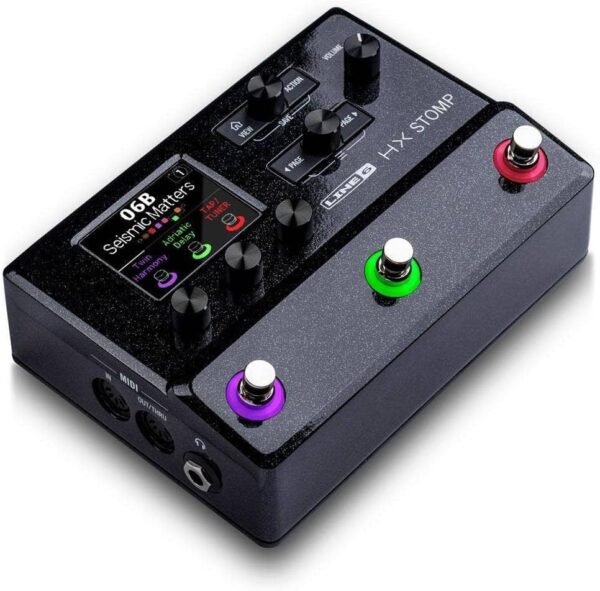
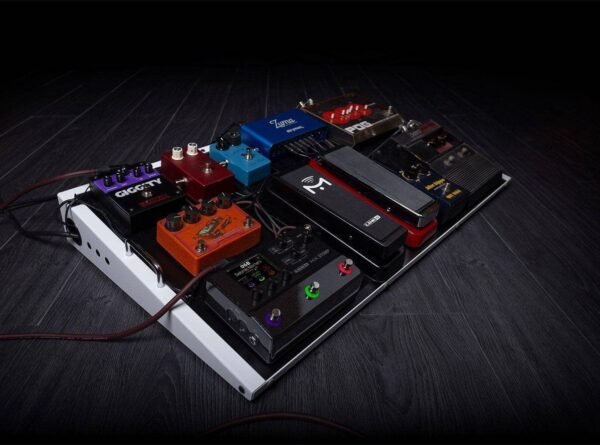
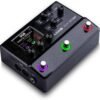
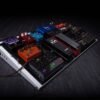
The HX Stomp is Line 6’s attempt to put professional grade modeling into a pedal that fits on an existing board. It runs the same HX Modeling technology as the flagship Helix processor, with the same amp, cabinet and effect models, but in an enclosure the listing gives as 6.7 by 4.8 by 2.5 inches. Line 6 describes four distinct roles for it: a super stompbox on a conventional board, a backup or travel rig, a tone expander alongside another modeler, and a complete standalone guitar or bass rig. It also functions as an audio interface.
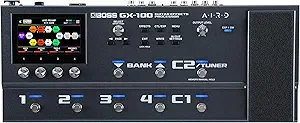
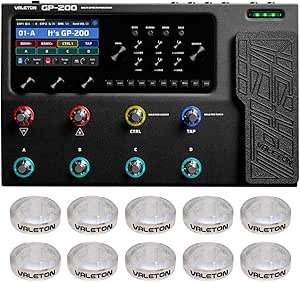
The player this suits is someone who already knows what they want from a modeler and needs it in the smallest practical package. It is a considered purchase rather than a first multi effects unit, and a beginner exploring sounds is better served by something broader and cheaper such as the Valeton GP-100. A player who wants a full sized floor unit with more footswitches should compare the Boss GX-100 instead.
The Modeling Engine and Block Count
The central claim is that HX Stomp is not a reduced version of the Helix engine but the same engine with fewer resources. Line 6 states over 300 amps, cabs and effects drawn from Helix, from the M-Series pedals, and from the legacy Line 6 stompbox modelers including the DL4 delay, MM4 modulation, FM4 filter and DM4 distortion. Those legacy models matter to players who built their sound around those pedals and want it back without hunting used hardware.
The practical constraint is the six block limit. Six simultaneous processing blocks covers an amp, a cabinet or impulse response, and four effects, which is enough for most conventional rigs but tight for anyone building elaborate parallel routing. The looper counts as a block, as does an impulse response, so the working total drops quickly. Players who routinely run large chains will hit that ceiling and should size up rather than fight it.
Impulse Response Loading and Bass Support
User loadable impulse responses are supported, which extends the cabinet options past the factory set. This is the same argument that applies to any modeler with IR loading: the cabinet stage has a larger effect on recorded tone than most players expect, and third party IRs are widely available.
Line 6 also states that presets created specifically for bass players are included, along with individual bass amp and cabinet models. That is a genuine differentiator, since many guitar focused modelers treat bass as an afterthought. A bassist looking at compact rigs should weigh this against dedicated units such as the Tone Hammer bass preamp.
Interface, Routing and Studio Use
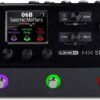
Control is handled by three capacitive sensing footswitches with color coded LED rings and a 320 by 240 pixel color display. Capacitive sensing means the switches respond to touch as well as to being pressed, which speeds up editing by letting a player select a block without changing the sound. Three footswitches is a small number for live preset changes, which is why Line 6 supports external MIDI control and an optional expression pedal or footswitch through a TRS input.
Routing is the strongest part of the design. The input and output configuration can feed an amplifier and a front of house mixer simultaneously, run four cable method with a conventional amplifier so that effects sit correctly around the amp preamp, and handle studio reamping. Free HX Edit software handles deeper editing from a computer, which is how most owners will build presets.
Two specification errors are worth flagging. The item weight is listed as 0.01 ounces, which is obviously wrong for a metal enclosure of this size. The signal format is listed as analog, which contradicts the entire premise of a digital modeling processor. The voltage is given as 9 volts and the country of origin as USA. The unit was first listed in October 2018 and shows 446 ratings at an average of 4.6 stars.
Highlights
- The same HX Modeling engine as the Helix flagship, in a pedalboard sized unit.
- Over 300 amps, cabs and effects, including legacy DL4, MM4, FM4 and DM4 models.
- Six simultaneous blocks with user loadable impulse responses and a built in looper.
- Color display and capacitive footswitches for fast on unit editing.
- Flexible routing covering four cable method, simultaneous amp and mixer feeds, and reamping.
- Dedicated bass amp models and bass presets alongside the guitar content.
Things To Consider
Six blocks is the defining limitation. Players moving from a larger Helix or from a big pedalboard will notice it immediately, and there is no way around it other than buying a bigger unit.
Three footswitches limit live preset access without external control. A gigging player will likely need a MIDI controller or an external footswitch, which adds cost and undermines part of the size advantage.
The listing carries two clear data errors, a 0.01 ounce weight and an analog signal format, so the specification table should not be relied on. The listing also does not state the sample rate, the number of inputs and outputs, or whether a power supply is included, which matters because units of this type often ship with a proprietary supply rather than a standard 9 volt pedal power connection.
Finally, the product dates from 2018. That is a long life for digital hardware, and while Line 6 has issued firmware updates over that period, a buyer should check the current firmware feature set rather than assuming the listing reflects it. Players wanting a rack or desktop format should look at the desktop and rack multieffects category instead.
Who Should Buy It and Who Should Not
The HX Stomp fits a player who wants Helix quality models in the smallest enclosure that can carry them, who already understands signal routing, and who is willing to add a MIDI controller for live use. Its routing flexibility makes it particularly strong as a studio tool and as a travel rig. Players comparing options across the floor multieffects category will find it sits at the professional end on capability while remaining small.
It is not for a beginner, not for a player who needs many footswitch accessible presets out of the box, and not for anyone building large parallel signal chains. Those players should buy a full sized modeler and accept the board space.