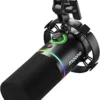
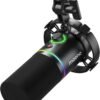



Description
What the MAONO PD200X Is and Who It Suits
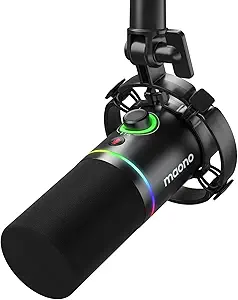
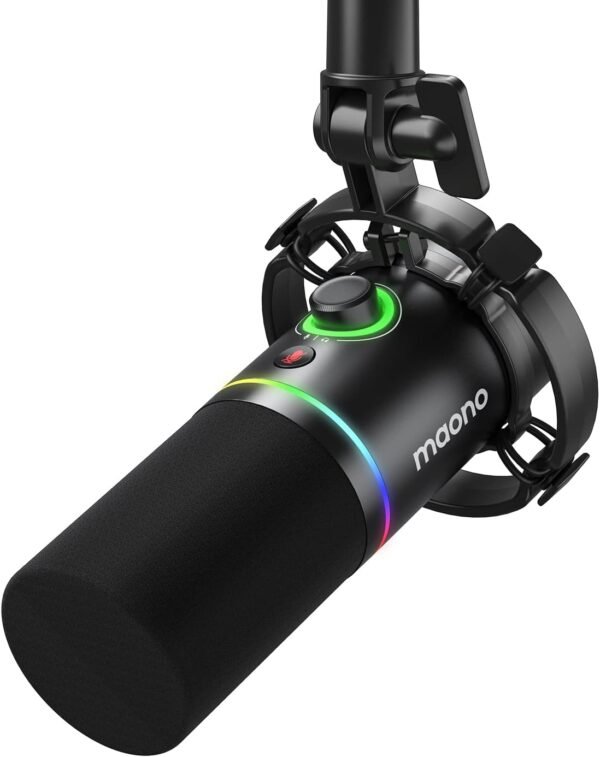
The MAONO PD200X is a dynamic microphone aimed at podcasting, streaming and gaming. The listing gives a metal body, a weight of 1.17 pounds, dimensions of 8.07 x 5.91 x 3.94 inches, a signal to noise ratio of 78 dB, a single channel, corded electric power, and a black finish. Hardware Platform is listed as laptop, audio interface and PC. It first became available in January 2023 and sits at number 15 in Multipurpose Dynamic Microphones on the source listing.
MAONO occupies the same market position as several other manufacturers supplying the streaming boom: broadcast style dynamic microphones at a fraction of professional prices. The buyer is someone building a desk for talking rather than a studio for music. Readers comparing options at the same level should look at the FIFINE AM8T and the Shure MV7X, both of which target the same shopper with different design choices.
The Dynamic Capsule and Why It Suits Spoken Word
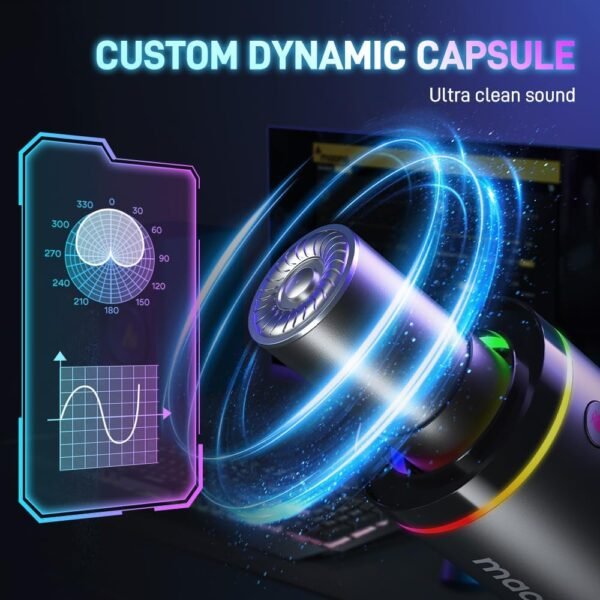
Dynamic microphones dominate broadcast for a reason that has nothing to do with sound quality in the abstract. A dynamic capsule uses a coil attached to a diaphragm moving in a magnetic field, which requires more sound energy to produce a signal than a condenser’s electrically charged membrane. Lower sensitivity means the microphone hears less of the room, and in a home office with a fan, a keyboard and a window, hearing less of the room is exactly what is wanted.
The trade is that the speaker must work close to the microphone, typically within a few inches, and must maintain that distance. Move away and the voice thins out and the room comes up. That discipline is second nature to broadcasters and takes practice for everyone else. It is also why a boom arm matters more with a dynamic microphone than with a condenser, since the arm holds the microphone at a consistent working distance. A suitable arm is covered in the Rode PSA1 studio arm.
Connection Options and What the Platform List Implies
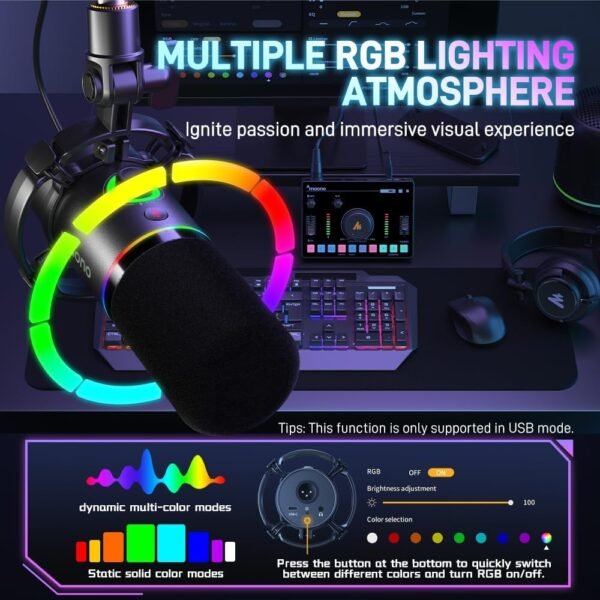
The Hardware Platform field names laptop, PC and audio interface, and that combination is informative. Laptops and PCs point to a USB connection that works without any additional equipment. An audio interface points to an XLR connection, which needs a separate preamp or interface to function. Microphones that list both usually have both, which is a genuinely useful arrangement: the USB output gets a user started immediately, and the XLR output provides an upgrade path when a proper interface arrives.
Buyers should confirm this against MAONO’s own documentation before ordering, because the listing does not state the connection types plainly and this is the single most consequential detail in the purchase. If the microphone is USB only, no interface is needed. If it is XLR only, the microphone alone will not produce sound. Readers who want a purely USB alternative with no ambiguity should look at the Samson Meteor Mic, and the wider multipurpose microphone category covers the alternatives.
Build, Controls and Desk Integration
Material is listed as Metal, which is worth noting on a product at this price point. A metal body adds mass, which reduces handling noise and helps the microphone stay put on a stand, and it is more durable than the plastic used at the cheapest end of the market. The listed weight of 1.17 pounds is consistent with a metal bodied broadcast style microphone and is a reasonable load for a decent boom arm, though a very light arm may struggle to hold it in position.
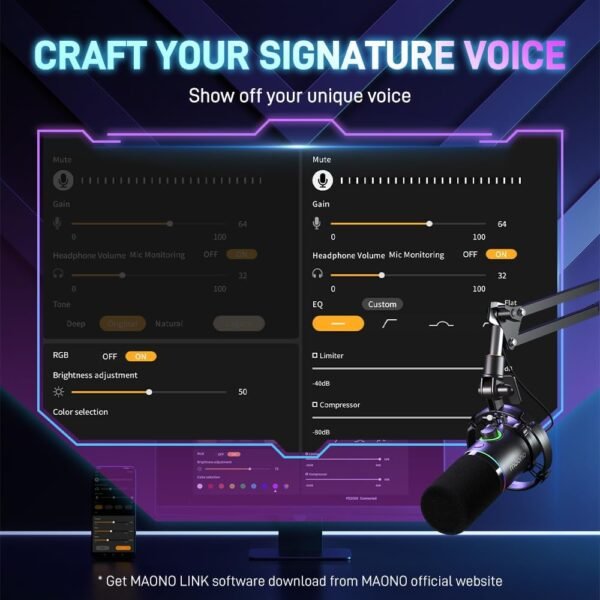
The listing gives Microphone Form Factor as Table Array, which does not accurately describe a handheld style broadcast microphone and should be disregarded. What the listing does not state is whether an onboard headphone output for zero latency monitoring is present, whether there is a physical mute, or whether gain is adjustable on the body. All three are common on microphones in this class and all three should be confirmed. Streamers assembling a full setup can also look at the vocal microphone selection.
Highlights
- Dynamic capsule, which rejects room noise better than a condenser in untreated spaces.
- Metal body construction rather than plastic.
- Signal to noise ratio listed at 78 dB.
- Hardware platform list covers both computers and audio interfaces.
- Listed at 1.17 pounds, a manageable load for a standard boom arm.
- Ranked number 15 in its listed microphone category on the source data.
Things To Consider
The specification data has several problems. Frequency Response is listed as a single value of 20 KHz, which is not a response specification at all, and no frequency range is published anywhere on the sheet. Audio Sensitivity is given as 52 dB with no reference level, which makes the number impossible to interpret or compare. Microphone Form Factor is listed as Table Array, which describes a completely different kind of microphone. Item dimensions and Product Dimensions both read 8.07 x 5.91 x 3.94 inches, which is likely the packaged size rather than the microphone body.
More importantly, the listing omits the specifications that decide whether a microphone suits a given voice and room. There is no polar pattern, which for a dynamic microphone is usually cardioid but is not stated here. There is no maximum sound pressure level, no impedance, no explicit connection type and no itemized list of what is in the box. Buyers should treat the manufacturer’s documentation as the reference throughout.
On the product itself, the ordinary caveats apply. Dynamic microphones need close and consistent placement. They generally produce a lower output level than condensers, so if connected over XLR they need an interface with enough clean gain, and a noisy preamp will be audible. And a microphone designed around speech will not flatter singing or acoustic instruments the way a large diaphragm condenser does.
Who Should Buy It, and Who Should Not
This suits a podcaster, streamer or remote worker who wants a metal bodied dynamic microphone for speech, and who values noise rejection in an untreated room over the extra detail a condenser captures. If the dual connection reading is correct, it also suits someone who wants to start on USB and move to an interface later.
It does not suit music recording, where a condenser is normally the right tool, and it does not suit a buyer who needs published polar pattern and frequency response data before deciding. Those readers should choose a microphone whose manufacturer publishes a full specification sheet.