Description
What the KZ ZS10 Pro Is and Who It Suits
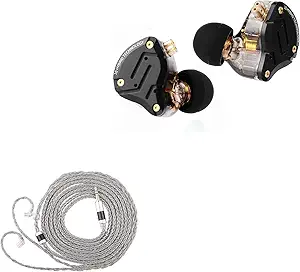
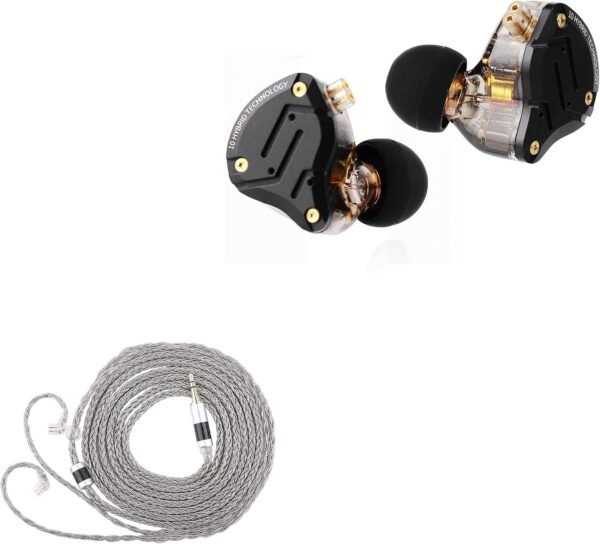
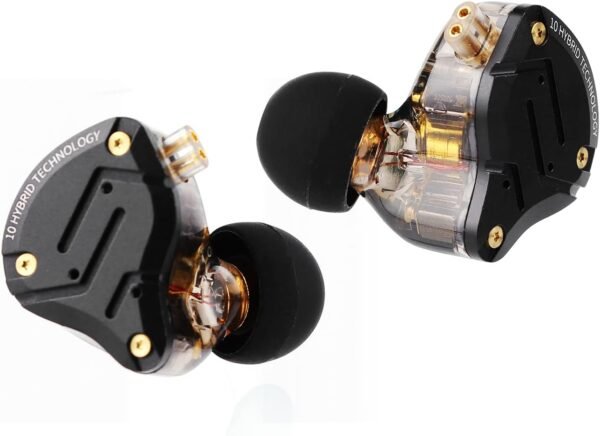
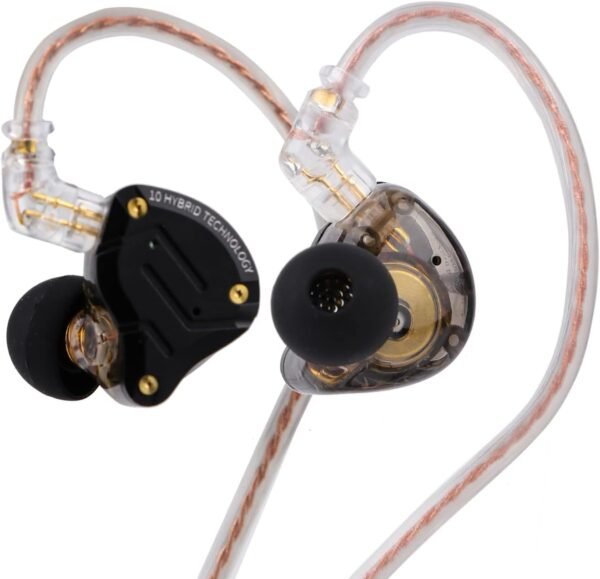
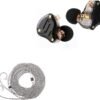
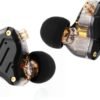
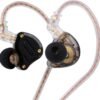
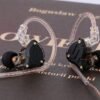
The KZ ZS10 Pro is a wired in-ear monitor built around a five driver hybrid array. The listing title from Linsoul describes four balanced armatures plus one dynamic driver per side, metal earphone shells with a stainless steel faceplate, and a Tripowin Zonie in-ear monitor cable in a two meter length. The specification sheet adds a 3.5 mm jack, wired connectivity, a detachable cable, a hybrid driver type and a frequency range of 20 Hz to 20,000 Hz. This particular listing dates from November 2024.
KZ is one of the manufacturers that made multi driver in-ear monitors affordable, and the ZS10 Pro has been one of its most widely discussed models. The buyer is someone new to the wired in-ear world who wants to hear what a hybrid array sounds like without a large commitment. Readers comparing directly should look at the CCA C12, which uses a very similar architecture, and the Etymotic ER3XR for the opposite single driver philosophy.
Four Balanced Armatures Plus One Dynamic
The two driver technologies in a hybrid do different jobs. A dynamic driver moves a diaphragm with a voice coil in a magnetic field and is good at low frequencies because it can displace a useful volume of air. A balanced armature is a tiny sealed mechanism originally developed for hearing aids, efficient and fast through the midrange and treble but unable to move enough air for deep bass.
A hybrid assigns bass to the dynamic driver and everything above it to the armatures, with a crossover network splitting the signal. The engineering challenge is entirely in that crossover: each driver has its own frequency response and phase behavior, and blending five of them into a coherent whole is considerably harder than tuning one. Driver count is a marketing figure rather than a quality measure, and a well tuned single driver design will beat a poorly integrated five driver one. The Moondrop Chu II DSP covers a single driver alternative that makes the opposite argument.
The Detachable Cable and the Included Upgrade
Cable Feature is listed as Detachable, which is the most practical durability feature on any wired earphone. Cables fail at the strain relief long before drivers do, and a detachable connector turns that failure into a cheap replacement rather than the end of the product. It also allows a change of cable length, a switch to a version with a microphone, or a move to a balanced termination.
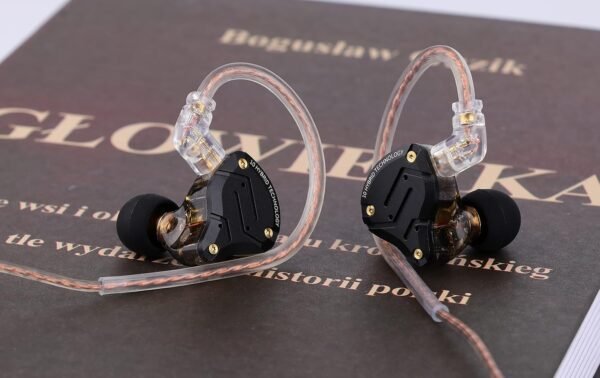
This particular listing bundles a Tripowin Zonie cable in a two meter length rather than the stock cable, which is a notable inclusion because the standard cable supplied with budget in-ear monitors is usually the weakest part of the package. A two meter length suits desktop use, where a standard 1.2 meter cable is often too short to reach a computer under a desk, and is less convenient for portable use where the excess has to go somewhere. Listeners pairing these with a portable source should look at the FiiO KA13 dongle, and the amplifiers category covers the desktop alternatives.
Fit, Shells and Isolation
The listing describes metal earphone shells with a stainless steel faceplate. Metal adds mass and rigidity, both of which help acoustically by reducing shell resonance, and it is more durable than the resin used on many competitors. It also makes the earpiece heavier, which for a design that hangs in the ear with the cable routed over the top can affect comfort during long sessions.
Earpiece Shape is listed as rounded tips, indicating a sealed in-ear design. That seal provides passive isolation, which for a wired monitor with no electronics is the only isolation available, and it is effective against high frequency noise such as voices and keyboards while doing less about low frequency rumble. As with every in-ear, the seal decides the outcome: a poor fit removes most of the bass and most of the isolation simultaneously, so buyers should expect to experiment with tip sizes. The Sivga Nightingale illustrates a different approach to sealing for anyone who finds standard tips difficult.
Highlights
- Five drivers per side: four balanced armatures plus one dynamic.
- Metal shells with a stainless steel faceplate.
- Detachable cable, so a cable failure is a cheap repair.
- Supplied with an aftermarket cable rather than a basic stock one.
- Two meter cable length, which suits desktop listening.
- 3.5 mm connection that works with any conventional source.
Things To Consider
The specification block is sparse and contains obvious errors. Control Method is listed as App, and there is no app and no controls of any kind on a passive wired earphone. Number of Power Levels is given as 10, which is meaningless for a device with no power. Water Resistance Level is listed as Water Resistant with no rating attached, and buyers should not assume any protection from sweat or rain on this basis.
More importantly, the listing omits the two specifications that matter most for an in-ear monitor. Impedance and sensitivity together determine what will drive the earphone properly, and multi armature designs are often both low impedance and highly sensitive, which makes them prone to revealing hiss from a noisy source. Neither figure is published here, so buyers should obtain them from KZ before pairing these with a specific amplifier or dongle. There is no driver size, no cable connector standard and no itemized list of the included eartips either.
The evidence base is thin as well. This listing shows no customer rating and no ratings count at all, which on a November 2024 listing is expected but leaves nothing to judge from beyond the specification. Practically, sealed in-ears block outside sound, which is a safety consideration outdoors, and a two meter cable is inconvenient for walking. There is no microphone, so calls are not supported without a different cable.
Who Should Buy It, and Who Should Not
These suit a listener starting to explore wired in-ear monitors who wants a hybrid array, metal shells and a detachable cable, and who is buying primarily for seated listening where the two meter cable is an advantage rather than a nuisance. The upgraded cable in the bundle is a genuine addition rather than a marketing one.
They do not suit anyone who needs a microphone, anyone walking or exercising with a two meter cable, or anyone who needs impedance and sensitivity figures before pairing with a source. Buyers in the last group should choose a model whose manufacturer publishes a full specification.