
Description
What the FiiO KA13 Is and Who It Suits
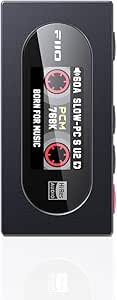
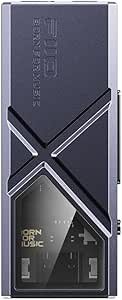
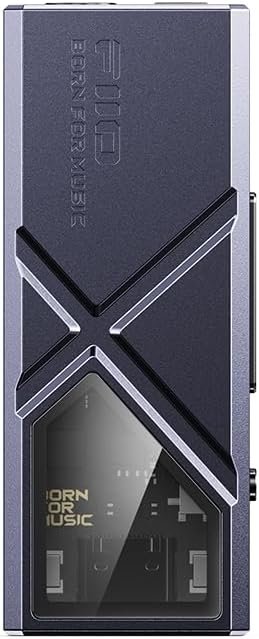
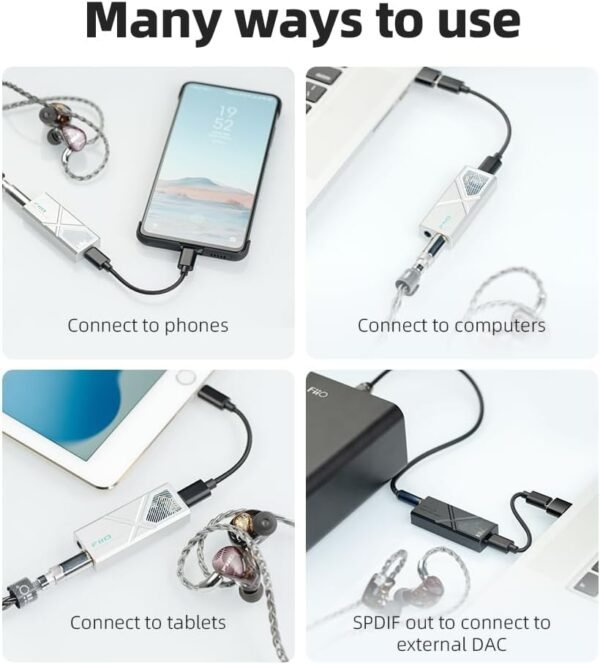
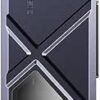
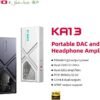
The KA13 is a USB-C dongle DAC and headphone amplifier, sold under the FiiO and JadeAudio names. It plugs into a phone, tablet or computer and replaces both the digital to analog conversion and the headphone amplification of the host device. FiiO lists compatibility with Android, iOS, PC and dedicated music players, and specifies decoding to PCM 384kHz at 32 bit and DSD256.
The buyer this suits is someone with wired headphones and a device that either has no headphone jack or drives headphones poorly. The distinguishing feature here is the dual output arrangement, which makes it suitable for someone who owns both single ended and balanced terminated headphones. Anyone wanting a screen and parametric EQ should compare the FiiO KA15, and anyone with desk space should look at the FiiO K11 instead.
Dual Outputs in One Dongle
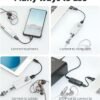
Fitting both a 3.5 mm and a 4.4 mm output into a dongle is the design achievement FiiO emphasizes, and it solves a real problem. Balanced 4.4 mm connections deliver more power and better channel separation, and many enthusiast in-ear monitors such as the SIVGA Nightingale now ship terminated that way. But most headphones and almost all consumer earphones still use 3.5 mm.
A dongle with only one of the two forces a choice, an adapter or a re-cabling. Having both means one device serves an entire headphone collection. FiiO describes the packaging effort involved as significant, which is credible given the physical space two jacks occupy in a unit this small.
The Converter Pairing and Desktop Mode
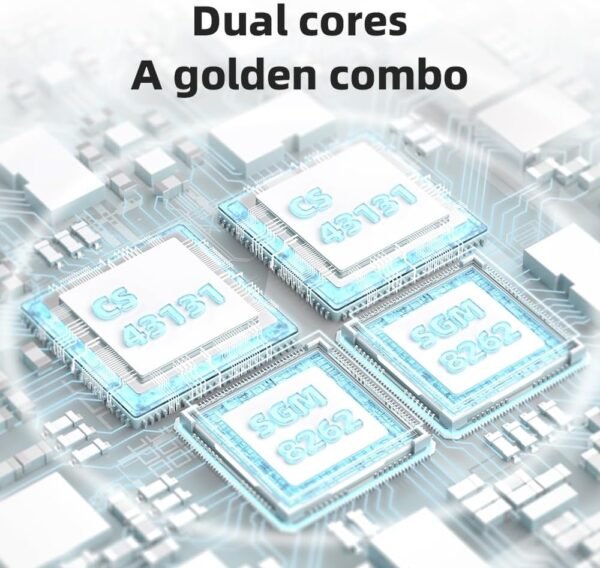
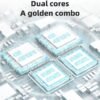
FiiO specifies two CS43131 DAC chips paired with two SGM8262 low noise operational amplifiers. Using two converters allows a fully differential design, with each channel served by its own chip, which is what supports the balanced output properly rather than deriving it from a single ended signal.
Desktop Mode is the feature that determines what headphones this can drive. FiiO states balanced output rises to 550mW in that mode, describing the result as sufficient for both low and high impedance headphones. Output power is the specification that separates a dongle that only works with efficient earbuds from one that can drive full sized headphones, and 550mW is substantial for a device of this size.
The name Desktop Mode implies the higher power draw is intended for use with a computer or a powered source rather than a phone battery, though the listing does not state that explicitly or give a current consumption figure. Anyone planning to use the high power mode from a phone should expect a meaningful effect on battery life.
App Control, SPDIF and What Is Missing
The FiiO Control app handles configuration, covering RGB lighting, SPDIF output and audio filter selection. Audio filters change the digital reconstruction behavior of the DAC and produce subtle differences in the treble; whether they are audible is debated, but they are a standard option on converters of this type.
The SPDIF output is the more interesting item. It allows the dongle to pass a digital signal onward to another device rather than converting it, which turns the KA13 into a USB to SPDIF bridge for feeding an external DAC or a digital input on an amplifier. That is a genuinely useful secondary function and is not common in this category.
Notably, this listing does not repeat the Android only app restriction that appears on the closely related KA15, so buyers on iOS should confirm app support directly with FiiO rather than assuming either way.
The listing has no attribute table at all. There is no weight, no dimensions, no ASIN level specification data, no country of origin, no warranty term and no customer rating information in the product record. For a technical product that is a substantial gap, and it means the five marketing bullets are the entire technical record available here. Nothing states the USB connector type on the host side beyond USB-C, whether an adapter for USB-A is included, or what the output impedance is.
Highlights
- Both 3.5 mm and 4.4 mm outputs in one compact dongle.
- Dual CS43131 converters with dual SGM8262 op-amps in a differential arrangement.
- Desktop Mode raising balanced output to 550mW for demanding headphones.
- PCM 384kHz/32bit and DSD256 decoding support.
- SPDIF output, allowing use as a digital bridge to another converter.
- App control for filters, lighting and SPDIF configuration.
Things To Consider
The listing has no specification table at all. Weight, dimensions, output impedance, warranty and customer rating data are all absent, so the marketing bullets are the only source.
Desktop Mode draws more power, and the listing does not quantify it. Using high power output from a phone will shorten its battery life, and no current figure is given.
App compatibility across operating systems is not stated on this listing, and FiiO restricts app control to Android on at least one closely related model. iOS users should confirm before purchase.
RGB lighting is a styling feature rather than a functional one, and it consumes power. Nothing states whether it can be disabled independently. Buyers should also confirm whether a USB-A adapter is included for computer use. Listeners can compare wired options across the earbud headphones category and other amplification approaches in the amplifiers category, including the far more powerful desktop FiiO K9 Pro.
Who Should Buy It and Who Should Not
The KA13 fits someone who owns headphones with both connector types, wants meaningful output power in a pocket device, and would use the SPDIF output as a bridge. The dual output arrangement is the reason to choose it over single output dongles, and it removes the adapter problem entirely.
It is unnecessary for anyone using wireless headphones, where amplification already sits inside the headphone, and for listeners whose earphones are efficient enough that a phone drives them adequately. It is also a difficult purchase for anyone who wants a published specification sheet, since this listing does not provide one. Owners of USB-C terminated earphones such as the Moondrop CHU II DSP already have conversion in the cable and do not need it.