
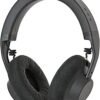
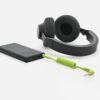


Description
What the AIAIAI TMA-2 Studio Wireless+ Is
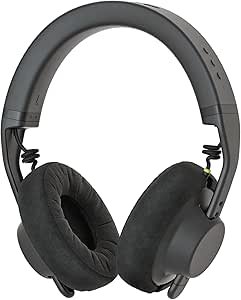
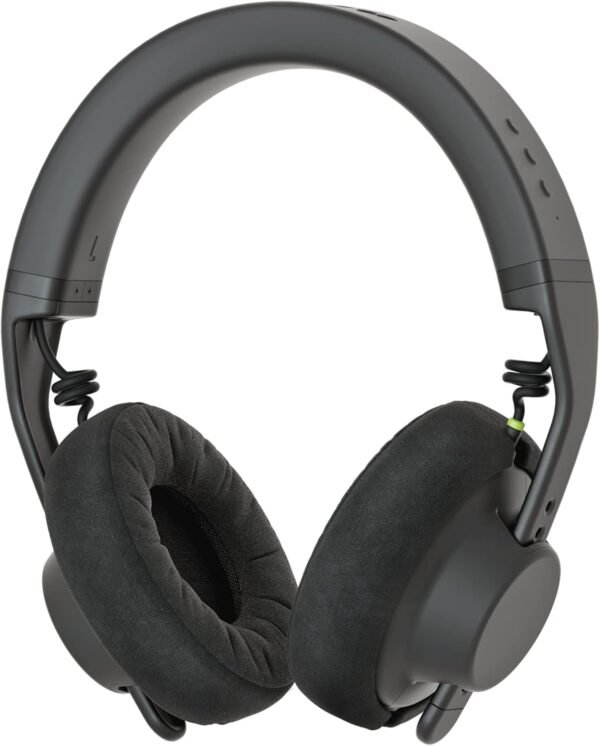
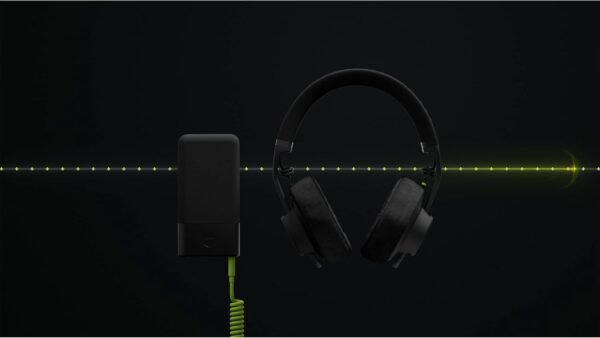
The AIAIAI TMA-2 Studio Wireless+ is a closed back, over ear monitoring headphone sold in black, and the listing frames it squarely at people who make music rather than people who only listen to it. The headline feature is W+ Link, a proprietary wireless system that AIAIAI describes as ultra low latency with lossless audio transmission. That is a different proposition from a normal Bluetooth headphone, where the codec and the buffering both add delay. A monitoring headphone that keeps latency low enough for tracking and overdubs is aimed at a producer standing away from the desk, a drummer wearing cans in a live room, or anyone who wants to move around a studio without a cable following them.
The second thing the listing stresses is that this is a modular product. The TMA-2 platform is built as a set of interchangeable parts, so the headband, the earpads, the cable and the speaker units are all separate components rather than a single sealed assembly. Buyers who have replaced a pair of studio headphones because one earcup went quiet, or because the pads crumbled after two summers, will understand why AIAIAI leads with that. It suits a studio owner buying tools that stay in service for years, and it suits a working engineer who would rather order a part than a whole new headphone.
The W+ Link Wireless System
AIAIAI states that W+ Link delivers ultra low latency and lossless audio, and pitches it as the enabling technology for wireless music creation. The company does not publish a latency figure or a transmission bitrate anywhere in this listing, so the claim has to be read as a marketing description rather than a measured number. That gap matters, because latency is the one specification a tracking engineer would want to see written down, and it is the specification that separates a genuine studio wireless system from a consumer one. Anyone weighing this against a wired reference should note the absence and ask the manufacturer directly.
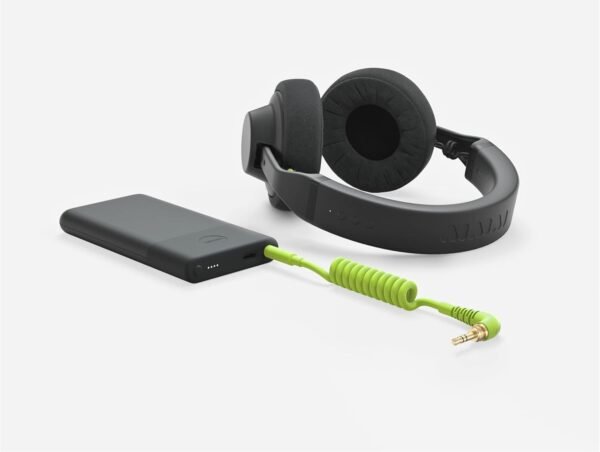
Bluetooth is offered as a second, separate wireless path. The listing gives Bluetooth playback as more than 80 hours, which is a long runtime by any standard and reflects the fact that the electronics live in the headband rather than in a cramped earcup. A hi fi coiled cable is also supplied for wired listening, which is the mode most mixing engineers will default to when they want the signal path to be as short as possible. Having all three options in one product is unusual, and it is the strongest practical argument for the Wireless+ over a conventional pair such as the Audio-Technica ATH-M30x, which is wired only.
Drivers, Cushions and Build
AIAIAI fits what it calls signature bio diaphragm speaker units, tuned for clarity and detail. As with the wireless claims, the listing gives no driver diameter, no impedance, no sensitivity figure and no frequency response range, which is a notable omission for a product sold as a studio monitor. Studio buyers usually compare impedance in particular, because it determines whether a headphone will run cleanly from a laptop or whether it wants a dedicated output. Readers who care about that number will find it published for competing designs such as the Sennheiser HD 280 Pro and the open backed Monolith M1060, and its absence here is worth weighing.
Comfort is addressed through over ear memory foam cushions wrapped in Alcantara, a synthetic suede that is used in car interiors and instrument cases because it stays cooler against skin than coated leatherette. On a modular platform the pads are also a consumable, so a set that wears out can be swapped without retiring the headphone. Anyone shopping the wider over ear headphones category will find pad replaceability is far from universal, and it is one of the few build details here that is stated plainly rather than described in adjectives.
Highlights
- W+ Link wireless is presented by AIAIAI as ultra low latency with lossless transmission, aimed at music creation rather than casual listening.
- Bluetooth is included as a separate mode with a stated playback figure above 80 hours.
- A hi fi coiled cable ships in the box for wired monitoring.
- Bio diaphragm speaker units are the AIAIAI in house design, tuned for clarity and detail.
- Alcantara wrapped memory foam earpads replace the coated foam used on most studio headphones at this level.
- Every major component is modular and can be bought and fitted separately.
- Black is the only finish shown on this listing.
Things To Consider
The most significant limitation is documentation. This listing carries no specifications table at all: no weight, no impedance, no driver size, no frequency response, no charging time, no wireless range and no stated latency in milliseconds. For a headphone whose entire selling proposition is technical, that leaves a buyer relying on adjectives. Anyone specifying gear for a facility, or matching a headphone to a specific interface, should request a full datasheet from AIAIAI before committing.
Modularity also cuts both ways. A platform built from replaceable parts is only economical if those parts remain available and reasonably priced, and that depends on the manufacturer continuing to stock them. A conventional headphone from a large brand is a simpler ownership proposition, even if it is less repairable. It is also worth noting that W+ Link is proprietary. It works with the AIAIAI transmitter hardware, not with a generic Bluetooth source, so the low latency mode is tied to that ecosystem rather than to whatever laptop or console is already on the desk.
Finally, this is a closed back monitoring design. That is the right choice for tracking, where isolation stops headphone bleed reaching the microphone, but it is not the choice most people would make for critical mixing, where an open back presentation is usually preferred. Buyers who want an open design for mixing should look at the open backed alternatives in the category instead, and buyers who want simple noise cancelling for a commute are shopping in the wrong part of the market entirely.
Who It Suits
The TMA-2 Studio Wireless+ makes the most sense for a producer, engineer or performing musician who genuinely needs to move around without a cable while tracking, and who values the ability to repair rather than replace. The combination of a proprietary low latency link, standard Bluetooth and a wired coiled cable in a single modular chassis is rare, and for the right workflow it removes a real daily friction.
It is a weaker fit for a listener who mainly wants noise cancellation on a plane, for a buyer who needs published impedance and frequency response before purchasing, or for anyone who wants the lowest cost path to a competent studio headphone. Those buyers are better served by a well documented wired pair, or by browsing the headphone amplifiers that make a demanding wired monitor practical in the first place.