Description
What the Koss KPH7 Is and Who It Suits
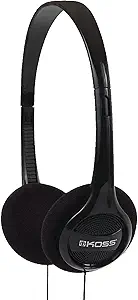
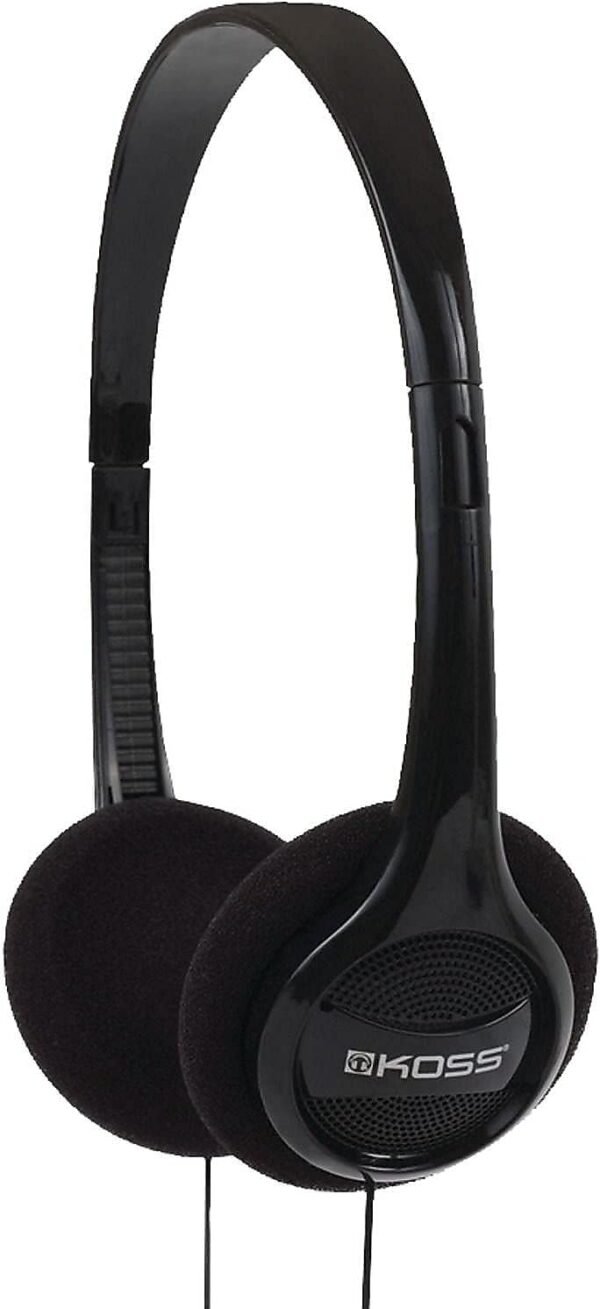
The KPH7 is a minimal wired on-ear headphone: a plastic headband, two small foam padded cups, a 4 foot cord and a 3.5 mm plug. Koss specifies a frequency response of 80 Hz to 18,000 Hz, a sensitivity of 91 dB SPL and an impedance of 32 ohms. The listing gives the weight as 2.56 ounces and the country of origin as China. It has been listed since January 2012 and carries 9,609 ratings at an average of 4.2 stars, with a very high overall ranking in Amazon’s electronics category that reflects genuine sales volume.
The buyer this suits is someone who wants headphones that work, cost very little, and weigh almost nothing: for a classroom, a spare set in a bag, a workshop, a child, or anywhere losing them would not matter. Koss has built this kind of product for decades. Anyone wanting better sound in the same tradition should compare the Koss Porta Pro, which uses the same design philosophy at a higher level.
The Specifications and What They Mean
The published numbers are unusually complete for a product this inexpensive, and they are informative.
An impedance of 32 ohms is low, which means the headphones present an easy load. A sensitivity of 91 dB is moderate. Together they mean a phone, a laptop or a tablet will drive these to normal listening volume without an amplifier, which is exactly what a product at this level needs to do. There is no requirement for a DAC or headphone amplifier here.
The frequency response of 80 Hz to 18,000 Hz is more revealing. The 80 Hz lower bound is well above the 20 Hz that larger headphones claim, and it is honest: small drivers in an unsealed on-ear cup cannot produce deep bass. Koss’s own bullet describes deep bass response, which sits awkwardly against its own published 80 Hz figure. The realistic expectation is present, adequate low end rather than genuine depth.
Weight and the On-Ear Format
Two and a half ounces is remarkably light. Most on-ear headphones weigh three to four times that, and over-ear models considerably more. Weight is the dominant factor in whether headphones are comfortable across hours, and a design this light imposes very little on the head.
The tradeoff is that light construction means thin plastic, small drivers and minimal padding. On-ear cups rest on the outer ear rather than surrounding it, which allows sound in and out freely. These do not isolate, and the noise control field in the listing correctly says none. In a quiet room that is fine; on a train or a plane it is not.
Durability, Listing Data and Long Term Value
The adjustable headband is the only structural adjustment described. There is no folding mechanism mentioned, no detachable cable and no carrying case in the included components, which lists only the headphone itself.
The absence of a detachable cable is the main durability concern. On inexpensive headphones the cable is where failure occurs, usually at the plug or where the cord enters the cup, and a fixed cable means a failure ends the product. At this price that may be an acceptable trade, but it should be understood.
Several attribute fields on this listing are wrong. A Bluetooth version of 5.0 is listed on a wired headphone with no wireless capability whatsoever. The cable feature says retractable, which is not described anywhere else and is not a feature of this design. The control method says remote, though the included components list no remote and the bullets describe none. The batteries field says one unknown battery is required, when the headphone is entirely passive. A carrying case color is listed although no case appears in the components. A theme field reads school.
The UPC field contains six different codes and the global trade identification field contains two, which indicates this listing has been merged across variants or bundles over its long life. Buyers should confirm exactly what arrives. The product dimensions of 8.44 by 2.13 by 6.38 inches describe the package.
One of Koss’s own bullets contains a typo, describing deep base response rather than bass, which is a small sign of how long this listing has run without editing.
Highlights
- Extremely light at 2.56 ounces, which is the main comfort argument.
- 32 ohm impedance and 91 dB sensitivity, so any phone or laptop drives them.
- Published frequency response, sensitivity and impedance, which is rare at this price.
- Simple 3.5 mm connection on a 4 foot cord with no battery or pairing.
- Adjustable headband suitable for adults and children according to the listing.
- 9,609 ratings at 4.2 stars across a listing running since 2012.
Things To Consider
The 80 Hz lower limit means these do not produce deep bass, regardless of the marketing bullet claiming otherwise. This is a limitation of the format and the price, not a fault.
There is no isolation at all. Open on-ear cups let sound in and out freely, which rules out noisy environments and shared quiet spaces.
The cable is not detachable and no case is included, so cable failure ends the product’s life and it has no protection in a bag.
The attribute table lists Bluetooth 5.0, a retractable cable, a remote and a required battery, none of which exist on this product, and the UPC field contains six codes suggesting a merged listing. Buyers should confirm what is in the box. Anyone wanting a more durable classroom option should compare the Califone 3068AV, and anyone wanting something even smaller should look at the clip on Koss KSC35 or the wired Apple EarPods.
Who Should Buy It and Who Should Not
The KPH7 makes sense as an inexpensive, very light spare or utility headphone: for a classroom set, a desk drawer, a child, or anywhere replaceability matters more than performance. The published specifications and the long sales record both suggest a product that does its modest job reliably. Buyers can compare it across the on-ear headphones category.
It is the wrong headphone for anyone who wants bass depth, isolation from noise, or a product built to last through cable wear. Those buyers should spend more, and should expect a detachable cable and a case as part of what that money buys.