
Description
What a Steel Tongue Drum Is
A steel tongue drum is a percussion instrument made from a hollow steel shell with tongues cut into the surface, each tuned to a specific pitch. Striking a tongue with a mallet or a fingertip makes it ring, and because the shell is closed the sound is sustained and bell like rather than sharp. It is a relative of the handpan and a descendant of the Caribbean steelpan, but it is far easier to make and far easier to play, which is why instruments of this kind have become common in meditation, music therapy and casual home playing.
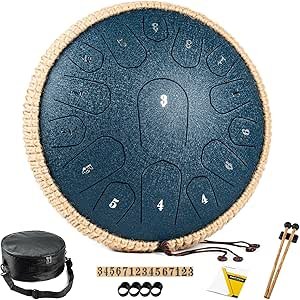
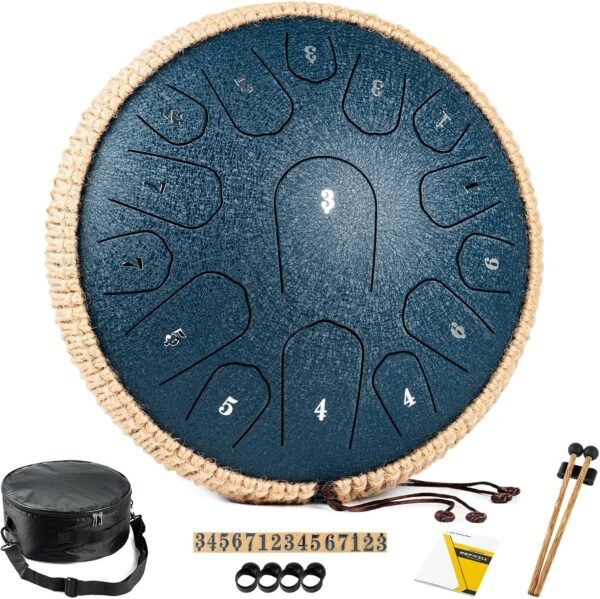
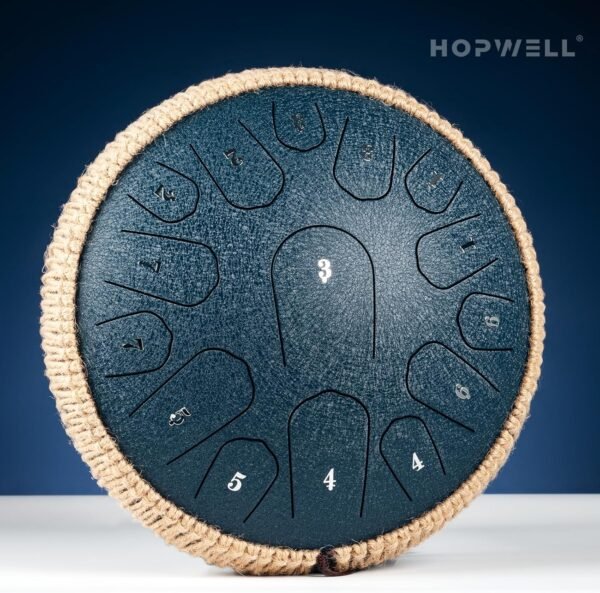
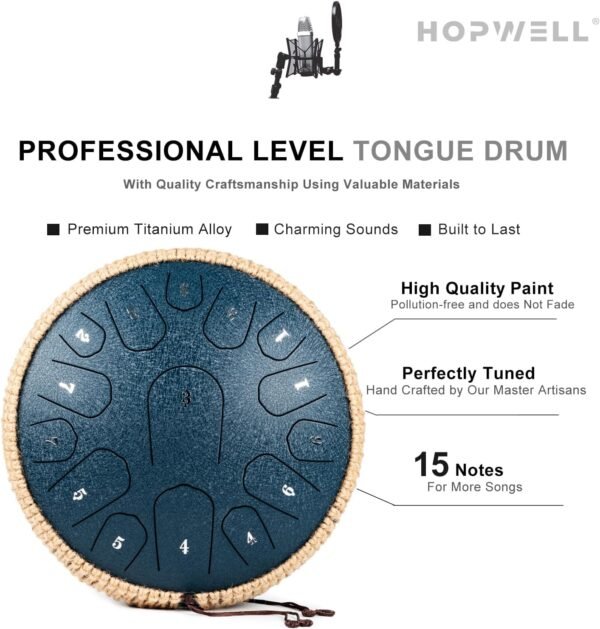
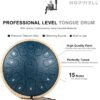
This particular instrument is listed as a 13 inch model with 15 notes tuned to D Major. Two things follow from that. A 13 inch diameter is at the larger end of the consumer range, which generally means longer sustain and a deeper fundamental than the small 6 and 8 inch drums. And a 15 note layout is generous; many drums in this class offer 8 or 11 notes, and the extra tongues expand what can be played without moving between instruments.
Why the D Major Tuning Matters
The most important thing to understand about a steel tongue drum is that it is a fixed pitch instrument. The tongues are cut and tuned at the factory and cannot be retuned by the player, so the scale chosen at purchase is the scale the instrument will always have. D Major is one of the most common choices for these instruments because every note in the scale sounds consonant against every other note, which means a complete beginner cannot play a wrong note.
That is the design intent rather than a limitation of quality. An instrument where any combination of strikes produces something harmonious is exactly what suits meditation, relaxation and children learning to explore sound. The consequence is that it cannot play music that leaves the scale. Anything requiring accidentals, a minor tonality or a modulation is out of reach on a diatonic drum, and buyers who want that flexibility need a chromatic instrument instead. Anyone recording the results at home will find microphone options across the multipurpose microphones category.
Finish, Accessories and Playing
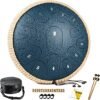
The listing describes a hand painted, fade resistant finish, and states that mallets, a music book and a carrying bag are supplied. That accessory bundle matters more than it might appear. Mallets change the sound substantially, giving a rounder and louder attack than fingers do, and having a book of arrangements written for the specific note layout removes the main barrier for a beginner, since standard sheet music does not map onto a tongue drum without translation. A carry bag also protects the finish, which on a painted steel instrument is the part most likely to show wear.
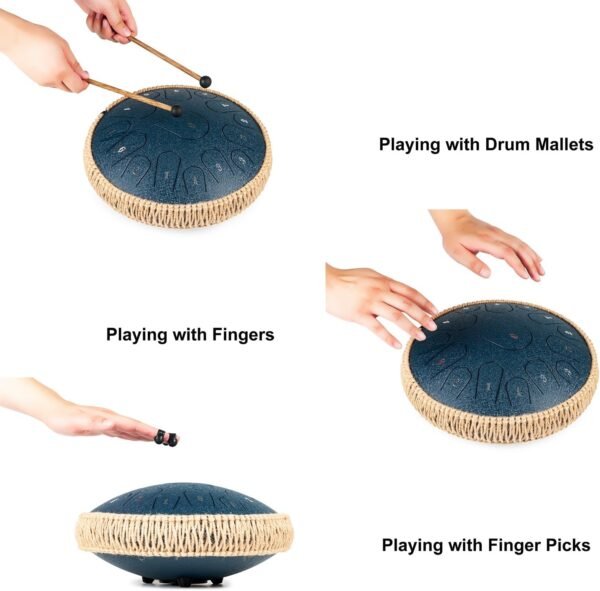
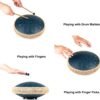
Steel tongue drums require no assembly, no tuning and no maintenance beyond keeping them dry, which puts them among the very few instruments that can be played usefully within a minute of unpacking. They can be played with the mallets or directly with the fingers, and the two approaches produce noticeably different articulation. Percussionists working with more conventional equipment can compare the electronic route through the Yamaha EAD10 and the Roland TD-11.
Highlights
- 13 inch shell, at the larger end of the consumer steel tongue drum range.
- 15 notes, more than the 8 or 11 offered by most instruments in this class.
- D Major tuning, so any combination of notes sounds consonant.
- Mallets, a music book and a carry bag supplied with the instrument.
- Hand painted finish described by the seller as fade resistant.
- Playable with mallets or fingers, with no tuning or setup required.
- Suitable for a complete beginner with no musical background.
Things To Consider
This listing has no product specification data of any kind attached to it: no attribute table, no manufacturer description and no feature bullets. That means the weight, the steel thickness, the exact note layout, the sustain, the finish material and the mallet type are all undocumented. For an instrument where steel gauge directly determines tone and durability, that is a substantial gap, and a buyer should ask the seller for the note layout diagram at minimum before ordering.
Hopwell is not an established instrument manufacturer, and steel tongue drums in this segment are largely produced by unbranded factories and sold under many names. The practical consequences are worth knowing: tuning accuracy varies between individual units, there is usually no way to have an instrument retuned or repaired, and warranty support is generally limited to a return window. None of that makes the instrument a poor purchase at this level, but it does mean it should be judged as a consumer product rather than as a professional instrument.
On capability, the fixed diatonic scale is the main constraint and it is permanent. Volume is also modest; a steel tongue drum is an intimate instrument and will not project across a room or compete with other instruments without amplification. Painted finishes on steel mark relatively easily, so the carry bag should be used. And anyone buying for a child should be aware that mallets on steel can be loud at close range even when the instrument is quiet at a distance.
Who It Suits
This drum suits someone who wants an instrument for relaxation, meditation or casual play rather than performance, who has no musical training and wants something that sounds good immediately, or who is buying a gift for someone in that position. The 15 note layout and the included book give it more scope than the smaller drums, and the D Major tuning removes the possibility of playing a wrong note.
It is the wrong purchase for a trained musician who needs a chromatic instrument, for anyone who wants to play existing repertoire, and for anyone who needs documented specifications before buying. Musicians looking for percussion that integrates with a recording setup should compare drum microphone options such as the Shure DMK57-52 kit and the mounting hardware in the instrument category.