Description
What the Apple EarPods with USB-C Are
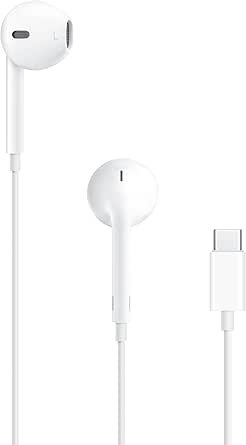
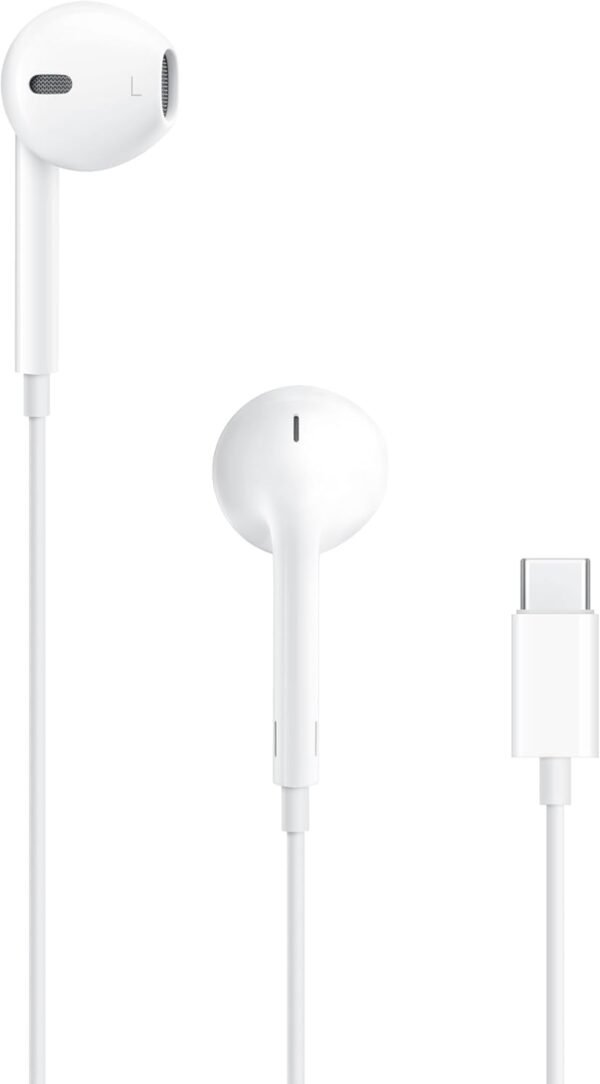
The Apple EarPods with USB-C Connector are a wired pair of earbuds that terminate in a USB-C plug instead of the older 3.5 mm jack or Lightning connector. Apple lists the model number as MYQY3AM/A and the model name as EarPods with USB-C Connector, with a first availability date of August 7, 2024. That date lines up with Apple’s move to USB-C across its phone and tablet lineup, and it explains the product’s reason for existing: it is the in-box style earbud that plugs straight into a modern iPhone, iPad, Mac or any other device with a USB-C audio port.
The audience is narrower than the brand name suggests. These are not noise canceling earbuds and they are not sealed in-ear monitors. The listing gives Sound Isolation as the only entry under Noise Control, which in practice means the shell shape and nothing else. Anyone shopping for active cancellation on a plane or a train is in the wrong aisle and would be better served by a sealed design. Buyers who want a cheap, reliable cable that always works, who dislike the pressure of silicone tips, and who want something that survives being thrown in a bag are the people this product is aimed at.
Fit, Build and the Hard Shell Design
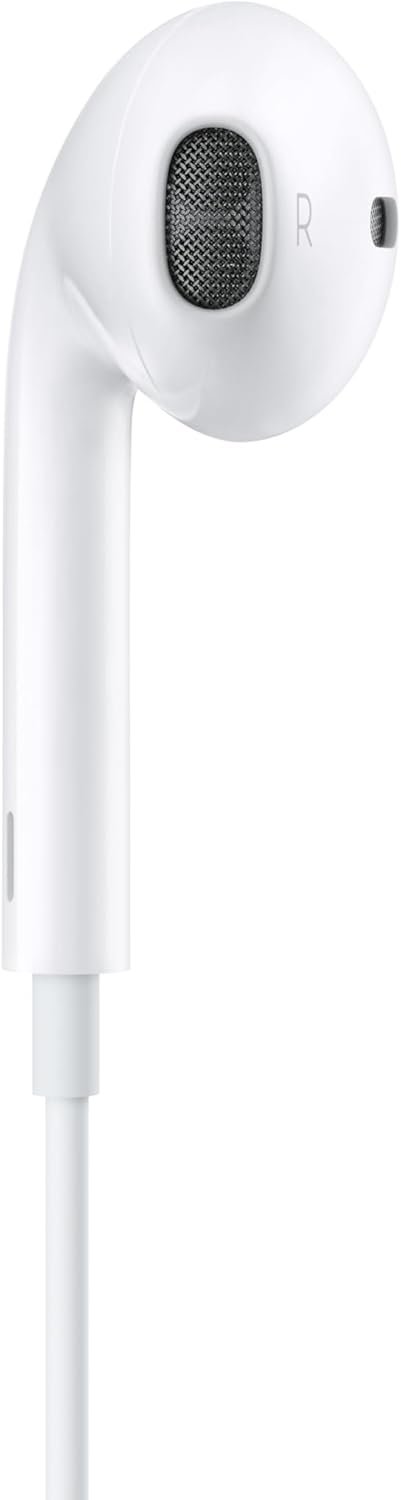
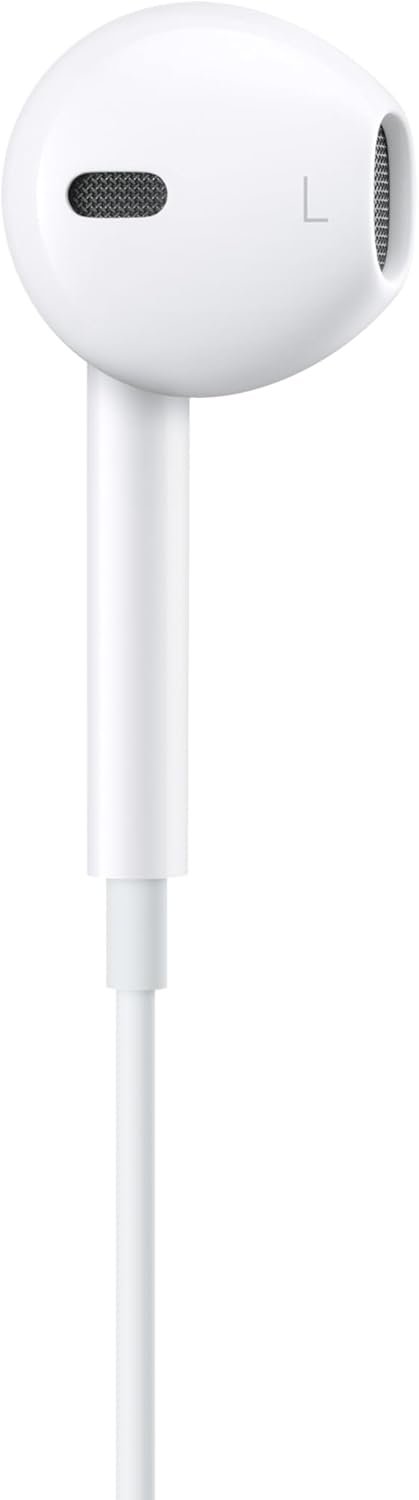
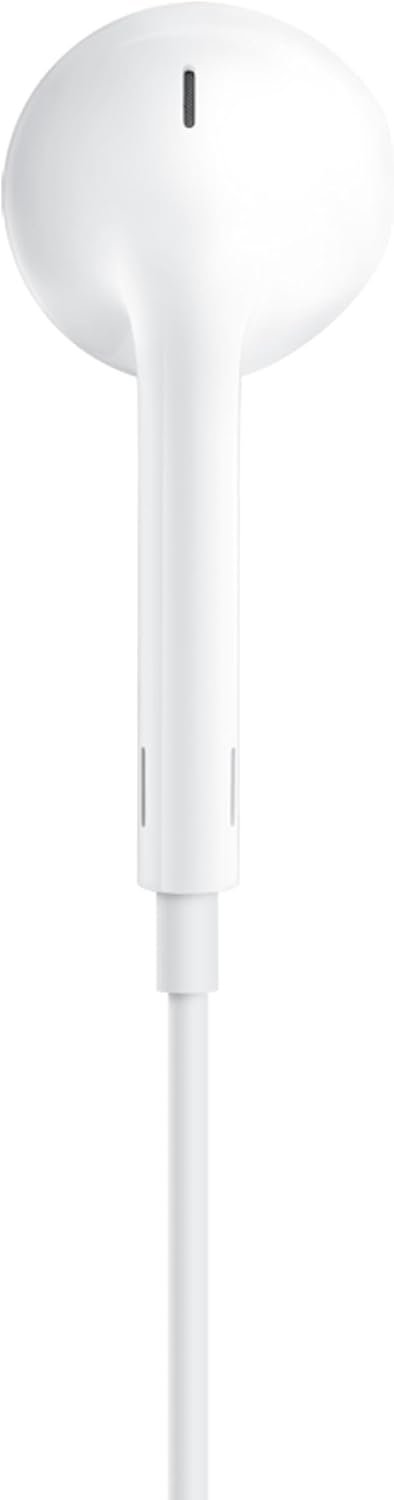
Apple’s EarPods use a molded hard plastic shell that rests in the outer ear rather than sealing inside the ear canal. The listing gives Plastic as the material and a weight of 1.12 ounces, which covers the whole package rather than the buds alone. This is the same shell geometry Apple has shipped for over a decade, so anyone who has held a pair before knows immediately whether it suits their ears. There is no tip selection and no sizing kit, which is the trade: no fiddling with eartips, but also no way to adjust the fit if the shape is wrong for a given ear.
The open design has a practical consequence that marketing copy tends to skip. Because nothing seals the canal, outside noise comes through freely and the sound leaks outward at higher volumes. That is a genuine advantage for cycling, running outdoors, or working somewhere that requires situational awareness, and the listing does name Cycling and Exercising among the recommended uses. It is a genuine disadvantage on public transit. Readers who want the same kind of open awareness in a wireless form should look at the AfterShokz OpenRun, which takes a very different route to the same goal.
Connection, Controls and Device Compatibility
Connectivity is listed simply as Wired, with the headphones jack given as USB-C. Because the plug carries digital audio, the digital to analog conversion happens inside the cable module rather than in the phone. That is the reason a USB-C earbud can work on a device with no analog output at all, and it is also the reason these buds behave differently across hosts. Apple lists compatible devices as cellphones, gaming consoles, telephones, laptops and desktops. Some Android phones and some Windows machines handle USB-C audio accessories inconsistently, so compatibility is worth checking against a specific device rather than assumed.
The inline remote is the feature most buyers are actually paying for. The listing describes a built-in remote that controls music, phone calls and volume, and it names Media Control as the control type. Physical buttons on a cable remain faster and more reliable than touch gestures on a bud, particularly with gloves or wet hands. Anyone comparing this against a wireless set with on-bud controls can see the difference in approach by reading the JLab Epic earbuds, where the controls live on the earbud itself.
Sound Character and What the Spec Sheet Supports
Apple does not publish driver size, impedance, sensitivity or frequency response for the EarPods in this listing, so any claim about tonal balance here would be invention rather than reporting. What the specification sheet does support is the intended use case: Music is listed under Specific Uses For Product, and the recommended uses list adds Audio Monitoring, Calling, Exercising and Gaming. Those are casual listening scenarios, not critical monitoring ones.
Structurally, an unsealed earbud loses low bass because there is no closed volume between driver and eardrum. That is physics rather than opinion, and it is why open earbuds of every brand tend to sound lighter in the low end than sealed models. Buyers who care about bass extension from a wired set will find sealed alternatives a better fit, and the Moondrop Chu II DSP covers a wired in-ear design that takes the opposite approach with a proper canal seal. For a budget wired comparison at a similar level of ambition, the JVC Gumy is a useful reference point.
Highlights
- USB-C plug works on devices that have removed the 3.5 mm headphone jack entirely.
- Built-in inline remote for volume, playback and calls, listed as Media Control.
- Open shell design keeps the wearer aware of surroundings, useful for cycling and outdoor exercise.
- No charging, no pairing and no battery to degrade over time.
- Light at a listed 1.12 ounces, with a plastic housing built for daily handling.
- Recommended uses in the listing span music, calling, gaming and audio monitoring.
Things To Consider
The specification sheet for this listing carries at least two entries that do not match the product as sold. Cable Feature is given as Retractable, but EarPods ship with a fixed length cable and no retraction mechanism. Control Method is listed as Touch, while the product uses physical buttons on an inline remote, and Control Type is separately listed as Media Control. The Product Dimensions of 3.25 x 2.9 x 1 inches describe the retail box rather than the earbuds. These are import errors in the listing data rather than statements from Apple’s own documentation, and they are worth naming rather than repeating.
Beyond the data quality issues, the real limitations are structural. Water Resistance Level is given as Not Water Resistant, so sweat and rain are a risk despite the exercise use cases in the same listing. There is no active noise cancellation. There is no case. The cable is a wear point, as it is on every wired earbud, and it cannot be replaced separately. Sound leaks out at volume, which makes these a poor choice for a shared office or a quiet library. Anyone wanting isolation instead should browse the wider earbud headphones selection.
Who Should Buy It, and Who Should Not
These make sense as a backup pair, as a wired option for a USB-C phone or tablet, and as an earbud for people who cannot tolerate the pressure of sealed tips. They also make sense for anyone who wants a set of buds that simply works with no charging and no pairing step, which matters for calls and video meetings more than for music.
They do not make sense for travel, for commuting, for gym use where sweat is a factor, or for anyone chasing deep bass or isolation. Those buyers should look at sealed wireless models such as the Sudio A1, or at a wired in-ear set with a proper canal seal. Buyers who want an on-ear option instead can start with the Koss KSC35, which sits at a different point on the size and comfort scale.