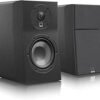

Description
What the Ultra Evolution Nano Is and Who It Suits
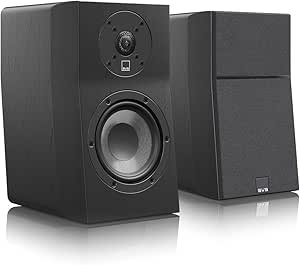
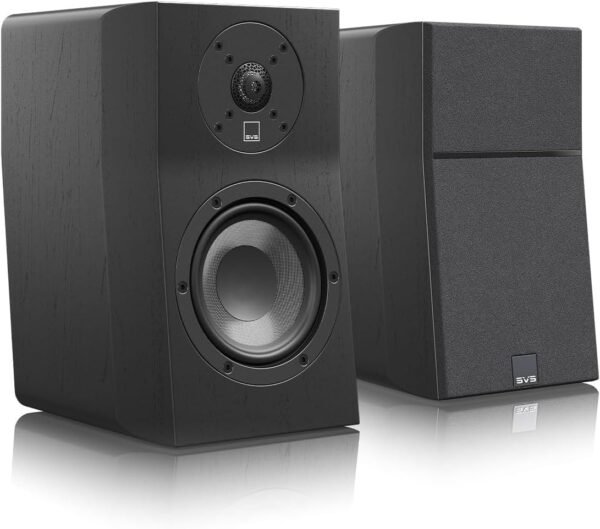
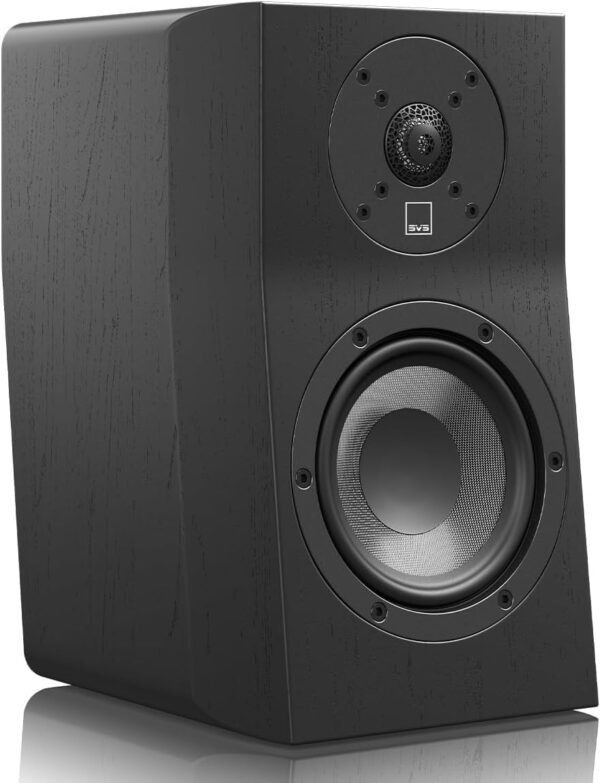
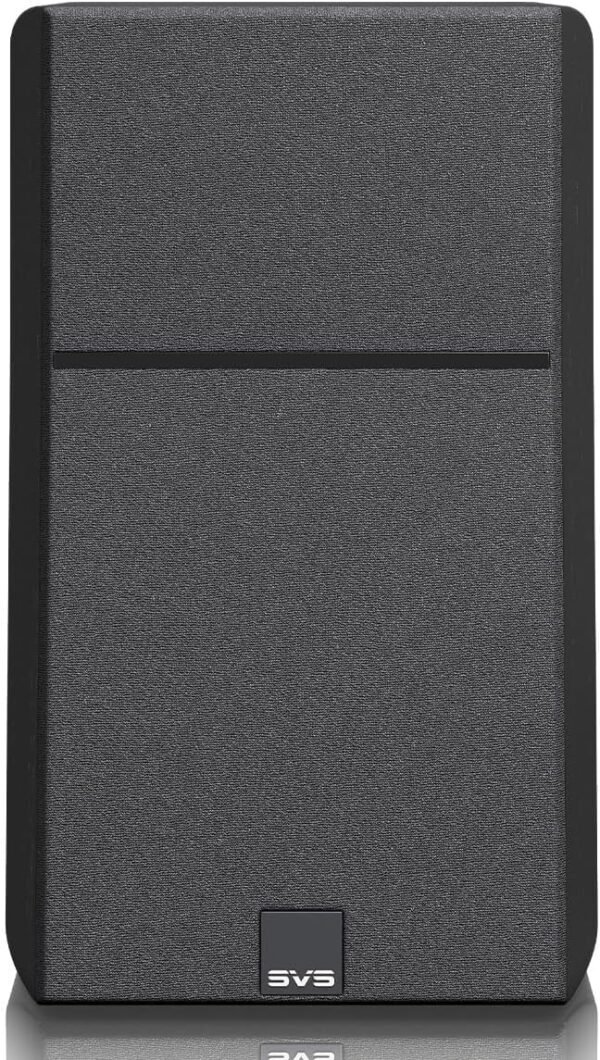
The SVS Ultra Evolution Nano is a compact passive bookshelf speaker sold as a pair in a black oak finish. SVS built its reputation on subwoofers before expanding into full range speakers, and the Ultra Evolution line is the company’s upper tier. Nano identifies the smallest cabinet in that range, which places this model as the one intended for desks, small rooms and installations where a larger speaker will not fit.
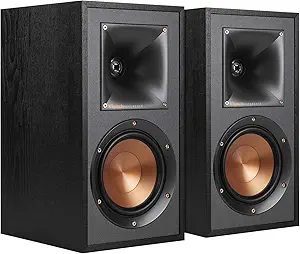
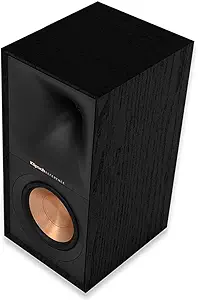
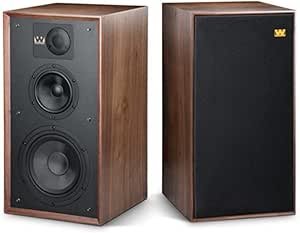
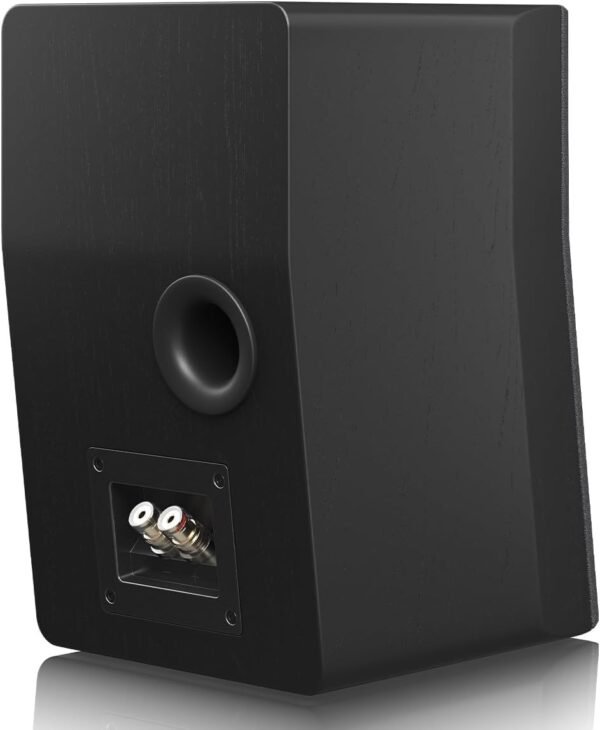
These are passive speakers: each cabinet contains drivers and a crossover network but no amplification, so a receiver or an integrated amplifier is required. The buyer is someone building a stereo system for music in a space that cannot accommodate floor standing speakers, or someone who wants a high quality compact pair for a desktop. Readers comparing bookshelf options at other levels should look at the Klipsch R-51M and the Wharfedale Linton.
What Compact Means in a Passive Speaker
Cabinet volume is the fundamental constraint on how low a passive speaker can play, and it is not negotiable. A small enclosure has less internal air volume to work against, which means the woofer’s useful bass extension stops higher than a larger cabinet’s would with the same driver. Designers respond either by porting the cabinet, which extends output over a narrow band at the cost of some transient control, or by sealing it, which rolls off more gently and generally sounds tighter.
What a small cabinet gains in return is significant. A narrow front baffle diffracts less sound around its edges, which improves imaging, and a small box is easier to make rigid, which reduces cabinet resonance. This is why compact monitors are often used in recording studios despite their limited bass. In practice, a compact pair paired with a subwoofer will outperform a larger pair used alone in most rooms. SVS’s own subwoofer heritage makes that pairing a natural one, and the Audioengine S8 powered subwoofer covers a comparable powered option.
Amplification and System Building
Because these are passive, the amplifier is part of the purchase rather than an afterthought. Two figures normally decide the match: nominal impedance, which tells the amplifier what load it faces, and sensitivity, which tells the buyer how loud a given amount of power will play. Neither is published in this listing, so both need to come from SVS’s documentation before an amplifier is chosen.
The broad principle is that compact speakers tend to be less sensitive than large ones, because a small driver in a small box converts less of the amplifier’s power into sound at low frequencies. That means a compact pair often benefits from more amplifier power than its size suggests. A home theater receiver such as the Onkyo TX-RZ50 will drive a pair like this without difficulty, while a dedicated stereo amplifier generally spends more of its cost on the parts that matter for music. Readers can compare across the bookshelf speakers category.
Placement, Stands and Getting the Best from Them
The word bookshelf in this category name is the single most misleading term in home audio. A speaker placed inside a bookshelf or hard against a wall behaves very differently from the same speaker on a stand in free space: the boundary reinforces some low frequencies and cancels others, and the surrounding shelf adds reflections close to the driver. The result is a congested, uneven sound that has nothing to do with the quality of the speaker.
On stands, pulled a foot or more from the wall, with the tweeters near seated ear height, the same pair sounds like a different product. Toe in, angling the speakers toward the listening seat, sharpens the stereo image at the cost of a narrower usable listening area. All of these adjustments are free and all of them matter more than most component upgrades. For a desktop setup, isolation pads or small stands that raise and angle the speakers toward the ears serve the same purpose. Buyers wanting an alternative approach entirely can look at the Marshall Acton III.
Highlights
- Sold as a matched pair rather than as a single speaker.
- Compact cabinet, sized for desks and small rooms.
- Passive design, so any suitable amplifier or receiver can drive them.
- Black oak finish specified in the listing.
- Part of SVS’s upper tier Ultra Evolution range.
- Small baffle width, which generally helps stereo imaging.
Things To Consider
The retail listing for these speakers publishes no specification block at all. There is no woofer size, no tweeter type or size, no frequency response, no sensitivity, no nominal impedance, no recommended amplifier power, no cabinet dimensions and no weight. For a passive speaker, impedance and sensitivity are the two figures that determine amplifier compatibility, and neither is available here. Cabinet dimensions decide whether the speakers fit the intended space. Nothing in this review invents any of it, and buyers should obtain the full specification from SVS’s own documentation before purchase.
There is also no customer rating and no ratings count on this listing, so no aggregate buyer feedback is available from this data. That is normal for a recently introduced model in a specialist range but it does mean the usual reassurance from a large sample is missing.
The structural limitations are those of every compact passive speaker. Deep bass requires a subwoofer, which is an additional purchase. Stands are effectively required for proper performance in a room, which is another cost and a space commitment. An amplifier is required. And the total installation, two speakers plus two stands plus an amplifier plus cables, is a visually larger and more expensive proposition than a single sound bar, which is the honest comparison many buyers are actually making.
Who Should Buy It, and Who Should Not
This suits a listener building a serious compact stereo system, on a desk or in a small room, who already owns or plans to buy an amplifier, and who has verified the specification independently. The compact format is a genuine advantage for imaging, not merely a compromise.
It does not suit anyone who wants a complete system in one box, anyone without space for stands, or anyone who needs the specification sheet before deciding, because this listing does not provide one. Those buyers should look at a sound bar or at an active speaker system instead.