
Description
What the Klipsch R-51M Is and Who It Suits
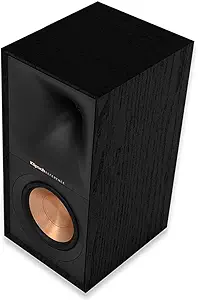
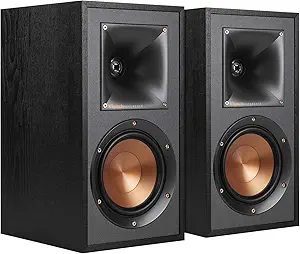
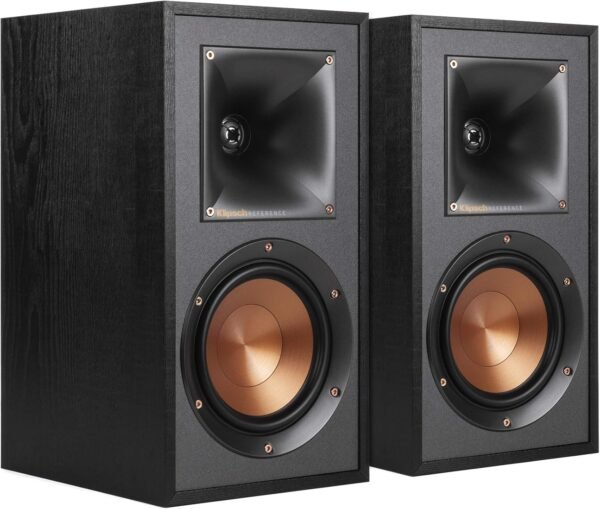
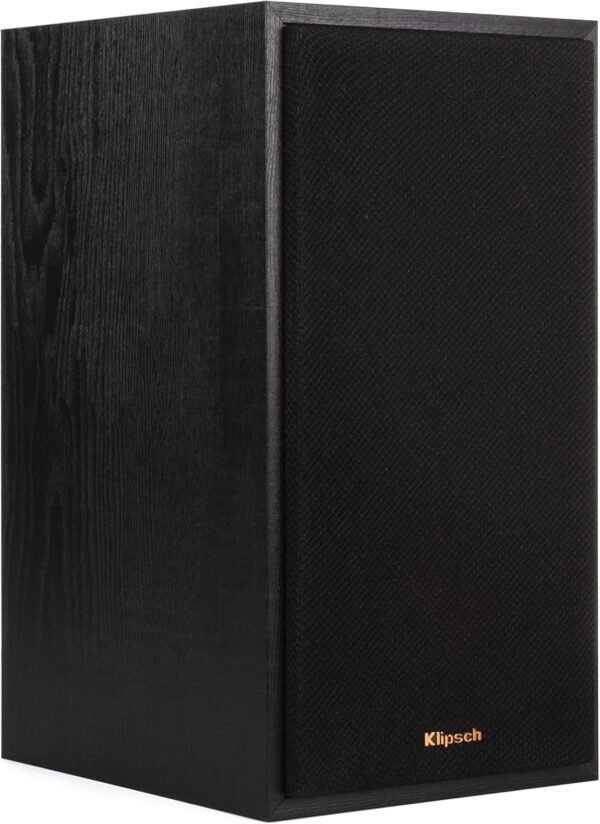
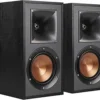
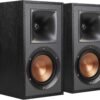
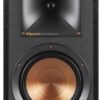
The Klipsch R-51M is a passive bookshelf speaker sold in pairs, part of the company’s Reference range. The listing gives a 5.25 inch woofer, a speaker type of tweeter, woofer and bookshelf, cabinet dimensions of 13.3 inches high by 7 inches wide by 8.5 inches deep, a weight of 11 pounds, a black finish and a note in the description that they are sold in pairs. It first became available in August 2018 and carries a 4.8 star rating across 1,039 ratings, which is among the strongest scores in this catalog.
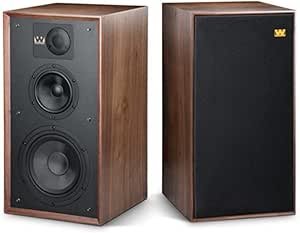
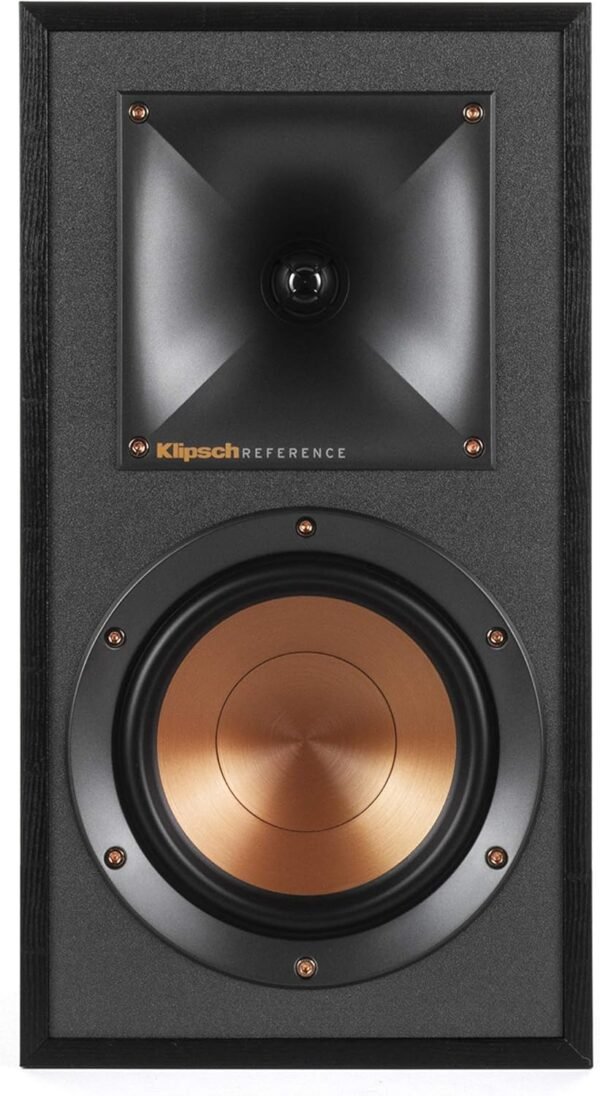
These are two way passive speakers, meaning each cabinet contains a woofer and a tweeter with a crossover network dividing the signal between them, and no amplification inside. They need an amplifier or a receiver to work. The buyer is someone building a stereo system for music, a pair of front speakers for a home theater, or a desktop setup with a small amplifier. Buyers comparing within the same range should look at the Klipsch R-50M, and those considering a different design philosophy entirely should read about the Wharfedale Linton.
The 5.25 Inch Woofer and What It Delivers
Driver size sets the boundaries for what a speaker can do at low frequencies, and a 5.25 inch woofer in a 13 inch cabinet is a mid sized bookshelf configuration. It moves considerably more air than the 2.5 to 4 inch drivers found in compact satellites, which means real midbass weight and the ability to carry a full range signal in a small room without help. It cannot reach the bottom octave that film soundtracks use, which is why bookshelf speakers of this size are almost always paired with a subwoofer for home theater use.
For music in a small or medium room, a pair of 5.25 inch two ways is often enough on its own, particularly for acoustic material and voices. Klipsch does not publish a frequency response, sensitivity or impedance figure in this listing, and all three would be useful: sensitivity in particular tells a buyer how loud a given amplifier will drive them. Anyone adding low end should look at the Klipsch R-8SW, which is designed to sit alongside speakers of exactly this size.
Placement, Stands and Room Interaction
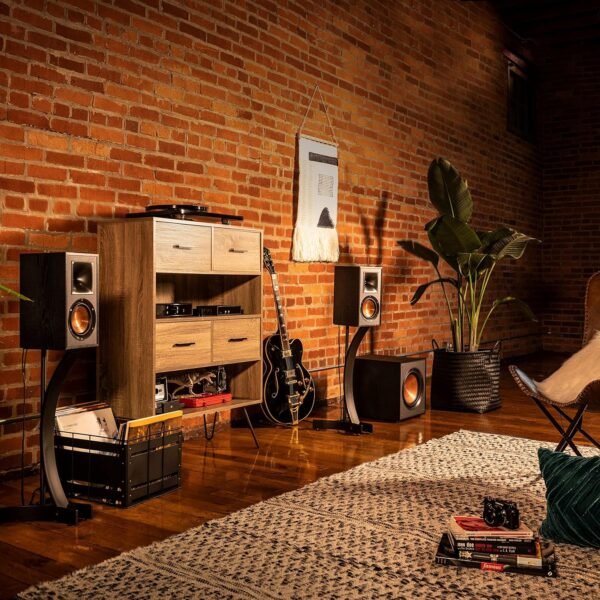
The name bookshelf is misleading and causes more disappointment than any other factor with speakers of this type. Placed inside a bookshelf or hard against a wall, the cabinet’s rear radiation reflects back and the boundary reinforces low frequencies unevenly, producing a boomy, congested result. On stands, out from the wall, with the tweeters near ear height, the same speakers sound like a different product. A cabinet 13.3 inches tall on a 24 inch stand puts the tweeter at roughly the right height for a seated listener.
Toe in is the second adjustment worth making. Angling the speakers slightly toward the listening position narrows the effective listening area but sharpens the stereo image; leaving them straight widens the usable area at the cost of precision. Neither is right in the abstract, and both are free to try. Readers building a full home theater around these will find the matching center in the Klipsch R-52C.
Amplification and System Building
Because these are passive speakers, the amplifier is part of the purchase. A home theater receiver drives them without issue and adds room correction, multichannel decoding and input switching. A dedicated stereo integrated amplifier typically offers better sound per dollar for music because none of the budget goes into video processing and surround decoding. A compact desktop amplifier is the third option for a computer setup.
Whichever route, the connection is bare speaker cable to binding posts, and the amplifier needs to be comfortable with the speakers’ impedance. Since this listing does not publish the impedance, buyers should get it from Klipsch’s documentation, particularly if using a lower powered amplifier. Readers who want the whole picture of a compact amplifier that would suit this pair can look at the Arylic B50, and the broader bookshelf speakers category covers the alternatives.
Highlights
- Sold as a matched pair rather than as a single speaker.
- 5.25 inch woofer with a separate tweeter in a two way configuration.
- Compact cabinet at 13.3 by 7 by 8.5 inches and 11 pounds each.
- Passive design, so any amplifier or receiver can drive them.
- Part of the Klipsch Reference line, which simplifies matching a center and surrounds.
- 4.8 stars across 1,039 ratings on the source listing, an unusually strong score.
Things To Consider
The specification block is badly wrong in several places and buyers should ignore most of it. Special Feature is listed as Radio, which these speakers do not have. Controller Type and Power Source are both listed as Corded Electric and Control Method as Remote, on passive speakers with no power connection and no controls of any kind. Maximum Range is given as 20 Meters, which is a wireless figure applied to a wired speaker. Subwoofer Diameter is listed as 5.25 Inches when that figure is the main woofer and there is no subwoofer. Surround Sound Channel Configuration reads 1.0 while Number of Items reads 2, reflecting that these ship as a pair.
The listing also omits the three specifications that matter most for a passive speaker: frequency response, sensitivity and nominal impedance. Without sensitivity there is no way to judge what amplifier power is appropriate, and without impedance there is no way to know whether a modest amplifier will cope. The tweeter size and type are not stated either.
The practical limitations are those of the format. Bookshelf speakers need stands and space from the wall to perform properly, and that is an additional cost and a room layout constraint. They need an amplifier. They do not produce deep bass and will want a subwoofer for film use. And two cabinets plus two stands plus an amplifier is a visually larger installation than a single sound bar, which is the honest comparison for many buyers.
Who Should Buy It, and Who Should Not
This suits someone building a real stereo system for music, or the front pair of a home theater, who has room for stands and already owns or plans to buy an amplifier. The strong review score across a large sample makes it one of the better documented choices in this category.
It does not suit a buyer who wants a single box solution, since an amplifier, cable and stands are all required, and it does not suit a room where the speakers must live inside a shelf unit. Those buyers should look at a sound bar instead.