
Description
What the Wharfedale Linton Is and Who It Suits
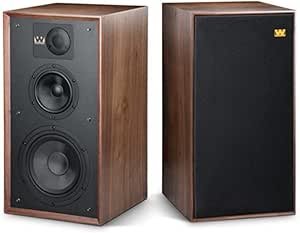
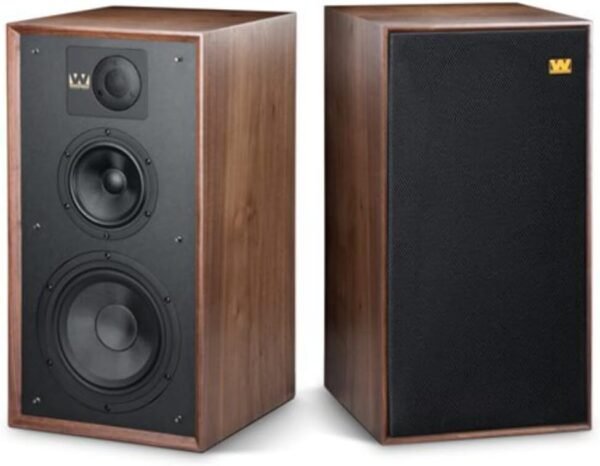
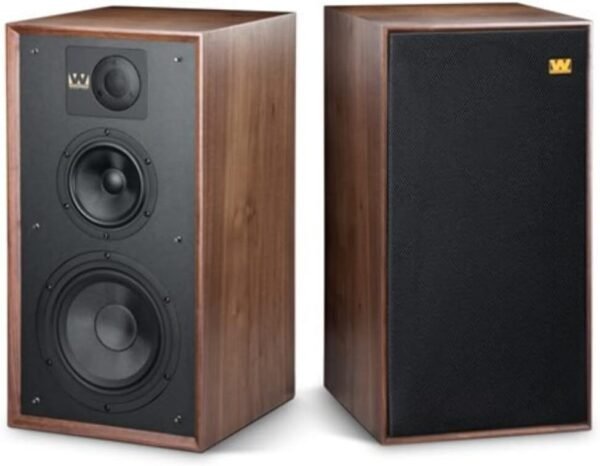
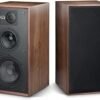
The Linton is Wharfedale’s 85th Anniversary reissue of a classic British standmount design, sold here as a matched pair in walnut. The listing gives sensitivity as 90 dB at 2.0V and 1 meter, a recommended amplifier power range of 25 to 200 watts, and dimensions of 22.2 inches high by 11.8 inches wide by 13.0 inches deep. Wharfedale states that stands are sold separately and lists them as available in their own right.
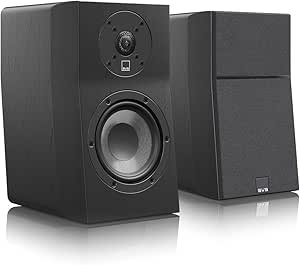
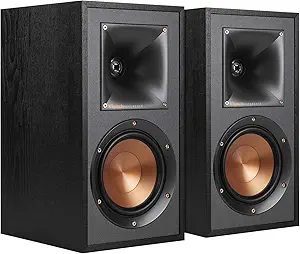
The first thing a buyer needs to understand is that these are not bookshelf speakers in any practical sense. At 22 inches tall and 13 inches deep, a Linton is closer in footprint to a small floorstander than to the compact standmounts most people picture. They will not fit on a typical bookshelf, and placing them on furniture close to a wall works against the design. Anyone whose room genuinely requires a compact speaker should look at conventional standmounts such as the Klipsch R-51M or the SVS Ultra Evolution Nano.
Sensitivity and Amplifier Matching
Ninety decibels is a high sensitivity figure, and the way Wharfedale states it deserves attention. Sensitivity is normally quoted at 2.83V and 1 meter, which corresponds to one watt into an 8 ohm load. Wharfedale quotes 2.0V at 1 meter instead, which is a lower drive voltage, so the figure is not directly comparable to the numbers most manufacturers publish. That does not make it dishonest; it makes it different, and buyers cross shopping on sensitivity should note the measurement condition rather than the number alone.
The recommended amplifier power range of 25 to 200 watts is unusually wide and unusually informative. The lower bound tells a buyer these speakers will work with a modest amplifier. The upper bound tells them the drivers can absorb serious power without damage. Between those points almost any home amplifier or receiver is a valid partner, from an integrated stereo amplifier to a multichannel unit such as the Pioneer Elite VSX-LX305. A high quality preamplifier such as the Douk Audio P1 is another route for a two channel system.
Cabinet Size and What It Buys
The size is not accidental. Internal cabinet volume is one of the fundamental constraints on how low a speaker can play and how much output it can produce without strain. A 22 by 12 by 13 inch enclosure has several times the internal volume of a compact standmount, which is why designs of this shape have historically produced bass that small speakers cannot reach.
The tradeoff is placement. Large standmounts need space behind and around them to work properly, and they need proper stands to bring the drivers to ear height. Wharfedale sells matching stands separately, and buying the speakers without them is a false economy: placing a 22 inch tall speaker on a low sideboard puts the tweeter well below the listener’s ears and changes the tonal balance.
Build, Finish and Listing Gaps
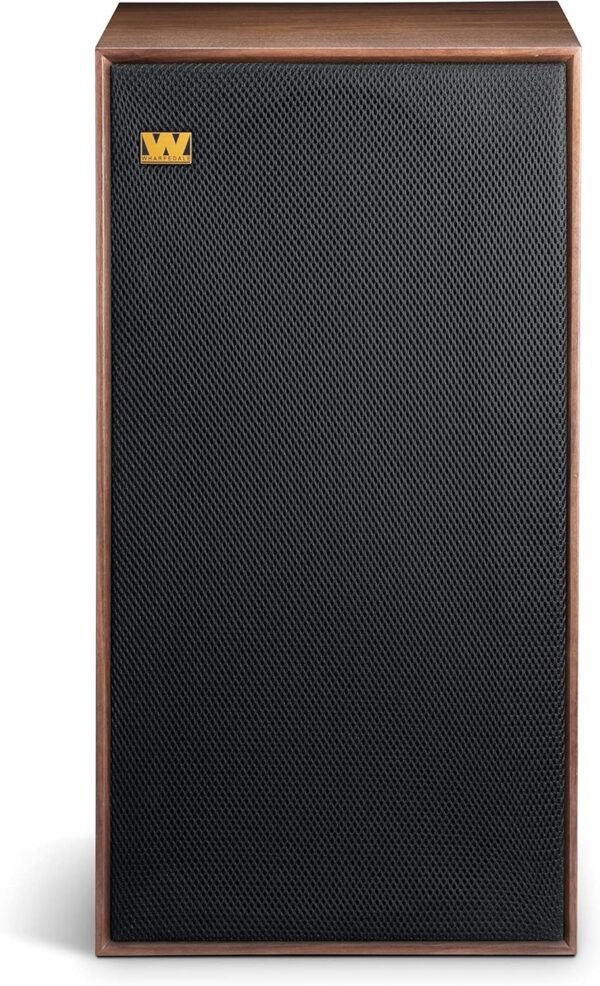
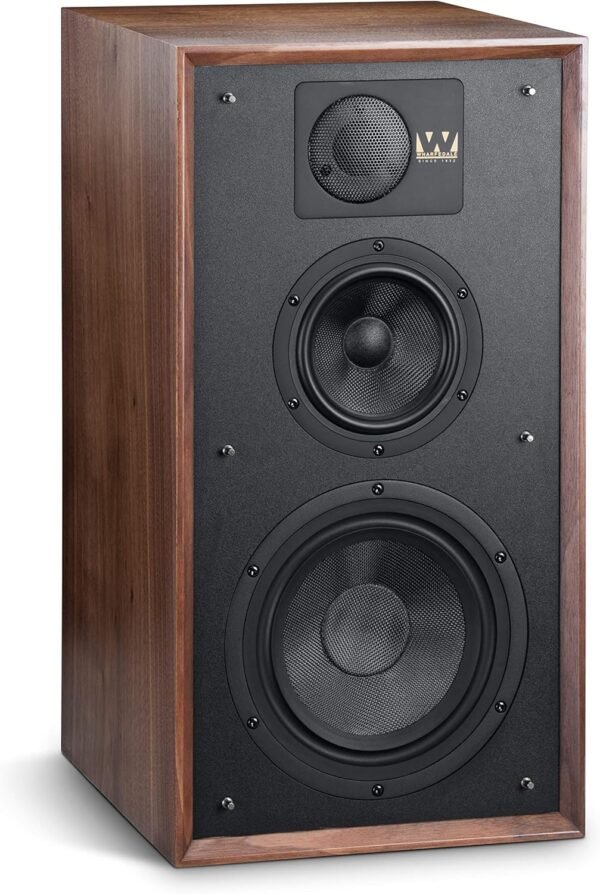
The walnut finish and the retro cabinet proportions are central to the appeal. This is a design sold partly on appearance, and a matched pair in real wood veneer sits in a different visual category from the black vinyl wrapped boxes that dominate the price bracket. Anyone buying on looks alone should still confirm the actual finish specification with a dealer, since veneer, foil and paint are all described as walnut by different manufacturers.
This listing is remarkably sparse for a product at this level. There is no manufacturer description, no attribute table at all, and no customer rating data in the product record. The five bullets contain the entire published specification: sensitivity, recommended power, dimensions, the 85th Anniversary designation and the note that stands are separate.
What is missing is substantial. There is no driver complement, no crossover frequency, no impedance figure, no frequency response range and no weight. Impedance in particular matters for amplifier matching, and frequency response is the number most buyers want. None of it appears here, and none of it should be assumed. Buyers should work from Wharfedale’s own published specification before purchase.
Highlights
- Sold as a matched pair, so the two cabinets are selected to perform alike.
- High stated sensitivity of 90 dB, meaning modest amplifiers can drive them.
- Wide 25 to 200 watt recommended power range, compatible with almost any home amplifier.
- Large cabinet volume, which is what allows a standmount to produce genuine low frequency output.
- Walnut finish and heritage cabinet proportions rather than a generic modern box.
- Matching dedicated stands available, designed for the correct listening height.
Things To Consider
The category label is misleading. These are large standmount speakers, not bookshelf speakers, and buyers should measure their intended location before ordering rather than after.
Stands are not included and are not optional in practice. Budget for them, or for a solution that places the tweeter at seated ear height, because the speakers will not perform as designed sitting on furniture.
The listing publishes almost no specifications. No impedance, no frequency response, no driver detail, no weight and no crossover information appear anywhere in the product record, and there is no customer rating data either.
The sensitivity figure is quoted at a non standard 2.0V rather than the usual 2.83V, so it cannot be compared directly with other manufacturers’ numbers. Finally, large speakers need room, and a pair of Lintons in a small space close to walls will produce boomy bass rather than the balance the design intends. Anyone with a small room should consider the bookshelf speakers category more broadly, including genuinely compact options such as the Klipsch R-50M.
Who Should Buy It and Who Should Not
The Linton suits a listener with a medium or large room, proper stands, a conventional stereo amplifier and an interest in a design that prioritizes scale and cabinet volume over compactness. The wide amplifier compatibility makes system building straightforward, and the matched pair supply is the right approach for stereo imaging.
It is the wrong speaker for a small room, for anyone who literally needs something to fit a shelf, or for a buyer who wants full published specifications before committing. Someone building a home theater front stage would also be better served by a matched multichannel range, since Wharfedale does not present a center channel or surround match in this listing. A floorstanding option such as the Dayton Audio Classic T65 is worth comparing if floor space is available anyway.