Description
What the Red Label FS3 Is
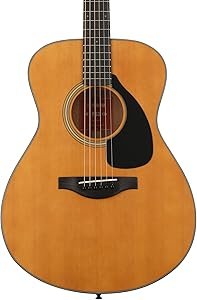
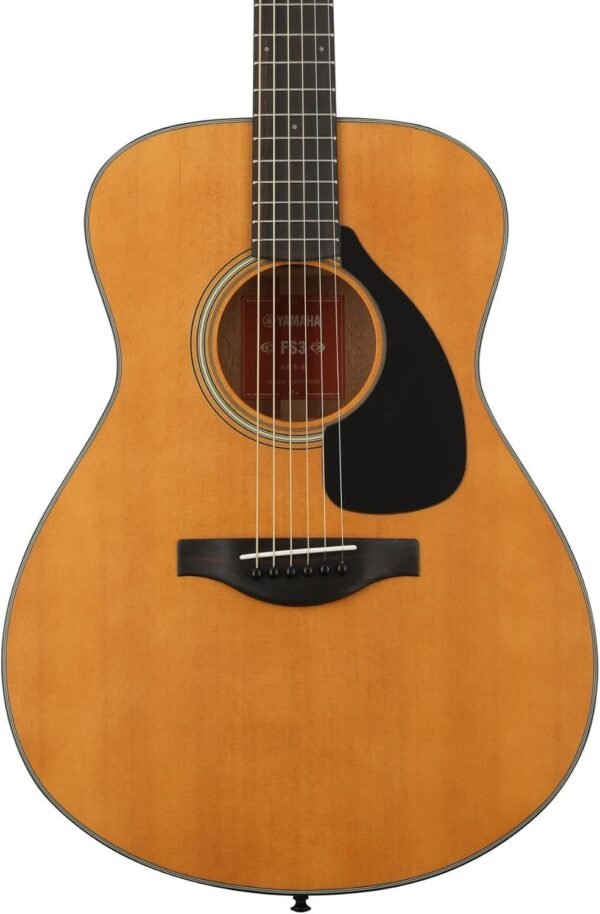
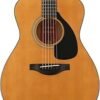
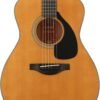
The Yamaha Red Label FS3 is a six string acoustic guitar with a solid Sitka spruce top, solid mahogany back and sides, an ebony fingerboard and an African mahogany neck, finished in natural. The Red Label name refers to the label inside the soundhole of the Yamaha guitars built in the 1960s and 1970s, instruments that acquired a substantial reputation among players, and the modern Red Label series is Yamaha’s return to that lineage.
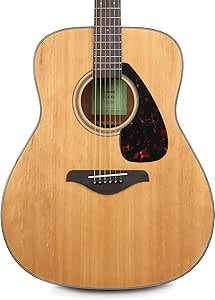
The FS prefix denotes the concert body size in the Yamaha naming system, the smaller and shallower of the two main shapes, as opposed to the FG dreadnought. A concert body is easier to hold, particularly seated, and trades some volume and low end for a more focused midrange that suits fingerstyle playing. Buyers deciding between shapes should compare the dreadnought Yamaha FG800J NT and the acoustic electric Yamaha FSX800C, which shares the same concert body.
Why All Solid Construction Matters
The single most important thing on this listing is a word that appears twice: solid. Yamaha states a solid Sitka spruce top and solid mahogany back and sides, which makes this an all solid wood guitar rather than a solid top over laminated back and sides, and rather than a fully laminated instrument. That distinction separates entry level guitars from serious ones more reliably than any other specification.
A solid piece of wood vibrates as one body. A laminate is several thin layers glued together with the grain running in different directions, which makes it stronger, cheaper and far more resistant to humidity, but the glue lines damp the vibration and the panel contributes much less to the sound. Solid wood also changes over time: as the resins in the timber cure over years of playing, an all solid guitar generally opens up in a way a laminated one does not. That is why all solid construction commands the price it does, and why it is the specification a buyer should look for first.
The Woods and the Fingerboard
Beyond the solid construction, the specific timbers Yamaha has chosen shape what the guitar sounds like. Sitka spruce is the standard soundboard timber for steel string guitars because it has an unusually high stiffness to weight ratio, which lets the top respond quickly and project without needing to be thick. Mahogany for the back and sides is the traditional alternative to rosewood, generally described as producing a drier, more focused midrange with less overtone complexity, which pairs naturally with the concert body shape and its similar emphasis.
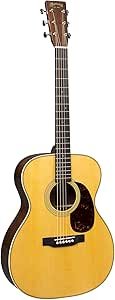
The fingerboard is ebony rather than rosewood, which is notable. Ebony is denser, harder and more expensive than rosewood, it is the traditional choice on higher grade instruments, and it wears more slowly under years of playing. The neck is African mahogany. Anyone comparing what greater outlay buys should look at the Martin 000-28, and players who would prefer nylon strings and a wider neck should compare the Yamaha C40II.
Highlights
- All solid wood construction, with both the top and the back and sides stated as solid.
- Solid Sitka spruce top, the standard high grade soundboard timber.
- Solid mahogany back and sides for a focused midrange character.
- Ebony fingerboard rather than rosewood, denser and more durable.
- African mahogany neck.
- Concert body size, easier to hold than a dreadnought.
- Natural finish showing the grain of the top.
- Part of the Red Label series, Yamaha’s reference to its own 1960s instruments.
- Listing data is accurate and free of the contradictions found across most of this catalog.
- Six strings in a standard steel string configuration.
- Natural finish with no stain or sunburst, showing the spruce grain directly.
Things To Consider
This listing is unusually clean compared with most on this site: the four feature bullets are accurate, specific and free of contradictions, and there is no attribute table full of irrelevant fields. What it is, however, is short. There is no scale length, no nut width, no neck profile, no bracing description, no weight, no statement about the finish type, no confirmation of whether a case or gig bag is included, and no mention of an onboard pickup. Nut width and neck profile in particular determine how a guitar feels in the hand, and those cannot be judged from this page.
All solid construction also brings a genuine responsibility that laminated guitars do not. Solid wood moves with humidity, and an all solid instrument kept in a dry room through a winter can develop cracks or a sunken top. Anyone buying at this level should budget for a hard case and a humidifier, and should treat those as part of the purchase rather than optional extras. This is the main reason all solid guitars are not usually recommended to a first time buyer who has nowhere suitable to keep one.
Nothing in the listing indicates electronics, so this should be treated as a purely acoustic guitar. Players who need to plug into a PA should look at acoustic electric options in the acoustic guitars category instead. And as with any acoustic guitar in this class, a professional setup after purchase will improve the action and intonation considerably, and the factory strings should be replaced as a matter of course.
Who It Suits
The Red Label FS3 suits a player who has moved past a first guitar and wants an all solid instrument that will improve with age, who prefers a concert body to a dreadnought, and who can look after solid wood properly. The ebony fingerboard and the solid mahogany back and sides put it well above the laminated instruments that dominate the entry level, and it is a guitar to keep rather than to replace.
It is the wrong purchase for a complete beginner who is not certain they will continue, for anyone without somewhere humidity controlled to store it, and for anyone who needs to plug in. Those buyers should look at the more forgiving instruments in the steel string acoustics category and add electronics later.