Description
What This Product Actually Is
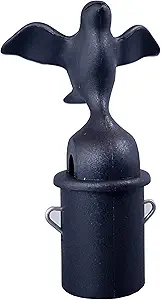
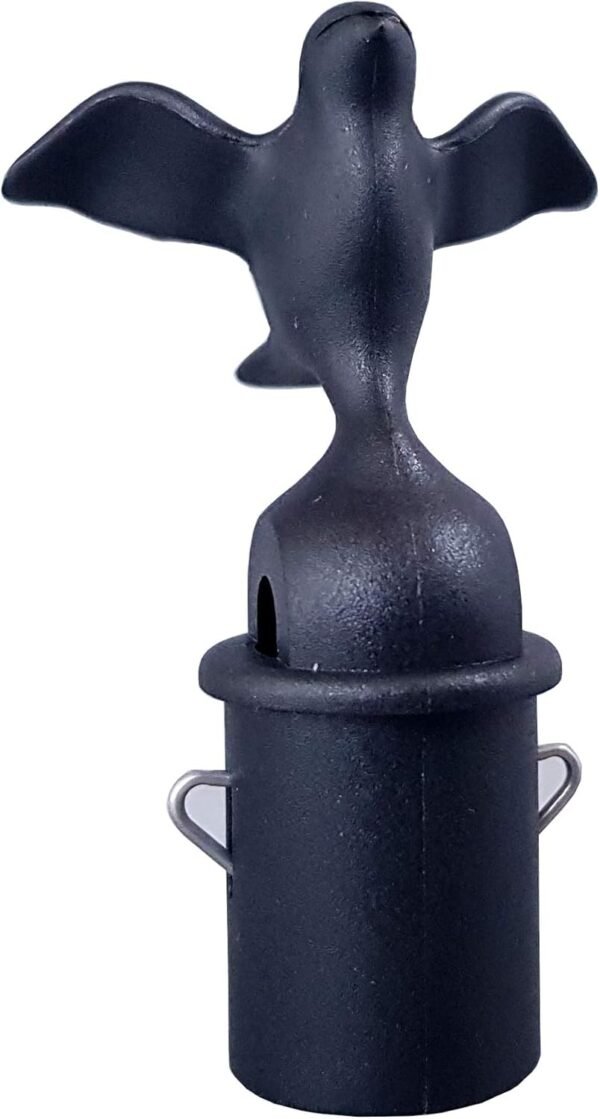
This needs saying before anything else. The Alessi 9093 B is a replacement bird shaped whistle for a stovetop kettle. It is a spare part for a kitchen item, not a musical instrument and not audio equipment of any kind. It appears in this catalog because the retail source categorizes it under Musical Instruments, Wind and Woodwind Instruments, Folk and World, Whistles, which is a categorization error upstream rather than a description of the product.
Readers who arrived here looking for headphones, speakers or recording equipment should know that immediately, and can start again from the whistles category section. Readers who genuinely want an unusual acoustic instrument rather than a kettle part will find one in the Hopwell steel tongue drum, which is a real instrument that happens to sit at the same unusual edge of the catalog.
How a Kettle Whistle Works
There is a legitimate acoustic story here, and it is the same physics that governs every whistle, flute and organ pipe. When water boils, steam rises through the kettle spout under pressure. The whistle sits on that spout and forces the steam through a narrow slot, directing the resulting jet across a sharp edge. The jet becomes unstable and oscillates from one side of the edge to the other, and that oscillation excites the air in the small cavity behind it.
The cavity’s dimensions set the pitch, in the same way that the length of an organ pipe or the size of a whistle body does. This is called an edge tone, and it is the same mechanism that produces sound in a recorder or a police whistle. The reason a kettle whistle rises in pitch and volume as the water approaches a full boil is that the steam velocity increases, which drives the oscillation harder. It is a genuine acoustic device, just not one anyone would call a musical instrument.
Why It Is a Replacement Part
Kettle whistles live in a hostile environment. They sit in a jet of steam at boiling point, are heated and cooled repeatedly, and are handled with wet hands and sometimes dropped. On a decorative design, the whistle is also the part most likely to be lost, since it lifts off the spout to allow pouring and is easily left on a counter or knocked into a sink.
That is why the manufacturer sells it separately. The economics are straightforward: a whistle costs a small fraction of a kettle, and a kettle with a missing or perished whistle is otherwise entirely functional. Selling spare parts extends the life of an expensive object, which is a good thing regardless of what category the listing lands in. The same principle applies across audio equipment, where a replaceable cable or earpad turns a failure into a repair, as with the detachable cable designs discussed in the CCA C12 in-ear monitors.
What Buyers Need to Verify
Because the listing publishes no specification block at all, everything that determines whether this part will work needs to be checked elsewhere. The kettle model is the first item: Alessi has produced more than one kettle design and more than one whistle shape, and a whistle from one will not necessarily fit another. The listing names the 9093, and buyers should confirm that against the marking on their own kettle rather than against its appearance.
The second item is the variant. This listing specifies black, and the same part is produced in other finishes and materials. The third is the material itself, which the listing does not state. A whistle that sits in boiling steam needs to be made of something rated for that, and material matters for both safety and durability. None of that is available here, and nothing in this review invents it. Alessi’s own documentation or an authorized dealer is the correct source. Readers who record household and kitchen sounds for content will find suitable microphones in the AKG P120 and the Audio-Technica AT4040.
Highlights
- Manufacturer supplied replacement part, so a kettle with a lost whistle can be repaired rather than replaced.
- Fits the Alessi 9093 kettle according to the product title.
- Black finish specified in the listing.
- Lifts off the spout for pouring, which is why it is the part most often lost.
- Available separately, which extends the working life of the kettle it belongs to.
- Works by the same edge tone principle as a recorder or a whistle instrument.
Things To Consider
The categorization is the main issue and it is not a small one. A shopper browsing an audio site has no reason to expect a kettle spare part, and a shopper looking for a musical whistle will not find one here. The retail source lists this item under wind and woodwind instruments, which is simply wrong, and that error has carried through into this catalog. It is flagged here rather than corrected, and readers should treat the category label as unreliable for this item.
The retail listing also publishes no specification block whatsoever: no material, no dimensions, no weight, no heat rating, no compatibility list beyond the model number in the title, and no country of origin. For a part that sits in boiling steam, the material is not a detail. Buyers should treat the manufacturer as the only reliable source.
There is also no customer rating and no ratings count on this listing, so no aggregate buyer feedback is available. Anyone ordering should confirm the return policy, since a part that does not fit a specific kettle is of no use at all.
Who Should Buy It, and Who Should Not
This suits exactly one person: an owner of the matching Alessi kettle whose whistle has been lost or damaged, who has confirmed the model and the variant against Alessi’s documentation. For that person it is a sensible repair rather than a replacement of the whole kettle.
It does not suit anyone else. It is not a musical instrument, it is not audio equipment, and it will not fit a kettle from another maker. Readers who came here for listening or recording gear should browse the multipurpose microphone section instead.