Description
What the ProCenter 1000 Is and Who It Suits
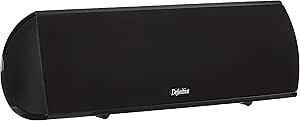
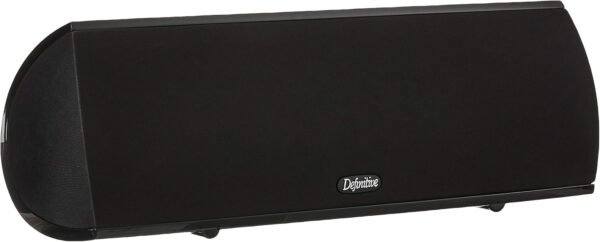
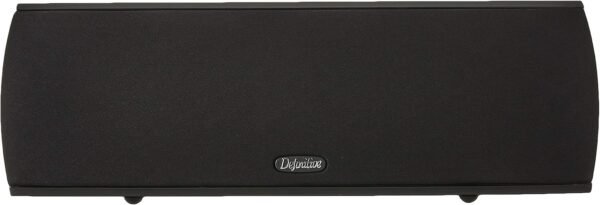
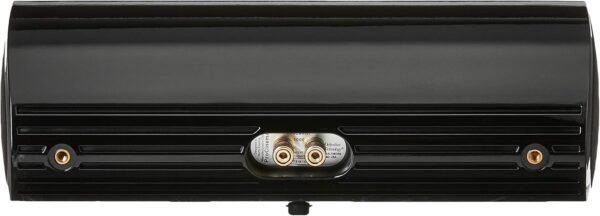
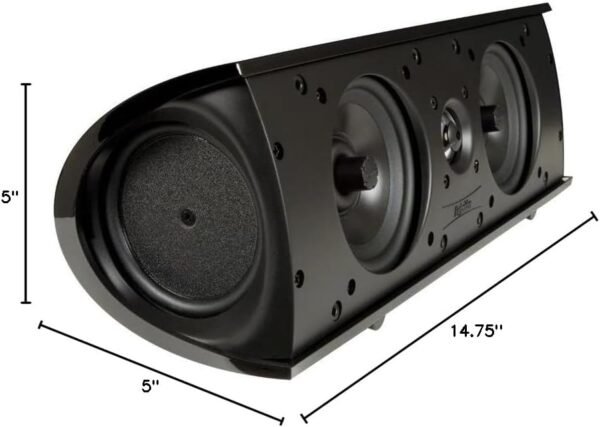
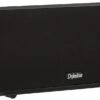
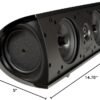
The Definitive Technology ProCenter 1000 is a compact center channel speaker finished in black. In a home theater system the center channel carries the majority of dialogue and a large share of on screen effects, which makes it the single most important speaker for intelligibility. Definitive Technology positions the ProCenter series as small enclosures for rooms where a full size center speaker will not fit under a television or inside a cabinet, and this model sits in that line.
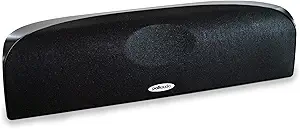
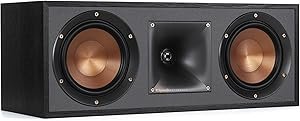
The buyer this suits already has, or is building, a multichannel system. A center channel is not a standalone product: it needs a receiver with a dedicated center output and a pair of left and right speakers to sit between. Anyone assembling that system from scratch will need a receiver such as the Pioneer Elite VSX-LX305, a pair of stereo speakers, and a subwoofer to carry the low frequencies the compact center cannot. Buyers comparing center options directly should also look at the Polk Audio TL1 and the Klipsch R-52C.
Why a Compact Center Is a Different Design Problem
Center channel speakers face a constraint the other speakers in a system do not. They must fit in a short, wide space under or above a screen, which pushes designers toward a horizontal layout with drivers on either side of a tweeter. That arrangement has a known weakness: as a listener moves off the center axis, the two woofers arrive at slightly different times and cancel each other in the crossover region, which thins out male voices for anyone sitting off to one side. Compact designs like the ProCenter series reduce that effect by shrinking the driver spacing, since a shorter distance between drivers means less cancellation.
The trade is bass output. A small cabinet cannot move much air, so a compact center depends on the subwoofer taking over earlier than a large center would require. That is not a flaw so much as a system design requirement, and it means the crossover setting on the receiver matters more than usual. Buyers pairing this with a subwoofer will find sizing guidance across the subwoofer selection, where enclosure volume and driver diameter are the figures that decide how low a system can go.
Matching It to the Rest of the System
Timbre matching is the reason speaker manufacturers sell systems rather than individual boxes. When a sound pans from the left speaker across the center to the right, a mismatch in tonal character is audible as a change in the sound of the object as it moves. Using a Definitive Technology center with Definitive Technology left and right speakers keeps that consistent. Mixing brands is common and often works well enough, but the center is the position where a mismatch is most obvious because dialogue lives there.
Placement matters as much as matching. A center channel should sit as close to ear height as the furniture allows, and it should be aimed at the listening position rather than at the ceiling or the floor. Setting the receiver crossover to route low frequencies away from a compact center to the subwoofer will usually improve both clarity and maximum volume. Readers building a complete system can see how bookshelf speakers fill the left and right positions in the Klipsch R-51M.
One further practical point concerns amplification. A passive center draws its power from the receiver’s dedicated center amplifier channel, so the relevant question is not how loud the speaker can go on its own but whether the receiver can supply enough current into the speaker’s impedance without protection tripping. Since this listing publishes neither impedance nor sensitivity, that pairing cannot be assessed from the retail data alone. Mainstream home theater receivers are designed for 6 to 8 ohm loads and handle compact speakers comfortably, so the risk is low, but buyers running an older or lower powered receiver should confirm the figures with the manufacturer before assuming a match.
Highlights
- Compact enclosure designed to fit under a television or inside a media cabinet.
- Dedicated center channel, the position that carries most film dialogue.
- Black finish, intended to disappear against typical television furniture.
- Part of a wider Definitive Technology range, which helps timbre matching across a system.
- Narrow driver spacing in compact designs reduces off axis cancellation compared with wide center speakers.
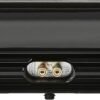
- Passive design, so it uses the center amplifier already present in a home theater receiver.
Things To Consider
The most important thing to say about this product is what is missing. The retail listing for the ProCenter 1000 carries no specification block at all: no driver sizes, no frequency response, no sensitivity, no impedance, no recommended amplifier power, no dimensions and no weight. Every one of those figures is needed to decide whether a speaker fits a given cabinet and a given receiver. Nothing in this review invents them, and buyers should obtain them from Definitive Technology’s own documentation or from a dealer before purchase. That absence is unusual and it is a genuine obstacle to an informed decision.
Beyond the missing data, the structural limitations of the category apply. A compact center cannot produce deep bass and needs a subwoofer alongside it. A passive speaker needs an amplifier channel, so it cannot be connected to a television directly. Center channels are also the component most sensitive to placement, and a speaker pushed back inside a closed cabinet will sound muffled regardless of quality. Anyone who cannot place a speaker at roughly ear height and unobstructed should consider a soundbar instead, several of which are covered across the site.
Who Should Buy It, and Who Should Not
This suits an owner of Definitive Technology left and right speakers who needs a matching center in a tight space, and it suits anyone whose television furniture rules out a full size horizontal center. In that situation a compact center that is properly crossed over to a subwoofer will outperform a larger speaker that has to be crammed in at a bad angle.
It does not suit a buyer without a multichannel receiver, since a passive center cannot be driven by a television. It also does not suit anyone who needs published specifications before committing, because this listing does not provide them. Buyers in either position should look at the center-channel speakers category for alternatives with fuller published data, or move to a soundbar based system that arrives complete.