

Description
What the FiiO K11 Is and Who It Suits
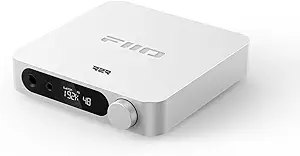
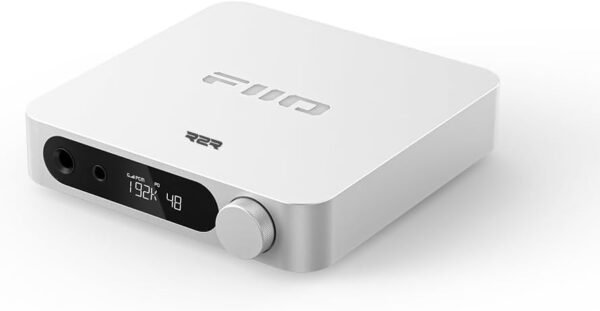
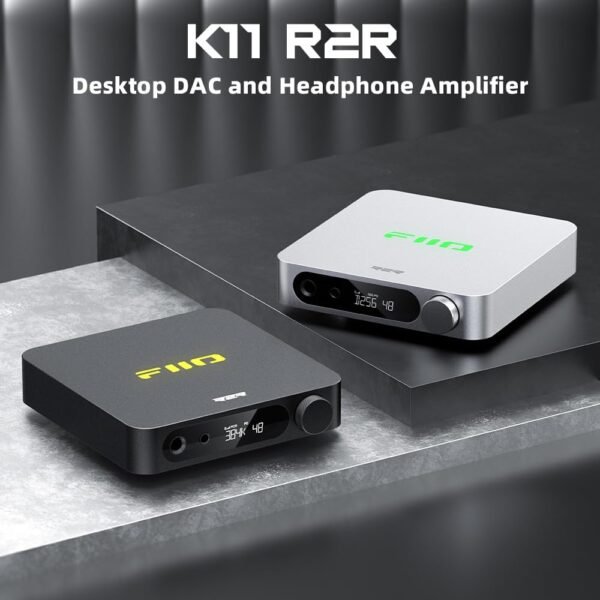
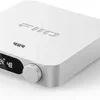
The K11 is a compact desktop digital to analog converter and headphone amplifier from FiiO, built in an aluminum chassis and connected by USB. The listing specifies a 6.35 mm headphone jack, a frequency range of 5 Hz to 90 kHz, and a USB Type-C to Type-A cable in the box. It was first listed in July 2024 with a country of origin of China, and it ranks inside the top fifty in the headphone amplifier category on Amazon.
The buyer this suits is someone whose headphones are not being driven properly by a computer or phone. Built in audio outputs on laptops and desktops are designed to a cost and often lack both the voltage and the current to drive anything beyond basic earbuds. A dedicated DAC and amplifier addresses that. Owners of demanding headphones such as the FiiO FT3 or the Monolith M1060 are the audience. Anyone who wants portability rather than a desktop unit should compare the FiiO KA13 or the FiiO KA15 dongles instead.
What a Desktop DAC and Amplifier Does
Two jobs happen in this box. The digital to analog converter takes the digital audio stream from the computer over USB and turns it into an analog signal, bypassing the computer’s own converter entirely. The headphone amplifier then raises that signal to a level and current that headphones can use.
The second job is where most of the benefit sits for headphone listeners. Sensitivity and impedance vary enormously across headphones, and a high impedance or low sensitivity model needs far more drive than a laptop output can supply. Underdriven headphones sound quiet, thin and lacking in bass control, and no amount of volume adjustment in software fixes it because the limit is hardware.
The 6.35 mm output listed here is the quarter inch jack standard on full sized headphones and on studio equipment. That connector choice signals the intended use: this is a desktop unit for wired over-ear headphones, not something for earbuds with a 3.5 mm plug, which would need an adapter.
The 5 Hz to 90 kHz Figure
The stated frequency range extends far beyond human hearing at both ends. Ninety kilohertz is more than four times the upper limit of what a person can hear, and 5 Hz is below the threshold of audible pitch. This is not misleading, and it is not unusual on audio electronics: a wide response measured at the device output indicates that the circuit is not imposing filtering within the audible band, which is the actual point. It is a design quality indicator rather than a claim that anyone hears 90 kHz.
What the Listing Does Not Say
This listing is unusually incomplete for a technical product, and the gaps are substantial enough to affect a purchasing decision.
There is no DAC chip identified. For this class of product the converter chip is one of the most discussed specifications, and buyers routinely compare units on that basis. There is no power output figure in milliwatts, which is the number that determines whether a given headphone can be driven adequately, and no supported impedance range. There is no gain switch information, no sample rate or bit depth support, and no statement of what outputs exist beyond the 6.35 mm jack. Whether the unit provides a line output, a balanced output or RCA connections is not addressed anywhere in the product data.
The listing also carries no manufacturer description and no feature bullets at all, so the attribute table is the only source. Several of its entries are wrong. The wireless communication technology field contains an untranslated Chinese term meaning wired. The cable feature is listed as retractable, the control method as remote, and the audio driver type as dynamic driver, none of which apply to a DAC and amplifier with no drivers, no remote and a fixed cable. The item weight of 2.2 pounds and the package dimensions of 9.65 by 8.94 by 2.36 inches describe the shipping box rather than the unit.
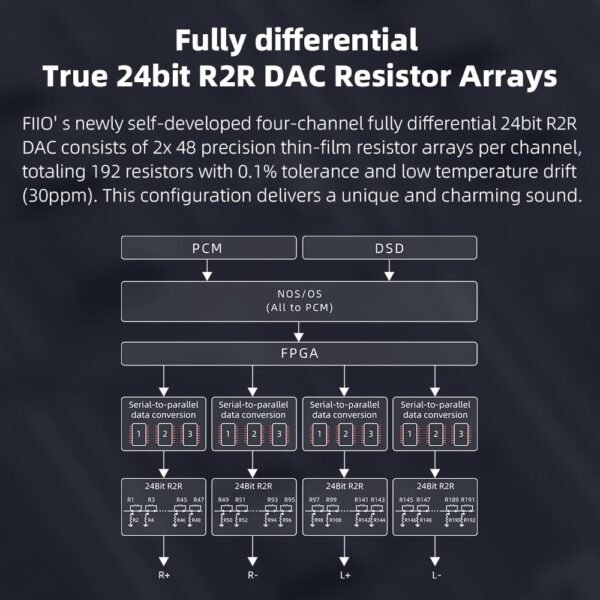
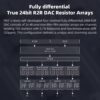
Buyers should treat FiiO’s own published specification as the authority here, and should be particularly careful about claims found elsewhere describing this model’s converter architecture, since FiiO produces closely named variants in the same series with genuinely different designs.
Highlights
- Dedicated DAC and headphone amplifier in one compact desktop unit.
- Aluminum chassis rather than plastic construction.
- 6.35 mm quarter inch output matched to full sized headphones and studio gear.
- USB connection with the required Type-C to Type-A cable supplied.
- Stated frequency range of 5 Hz to 90 kHz, well beyond the audible band.
- Ranked inside the top fifty headphone amplifiers on Amazon, indicating real sales volume.
Things To Consider
No power output figure is published. Without a milliwatt rating into a stated impedance, there is no way to judge whether this unit will drive a particular headphone, which is the primary reason to buy one.
The DAC chip is not identified, and no sample rate or bit depth support is listed. For a product category where those specifications drive comparison, that is a serious gap.
The attribute table contains an untranslated Chinese field value and several fields that describe a completely different type of product. It cannot be used as a reference.
The output configuration is unclear beyond the 6.35 mm jack. Whether there is a line output for powered speakers, an RCA pair, or a balanced connection is not stated, and that determines whether the unit can serve as a system hub rather than only a headphone amplifier. Buyers driving genuinely difficult headphones such as the HIFIMAN SUSVARA should look at the substantially more powerful FiiO K9 Pro and compare across the amplifiers category.
Who Should Buy It and Who Should Not
The K11 makes sense for someone with a wired over-ear headphone that a computer output is not driving well, who wants a small desktop box rather than a dongle, and who is willing to check the manufacturer’s own specification before buying. FiiO has a long record in this category and the unit sells in volume. Listeners can browse suitable headphones across the over-ear headphones category.
It is not the right purchase for anyone who needs to know the power output before committing, since this listing does not state it. It is also unnecessary for listeners using efficient earbuds or wireless headphones, where the amplification is already inside the device.